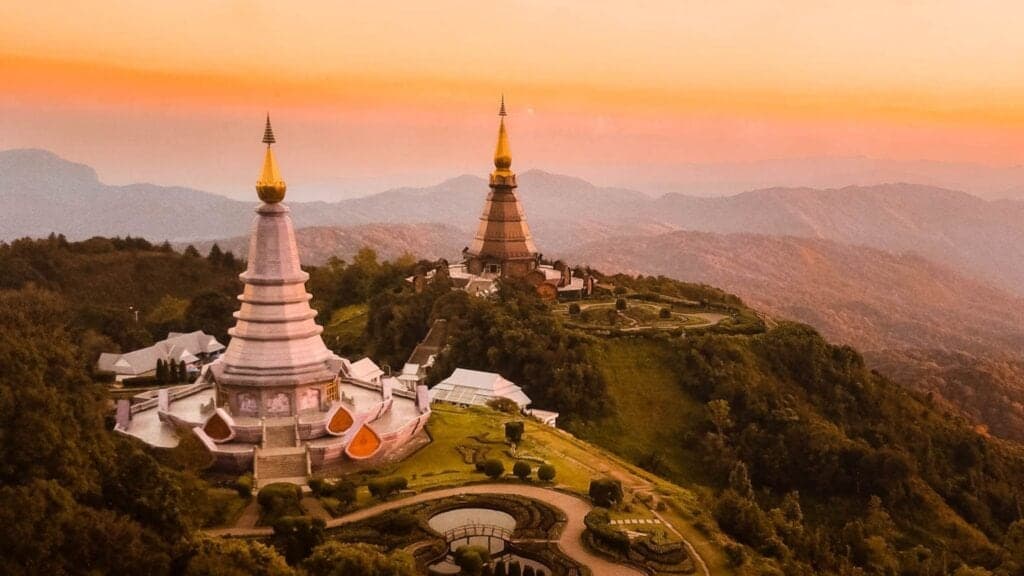
Hill-tribe trekking from Chiang Mai is still worth doing in 2026 — if you pick a small operator that pays the village directly, keeps groups under eight, and skips the long-neck Kayan villages entirely. The 2-day, 1-night trek to a Karen, Lahu or Hmong community is the sweet-spot product. Day treks rush the village stop. 3-day treks pad the second day. If you want forest trekking with the proper overnight, our 2-day Doi Inthanon trekking and sunrise trip is the closest match; for a single hard day on the trail the Doi Inthanon and Kew Mae Pan nature trail trek is the day-trek option. Below is the operator-side filter we use ourselves.
Why does hill-tribe trekking get an "ethics fail" reputation?
Because for two decades the dominant product was a "tribal zoo" day-trip to drive-through villages, with payments captured by operators and very little reaching the families being visited.
The hill-tribe trek product was invented in Chiang Mai in the 1970s. By the 2000s, mass-market operators had standardised a formula: 30-tourist minibus, a hard 4-hour hike, a 20-minute village stop for photos and to buy "handicrafts" (often imported), an elephant bath, and back to the city. The villagers in this model received roughly 5 to 10% of the per-head fare.
Two things changed in the last decade:
- A small cluster of operators (us, a handful of community-based projects, and a few guide cooperatives in Mae Hong Son) restructured. Pay-the-village-direct, small groups, longer stays, no performative shows.
- The long-neck Kayan visit was called out by Amnesty International and other rights groups as exploitative. Most operators with real ethics chops dropped Kayan village stops by 2018. Some never have.
The product still has the legacy reputation, fairly. The good operators are now the minority, and travellers have to filter for them.
How do I tell an ethical operator from a "tribal zoo" operator?
Five questions. The honest operator answers them in two minutes. The dishonest one stalls or changes the subject.
The answers we'd accept from a good operator:
- "Roughly 30 to 40% of the trek fee covers village host payments, meals, and direct contribution. Happy to show you the breakdown."
- "It's a real family home — Karen, Lahu, Hmong, depending on the route. You'll share dinner with the host."
- "Maximum 8. We don't run mixed-group treks."
- "No. We stopped visiting Kayan settlements in 2018."
- "We do an optional elephant half-day with a camp on the chained-free list — Elephant Nature Park's smaller sister projects, or independently audited camps. Riding camps are not on our roster."
Anything else and the operator's ethics are negotiable.
Which tribes can I realistically visit from Chiang Mai?
Karen, Lahu, Hmong, and Lisu are the main four. Each has a different cultural posture toward tourism.
The "hill tribes" label is itself contested — these are six or seven distinct ethnic groups with different languages, religions, dress, and farming practices. From Chiang Mai's day-trip and 2-day-trek radius:
- Karen (Kayaw, Sgaw, Pwo). The largest group, Theravada Buddhist and animist branches, traditional weavers. Most ethical trekking villages are Karen. Tourism revenue is significant but not the only income.
- Lahu. Animist, swidden farmers, distinct red-and-black dress. Smaller villages, often higher altitude. Lahu villages tend to be quieter on the trek circuit.
- Hmong. Animist and Christian branches, originally from southern China. Hmong villages closer to Chiang Mai (like Doi Pui) are tourist-heavy. Further north, away from the day-trip radius, the villages function more normally.
- Lisu. Smaller population, Tibeto-Burman language family. Lisu villages are typically the most performative on the day-trek circuit, including dance shows that locals describe as adapted for tourists.
The Kayan (long-neck) are technically Karenni, not Karen. They are a refugee population. We don't include them in the roster above because we don't visit them.
What does a 2-day, 1-night trek actually look like?
Day 1: 09:00 pickup, 90-minute drive, 4-hour hike, village arrival mid-afternoon, evening cooked by host family. Day 2: morning hike, lunch, songthaew back to Chiang Mai by 16:00.
| Trek length | Hike distance (total) | Village time | What you get | Typical price (per pax) |
|---|---|---|---|---|
| Day trek | 8–12 km | 20–60 minutes | Hike + brief village stop | ฿1,200–1,800 |
| 2-day, 1-night | 12–18 km | 16–20 hours | Hike + overnight in family home | ฿3,000–4,500 |
| 3-day, 2-night | 18–28 km | 30+ hours, two villages | Hike + two communities | ฿4,500–6,500 |
The 2-day, 1-night sits in the sweet spot. Day 1's hike is enough that you arrive in the village hungry and ready to settle. The overnight is where the actual exchange happens — sharing dinner, sitting around the fire, the host's kids being curious about your phone. Day 2's hike is shorter so you arrive back at the city not destroyed.
The 3-day, 2-night adds a second village but most travellers tell us day 3 feels redundant. The novelty of village life is largely absorbed by day 2. Skip unless you're a slow-traveller type who really wants more.
What about long-neck villages — why do you keep saying don't go?
Because the people in those villages are stateless refugees who legally cannot work, and their income depends on tourists paying entry fees to be photographed. Walking through is paying for a system that traps them.
This is the most uncomfortable section of the post so we want to be direct about it. The Kayan refugees who fled the Myanmar civil war in the 1980s and 1990s settled in border provinces (mostly Mae Hong Son, some in Chiang Rai). Many lack Thai citizenship and the work rights it would confer. The provincial authorities allowed the establishment of "long-neck villages" near tourist routes where Kayan families could collect entry fees from visitors.
The result is something close to what human-rights observers call a "human zoo." Kayan women wear the brass coils, sit and weave, are photographed, sell trinkets. The men have little role in the tourism economy and often leave to seek illegal work elsewhere. Income from a typical village splits between the families and the (Thai) intermediary handling logistics, with the split often weighted away from the families.
Amnesty International, the BBC, and the Thai Burma Border Consortium have all flagged this. The cleaner ethical position is to skip Kayan village visits until Thailand grants the community work rights or citizenship.
If you want to support the community, the better channel is the Thai Burma Border Consortium or similar refugee-support NGOs, not a village entry fee.
What should I pack?
Trail shoes (broken in), a fleece, a head torch, a 2L water bottle, mosquito repellent, basic first-aid, and a small gift if you want to bring one.
Packing for a 2-day trek in detail:
- Shoes. Trail running shoes or light boots, broken in. New shoes will blister you in 4 km. Sandals are not viable.
- Clothing. Quick-dry trousers (no jeans). Two T-shirts. A fleece or light jacket — village nights in December are properly cold at altitude.
- Sleeping. Provided by most operators. Bring a sleep-sheet if you're particular.
- Water. 2 litres minimum. Refill at the village (most use spring-fed taps that are fine; ask your guide).
- Light. A head torch — Karen villages don't have street lighting and the outhouse is 30 metres from the sleeping building.
- Bug spray. Mosquitoes are present October to January at altitude but not bad.
- A small gift. Optional. A pack of pens or a notebook for the host kids is fine. Don't bring sweets. Don't hand cash to children.
How does the elephant question fit into this?
Many trek packages bundle an elephant half-day. That elephant camp choice is independent of the trek ethics. Vet it separately.
This is one of the under-explained traps. An operator can run a properly ethical Karen-village trek and then bundle an unethical elephant camp on day 2 for the half-day add-on. The combined package gets called "ethical trekking" because the trek part is fine.
The check is the same one we use for any elephant booking. Ask: can guests ride the elephants? Are there chains or hooks visible? Are there shows or paint-the-elephant activities? If any of those is a yes, it's not a sanctuary, regardless of what the camp calls itself.
The best operators (us included) refuse to bundle camps that fail those tests, even when the camp is geographically convenient for the trek route. If a trek package's price seems unusually low and the elephant camp's name isn't disclosed in advance, that's worth a question. The camp we use for the half-day add-on is our Karen Hill Tribe elephant sanctuary day, where guests feed and walk with the herd and there is no riding.
What's the operator-side reality on village relationships?
The good operators have 10 to 20 year relationships with their host villages. The bad operators rotate villages based on commission deals. You can feel the difference in 10 minutes on arrival.
The Karen host families on our roster have worked with the same handful of operators for over a decade. The hosts know the guide. The guide knows the kids. The food on the first night is normal village food the host eats anyway, not a performative spread. When the operator-village relationship is solid, the visit feels like staying with a distant family acquaintance.
Conversely, when the operator is using a new village because they could get a cheaper deal, the dynamics show. The host stays separate. The food is a generic curry. The "cultural performance" is rehearsed and brief. Two trek operators in the same hour can deliver these two completely different experiences from the same booking page.
How does this compare with what Viator and GetYourGuide sell?
Marketplace trek listings on Viator and GetYourGuide skew toward large-group day treks. Some operator-direct ethical options exist, but they're harder to find and 20 to 30% more expensive due to commission.
The marketplace product is the legacy "tribal zoo" formula at scale. Browse Chiang Mai trekking listings and most of the top results have 15-30 group size, mid-range pricing, and minimal disclosure on village relationships. A handful of ethical operators do list on those platforms but they're swamped by listings.
If you want the marketplace convenience (instant book, English call centre, chargeback rights), filter by group size first — anything over 8 is almost always the legacy product. We've written a longer breakdown on Viator alternatives for Chiang Mai covering the trade-offs.
Book the 2-day Doi Inthanon trek and sunriseForest trail, overnight, small groups, operator-directInternal reading worth your time:
- Ethical elephant sanctuary evaluation
- Mae Hong Son loop — by motorbike or hired car
- Best Viator alternatives for Chiang Mai
- Is Chiang Mai worth visiting in 2026?
For background on the Kayan refugee situation, Amnesty International's Thailand page and the Thai Burma Border Consortium (both accessed 2026-05-25) are the substantive sources.
Frequently asked questions
Is hill-tribe tourism still ethical in 2026?
It can be, but the operator choice does almost all the work. Ethical operators pay village hosts directly, sleep in village homes with consent, share menus that include normal village food rather than performative 'tribal' set-pieces, and keep group sizes under eight. Unethical operators run drive-through 'human zoo' visits to long-neck Kayan villages for photos. The same trek itinerary at the same price point can be either, depending on operator. Always ask who in the village receives payment.
What is the long-neck village problem?
The Kayan (sometimes called Padaung) people fled Myanmar conflict in the 1980s and 1990s. Many of the women wear brass coil necklaces. Some Kayan refugees in Thailand live in semi-permanent settlements where they cannot legally work or own land, and their primary income is tourists paying ฿200 to ฿500 entry to walk through and photograph them. Human-rights groups have criticised these arrangements for decades. The ethical move is to skip Kayan village visits entirely until the legal situation changes.
Is a day trek or a 2-day, 1-night trek better?
2-day if you genuinely want to meet villages. The day trek tends to be a hard hike with a 20-minute photo stop at one village — not much exchange happens. The 2-day, 1-night trek includes an overnight in a Karen or Lahu village home, evening meal cooked by the host family, and morning conversation. Logistics are easier than people expect — sleeping bags provided, basic toilet, no shower (a quick wash from a bucket). 3-day treks add a second village but most travellers find day 3 surplus.
What's the best month for hill-tribe trekking?
Mid-November to early February is the sweet spot. Daytime temperatures 22 to 28°C, low humidity, dry trails. December and January nights in the villages are cool — 8 to 14°C at altitude — so pack a fleece. March and April are technically possible but the burning-season air degrades visibility and irritates respiratory systems. June to October is rainy season, trails get slippery, and several villages become harder to reach. November and January are the operator's preferred months too.
How fit do I need to be?
Moderate. A 2-day trek typically covers 12 to 18 km total over hilly forest paths with some 200 to 400 metre elevation gains. If you can walk a hilly 8 km Sunday hike without distress, you'll cope. The bigger comfort variable is footwear — proper trail shoes or boots, broken in. The 'easy' marketed treks shorten distance but tend to include a more performative village experience, which is worse on ethics. The medium-difficulty operator-direct treks are usually the best value.
Should I tip the village hosts directly?
Yes, modestly. ฿100 to ฿200 per traveller per night, given quietly to the host adult, is the standard. Don't give cash to children — give a useful gift if you've brought one (school stationery, basic medicines from your kit). The bigger ethical contribution is the operator-fee structure. Ask before booking what percentage of your trek fee goes to the village. Operators who can't answer with a clear breakdown are usually the ones keeping most of it.
Frequently asked questions
Is hill-tribe tourism still ethical in 2026?
It can be, but the operator choice does almost all the work. Ethical operators pay village hosts directly, sleep in village homes with consent, share menus that include normal village food rather than performative 'tribal' set-pieces, and keep group sizes under eight. Unethical operators run drive-through 'human zoo' visits to long-neck Kayan villages for photos. The same trek itinerary at the same price point can be either, depending on operator. Always ask who in the village receives payment.
What is the long-neck village problem?
The Kayan (sometimes called Padaung) people fled Myanmar conflict in the 1980s and 1990s. Many of the women wear brass coil necklaces. Some Kayan refugees in Thailand live in semi-permanent settlements where they cannot legally work or own land, and their primary income is tourists paying ฿200 to ฿500 entry to walk through and photograph them. Human-rights groups have criticised these arrangements for decades. The ethical move is to skip Kayan village visits entirely until the legal situation changes.
Is a day trek or a 2-day, 1-night trek better?
2-day if you genuinely want to meet villages. The day trek tends to be a hard hike with a 20-minute photo stop at one village — not much exchange happens. The 2-day, 1-night trek includes an overnight in a Karen or Lahu village home, evening meal cooked by the host family, and morning conversation. Logistics are easier than people expect — sleeping bags provided, basic toilet, no shower (a quick wash from a bucket). 3-day treks add a second village but most travellers find day 3 surplus.
What's the best month for hill-tribe trekking?
Mid-November to early February is the sweet spot. Daytime temperatures 22 to 28°C, low humidity, dry trails. December and January nights in the villages are cool — 8 to 14°C at altitude — so pack a fleece. March and April are technically possible but the burning-season air degrades visibility and irritates respiratory systems. June to October is rainy season, trails get slippery, and several villages become harder to reach. November and January are the operator's preferred months too.
How fit do I need to be?
Moderate. A 2-day trek typically covers 12 to 18 km total over hilly forest paths with some 200 to 400 metre elevation gains. If you can walk a hilly 8 km Sunday hike without distress, you'll cope. The bigger comfort variable is footwear — proper trail shoes or boots, broken in. The 'easy' marketed treks shorten distance but tend to include a more performative village experience, which is worse on ethics. The medium-difficulty operator-direct treks are usually the best value.
Should I tip the village hosts directly?
Yes, modestly. ฿100 to ฿200 per traveller per night, given quietly to the host adult, is the standard. Don't give cash to children — give a useful gift if you've brought one (school stationery, basic medicines from your kit). The bigger ethical contribution is the operator-fee structure. Ask before booking what percentage of your trek fee goes to the village. Operators who can't answer with a clear breakdown are usually the ones keeping most of it.