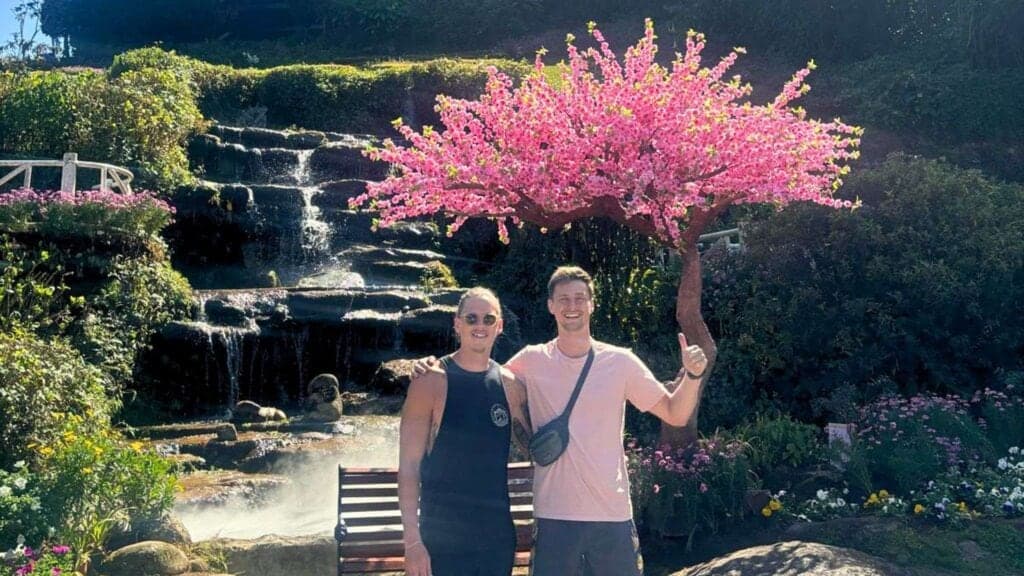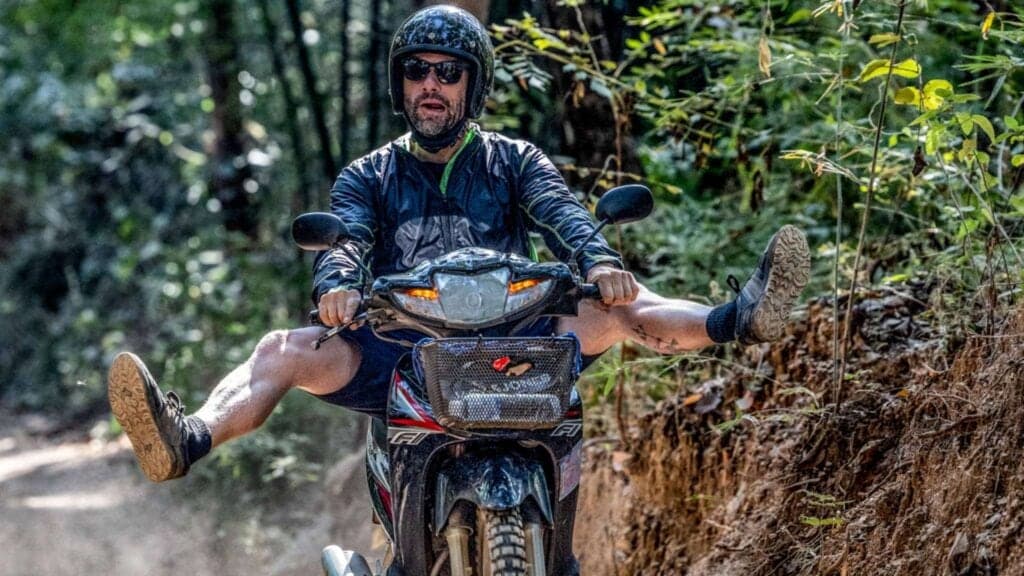
TL;DR — the Mae Hong Son loop is a 600km, 1,864-corner mountain road trip starting and ending in Chiang Mai, passing through Pai, Mae Hong Son town, Khun Yuam, and Mae Sariang. Do it in five days anticlockwise on a 150–250cc bike or small SUV. Three days is too tight unless you're an experienced rider willing to skip the towns. Ride only in daylight, get the licence and insurance sorted before you sign the rental, and stay outside the noisy parts of Pai.
What exactly is the Mae Hong Son loop?
A 600km mountain circuit through Thailand's northwestern Mae Hong Son province, running anticlockwise Chiang Mai → Pai → Mae Hong Son town → Khun Yuam → Mae Sariang → Hot → Chiang Mai. The 1,864-corner number on every Pai coffee mug refers specifically to the Chiang Mai–Pai segment.
The loop was paved into its current form in the 1970s as Route 1095 (Chiang Mai to Mae Hong Son via Pai) connected with Route 108 (Mae Hong Son to Chiang Mai via Mae Sariang and Hot). The road climbs from Chiang Mai's 300m elevation to over 1,500m at the highest passes, crosses dozens of hill-tribe villages, and follows ridge-lines with viewpoints over Myanmar visible to the west on clear days.
It's the most-Googled Thai road trip outside of the southern beach circuits, and the most-injured. The 1,864-corner count is real and the road surface is genuinely good. The danger is fatigue, weather, and rented bikes maintained badly.
How long should the loop actually take?
Five days is the right answer for first-timers and for anyone who wants to see the towns. Three days is doable only by experienced riders accepting that they'll skip most of the journey's character.
| Length | Daily riding hours | Towns properly explored | Recommended for |
|---|---|---|---|
| 3 days | 6–7 hours | Pai (overnight only), Mae Hong Son (overnight only) | Experienced riders, time-constrained |
| 4 days | 5 hours | Pai, Mae Hong Son, one of Khun Yuam or Mae Sariang | Mixed comfort, balanced |
| 5 days | 3–4 hours | Pai, Mae Hong Son, Khun Yuam, Mae Sariang | First-timers, photographers, families |
| 7+ days | 2–3 hours | All towns plus side trips (Cave Lod, Su Tong Pae bridge) | Slow travel, multiple village stays |
The math behind why three days is tight: 600km divided by three days is 200km/day. On mountain roads with 1,864 corners and elevation changes of 1,200m, average speed is 35–45 km/h including stops. That's 4.5–6 hours of actual riding time daily, plus fuel stops, food, and the photo-stops that justify being on the road in the first place. By day three you'll be fried.
What's the right vehicle for the loop?
A 150–250cc semi-automatic motorbike for experienced riders, a small SUV (Toyota Yaris Cross, Honda HR-V) for everyone else. A 110cc city scooter is not appropriate for the loop.
Bike-specific advice: rent from a shop that issues a written inspection sheet (Aya Service in Chiang Mai is the most-recommended). Refuse any bike with bald tyres, leaking forks, or fewer than two functioning indicators. The bikes most Pai shops issue casually to tourists are not the bikes that should be doing this loop.
Car advice: the road is paved throughout but the curves are tight. A subcompact SUV handles better than a sedan because the higher driving position helps visibility around blind corners. Automatic transmission strongly preferred — manual is exhausting after the 300th corner.
Which direction — clockwise or anticlockwise?
Anticlockwise. Chiang Mai → Pai → Mae Hong Son → Khun Yuam → Mae Sariang → Hot → Chiang Mai. Steepest climbs come early in the day when you're fresh; cliffside positioning on most corners is safer.
The reasoning is unromantic but solid: the Pai–Mae Hong Son segment has the loop's steepest descent (from the Doi Chang pass down to Soppong). Going anticlockwise puts that descent in your morning when concentration is sharp. Going clockwise puts the same descent at the end of your day, when fatigue compounds with the technical difficulty.
The corner-positioning advantage is subtler. On most of the loop's outside-cliff corners, anticlockwise traffic rides closer to the cliff face than the drop, while clockwise traffic rides closer to the drop. If you fade or misjudge a corner, scraping the cliff is recoverable. Going over the edge is not.
What's the right route plan day-by-day for five days?
Five-day anticlockwise: Day 1 Chiang Mai → Pai (130km, 4h). Day 2 Pai → Mae Hong Son (110km, 3.5h). Day 3 Mae Hong Son → Khun Yuam (70km, 2.5h). Day 4 Khun Yuam → Mae Sariang (90km, 3h). Day 5 Mae Sariang → Chiang Mai via Hot (200km, 4.5h).
The flow has structural logic. Day 1's Chiang Mai–Pai run is the most-corner-dense and most-photographed section, so you ride it fresh. Day 2 is a half-day to Mae Hong Son with afternoon time for the lake and the Burmese-style temple at Wat Chong Klang. Day 3 is the slow day — Khun Yuam is sleepy and the afternoon is for the WWII Japanese-era memorial and walking the village. Day 4 lets you stop at Mae Sariang's lakeside resorts mid-afternoon. Day 5 is the long return, mostly straight highway via Hot.
Side trips worth working in: Tham Lod cave near Soppong (one hour off the loop, takes 2–3 hours total), the Su Tong Pae bamboo bridge outside Mae Hong Son (30 minutes, sunrise is magical), and the Mae Surin waterfall east of Khun Yuam (90 minutes round trip).
Where should I stay overnight?
Pai night one outside the Walking Street area (1–2km out, ฿800–฿1,500). Mae Hong Son near the lake (฿1,200–฿2,500). Khun Yuam small homestays (฿500–฿1,800). Mae Sariang lakeside resorts (฿1,000–฿2,000).
Pai-specific note: the Walking Street is loud past midnight and the central guesthouses charge a premium for the noise. Stay 1–2km out (Reverie Siam, Hotel des Artists, or the smaller homestays toward Pam Bok waterfall) for a quieter night and better value. You can walk or scooter into the centre in 5 minutes.
Mae Hong Son: the lakeside guesthouses on Khunlumprapas Road offer the lake-and-temple view that justifies coming here. Avoid the bus-station-adjacent budget guesthouses unless you're truly on a backpacker budget — the difference between ฿600 and ฿1,200 is the difference between "passable" and "actually pleasant."
What about the burning season?
February through April the loop is rideable but visibility drops to under 1km on bad days and the famous viewpoints are smoke-grey. June through September is rideable but rains turn corners slick. Best riding season is November to January — cool, clear, dry.
The burning season is the single biggest reason to time the loop carefully. Northern Thailand's slash-and-burn agriculture combined with seasonal forest fires push PM2.5 levels in Mae Hong Son province to 200–400 micrograms during peak weeks — well above WHO's 24-hour guideline of 15 micrograms. The road is still open but the loop's signature experience (mountain views, golden light, photographs) collapses to "you're driving through a haze and your throat hurts."
For burning-season trip planning context, our burning season guide covers timing, mask choices, and air-quality forecasting tools.
What gear and prep do I actually need?
A real helmet (not the open-face shell most shops issue), long pants, real shoes (not flip-flops), 1.5L water per riding day, sunscreen, and a phone mount with offline maps downloaded. For bike riders add gloves and a light rain jacket.
Helmet specifically: bring your own or pay for an upgrade. The half-shell helmets most Thai rental shops include offer almost no protection. Aya Service rents full-face helmets for ฿50/day — money well spent. If you're flying in for this trip, packing your own helmet is the single best gear decision.
Phone: download Google Maps offline tiles for the entire loop before leaving Chiang Mai. Mobile signal drops between Pai and Mae Hong Son and again on the Khun Yuam descent. Maps.me works as a backup. A waterproof phone mount with USB charging from the bike's electrical system is the difference between "I know where I am" and "I think we're lost."
Is the loop right for couples and families?
Yes for couples comfortable with mountain roads in either a car or two-up on a bike. Not really for families with children under about 10 — the ride times and the lack of kid-friendly activities make it tedious for small humans.
For couples: the car option is the under-recognised choice. Renting a small SUV in Chiang Mai (Sixt, Avis, or local agency Budget Catcher) for the five-day loop runs ฿2,500–฿4,000/day. That's roughly the same as two bike rentals plus the helmet upgrades. The car removes weather risk, luggage stress, and the spine-jarring two-up experience that turns some couples off mountain riding by hour three.
For families: the towns have limited child-specific entertainment and the daily riding times push children past patience by day two. Pai has good family resorts and could be a base for a Pai-only three-day trip (skipping the full loop). The full loop is better for adults.
Should you go independently or with a guided tour?
Independent for confident riders or drivers with mountain experience. Guided for everyone else — the safety upside of an experienced lead rider plus a support vehicle is worth the cost.
Guided options include small-group bike tours (4–8 riders with a lead rider familiar with the road and a support vehicle carrying luggage) and private vehicle tours (driver-guide, you ride or sit). Prices range ฿8,000–฿25,000 per person depending on group size and length.
If you'd like a guided version of the loop with our roster of drivers and a support vehicle, our Chiang Mai adventure tours page lists current options. The guided route covers the same loop with built-in flexibility for weather and stamina. If you want a shorter taste of the riding before committing to the full loop, the Chiang Mai scooter adventure river cruise runs a guided half-day on quieter back roads, and the two-day Doi Inthanon trekking and sunrise tour is a good way to test your appetite for mountain overnights without the road risk.
The bottom line on the Mae Hong Son loop
Five days, anticlockwise, on a 150–250cc bike or small SUV. November to January for clear weather. Daylight riding only. Real helmet, real licence, real insurance. The trip is genuinely one of Southeast Asia's great road trips when done right, and one of its most-injuring when done wrong.
If you're committed and properly prepared, the loop delivers viewpoints, villages, and 1,864 corners of mountain road that few other Thai itineraries match. If you're casually curious, take a two-day Pai trip instead and save the full loop for a return visit.
Book the Chiang Mai scooter adventureGuided half-day on quiet back roads with hotel pickupInternal reading worth your time:
- Pai from Chiang Mai: how to get there and what to do
- Chiang Mai scooter rental guide: shops, prices, what to inspect
- Burning season in Chiang Mai: when, how bad, and workarounds
- WHO Thailand road safety country profile (external)
Frequently asked questions
Should I do the Mae Hong Son loop in 3 days or 5 days?
Five days if you've never ridden Thailand's mountain roads or want to actually see the towns. Three days only if you're already a confident rider and willing to skip the village detours that justify the trip. The full loop covers about 600km with 1,864 corners (the famous figure on every coffee mug in Pai). At 3-day pace, you'll spend 6–7 hours on the bike daily and arrive each night too tired to enjoy where you've stopped. At 5-day pace, you ride 3–4 hours daily and have afternoons for waterfalls, viewpoints, and the actual towns. Five days is the right answer unless time is rigid.
Is the scooter or a car better for the Mae Hong Son loop?
For experienced riders, a 150–250cc semi-automatic motorbike is the iconic and most rewarding choice. For mixed-experience couples or families, rent a small SUV — the curves are easier on the spine and you can carry luggage. A 110cc city scooter is not appropriate for the loop; the elevation gain and 1,864 corners will overheat the engine and exhaust the rider. If you've ridden mountain roads before and have a Thai or international motorcycle licence (legally required for anything over 50cc), the bike wins. Otherwise, take the car.
Is the Mae Hong Son loop dangerous?
It has the highest motorcycle accident rate of any Thai road trip among foreign tourists. The dangers are real but specific: the descent from Mae Hong Son toward Khun Yuam at night, fatigue on day three of an aggressive itinerary, and the rented bikes most shops issue with worn tyres or weak brakes. None of those are unavoidable. Ride only in daylight, take five days not three, inspect the bike before you sign, wear a real helmet not the open-face shells most shops hand out, and check travel insurance covers motorbikes (most policies don't unless you have a licence).
Is it better to ride clockwise or anticlockwise?
Anticlockwise — Chiang Mai to Pai, then west to Mae Hong Son, south to Khun Yuam, and back via Mae Sariang. The anticlockwise direction puts the steepest climbs in the morning when you're fresh, keeps you on the inside of most mountain corners (closer to the cliff than the drop), and finishes with the more relaxed Mae Sariang–Hot stretch on day four or five. Clockwise puts the toughest section (Khun Yuam to Mae Hong Son) at the end of a long day, which is when most accidents happen. Anticlockwise is the universal local recommendation.
Where should I stay overnight on the loop?
For a five-day loop: night one in Pai (skip the noisy Walking Street guesthouses, stay 1–2km out for ฿800–฿1,500), night two in Mae Hong Son town near the lake (฿1,200–฿2,500), night three in Khun Yuam (small homestays from ฿500 or one boutique guesthouse at ฿1,800), and night four in Mae Sariang (lakeside resorts ฿1,000–฿2,000). For three days: skip Khun Yuam and Mae Sariang, double up in Pai or Mae Hong Son. The village stays are the journey's actual character.
Do I need a special licence or insurance?
Legally yes. Thailand requires a motorcycle endorsement on your home licence plus an International Driving Permit with the motorcycle category endorsed, or a Thai motorcycle licence. Most rental shops will rent without checking, but if you crash without proper licence your travel insurance is void in most policies. Police checkpoints between Pai and Mae Hong Son do random stops and fine unlicenced riders ฿500–฿2,000. Insurance: confirm in writing your policy covers Thailand, motorcycles, and engines over 50cc. Most generic travel policies exclude all three.
Frequently asked questions
Should I do the Mae Hong Son loop in 3 days or 5 days?
Five days if you've never ridden Thailand's mountain roads or want to actually see the towns. Three days only if you're already a confident rider and willing to skip the village detours that justify the trip. The full loop covers about 600km with 1,864 corners (the famous figure on every coffee mug in Pai). At 3-day pace, you'll spend 6–7 hours on the bike daily and arrive each night too tired to enjoy where you've stopped. At 5-day pace, you ride 3–4 hours daily and have afternoons for waterfalls, viewpoints, and the actual towns. Five days is the right answer unless time is rigid.
Is the scooter or a car better for the Mae Hong Son loop?
For experienced riders, a 150–250cc semi-automatic motorbike is the iconic and most rewarding choice. For mixed-experience couples or families, rent a small SUV — the curves are easier on the spine and you can carry luggage. A 110cc city scooter is not appropriate for the loop; the elevation gain and 1,864 corners will overheat the engine and exhaust the rider. If you've ridden mountain roads before and have a Thai or international motorcycle licence (legally required for anything over 50cc), the bike wins. Otherwise, take the car.
Is the Mae Hong Son loop dangerous?
It has the highest motorcycle accident rate of any Thai road trip among foreign tourists. The dangers are real but specific: the descent from Mae Hong Son toward Khun Yuam at night, fatigue on day three of an aggressive itinerary, and the rented bikes most shops issue with worn tyres or weak brakes. None of those are unavoidable. Ride only in daylight, take five days not three, inspect the bike before you sign, wear a real helmet not the open-face shells most shops hand out, and check travel insurance covers motorbikes (most policies don't unless you have a licence).
Is it better to ride clockwise or anticlockwise?
Anticlockwise — Chiang Mai to Pai, then west to Mae Hong Son, south to Khun Yuam, and back via Mae Sariang. The anticlockwise direction puts the steepest climbs in the morning when you're fresh, keeps you on the inside of most mountain corners (closer to the cliff than the drop), and finishes with the more relaxed Mae Sariang–Hot stretch on day four or five. Clockwise puts the toughest section (Khun Yuam to Mae Hong Son) at the end of a long day, which is when most accidents happen. Anticlockwise is the universal local recommendation.
Where should I stay overnight on the loop?
For a five-day loop: night one in Pai (skip the noisy Walking Street guesthouses, stay 1–2km out for ฿800–฿1,500), night two in Mae Hong Son town near the lake (฿1,200–฿2,500), night three in Khun Yuam (small homestays from ฿500 or one boutique guesthouse at ฿1,800), and night four in Mae Sariang (lakeside resorts ฿1,000–฿2,000). For three days: skip Khun Yuam and Mae Sariang, double up in Pai or Mae Hong Son. The village stays are the journey's actual character.
Do I need a special licence or insurance?
Legally yes. Thailand requires a motorcycle endorsement on your home licence plus an International Driving Permit with the motorcycle category endorsed, or a Thai motorcycle licence. Most rental shops will rent without checking, but if you crash without proper licence your travel insurance is void in most policies. Police checkpoints between Pai and Mae Hong Son do random stops and fine unlicenced riders ฿500–฿2,000. Insurance: confirm in writing your policy covers Thailand, motorcycles, and engines over 50cc. Most generic travel policies exclude all three.