TL;DR — a 3-day Chiang Mai itinerary that covers the genuine highlights: Day 1 Doi Suthep at sunrise plus three Old City temples plus night-market dinner. Day 2 ethical elephant sanctuary day-trip. Day 3 Thai cooking class plus Sunday Walking Street if your timing aligns, otherwise Saturday Walking Street or independent food walk. Stay inside the Old City. Three days is the minimum for the headline experiences; five days is the better answer if you can swing it.
Is three days really enough for Chiang Mai?
Three days covers the headline experiences — Doi Suthep, an elephant sanctuary, the Old City temples, a cooking class, and a Walking Street — but it doesn't allow Pai, the Mae Hong Son loop, Chiang Rai day trips, or multi-day trekking. Expectations matter. If you've come to "see" Chiang Mai, three days work. If you've come to understand it, you'll wish you'd booked five.
The pace is tight but not exhausting if structured well. The mistake most rushed itineraries make is cramming a Chiang Rai day trip into three days, which means 11 hours on the road over two days and not enough time to actually be in Chiang Mai. We'd skip Chiang Rai entirely on a 3-day trip and save it for a longer return visit.
If you have flexibility, our how many days in Chiang Mai breakdown covers the 3-day, 5-day, 7-day, and 14-day trade-offs.
What does Day 1 look like — temples and arrival day?
Doi Suthep at sunrise (06:30 arrival), brunch back in town, three Old City temples in the afternoon, dinner at Chang Phueak Gate market. Recovery-from-flight day that still hits the city's most-photographed sites.
The Doi Suthep sunrise version is the cheat code. The temple opens at 06:00, the Naga staircase is empty until about 08:00, and the dawn light over the city below is the trip's defining photograph. If you'd rather not arrange the early Grab yourself, our Half Day Doi Suthep Temple and Hmong village tour covers the mountain leg with hotel pickup. The Grab fare from the Old City is ฿250–฿350 one-way; arrange for the same driver to wait 90 minutes for the return (negotiate ฿800–฿1,000 round trip with wait). By 09:00 you're back in the Old City for breakfast and the crowd has just started arriving at Doi Suthep.
| Time | Activity | Notes |
|---|---|---|
| 05:30 | Hotel pickup by pre-arranged Grab | Driver waits 90 min at temple |
| 06:15 | Arrive Doi Suthep base, climb 309 Naga steps | Or use the funicular for ฿20 |
| 06:45–08:30 | Temple visit, sunrise, photography | Dress code applies |
| 09:00 | Back at hotel, breakfast | Aroon Rai or hotel breakfast |
| 11:00 | Wat Phra Singh | Don't miss the viharn lai kham behind the main hall |
| 12:30 | Lunch — Khao Soi Khun Yai or Cowboy Hat Lady | Closest specialty stalls |
| 14:00 | Wat Chedi Luang | Walk 600m east from Wat Phra Singh |
| 15:30 | Wat Phan Tao | Wooden Lan Na viharn next to Chedi Luang |
| 17:00 | Back to hotel, rest | Recovery before evening |
| 18:30 | Chang Phueak Gate market dinner | Khao kha moo, sai ua, mango sticky rice |
| 20:30 | Optional: Three Kings Monument or evening market walk | Early night recommended |
If you're arriving on a morning flight Day 1 rather than Day 0, skip the Doi Suthep sunrise and do it as a late-afternoon visit (15:00 arrival, 17:30 leave). The view is great either time; sunrise is just less crowded.
What does Day 2 look like — the elephant sanctuary day?
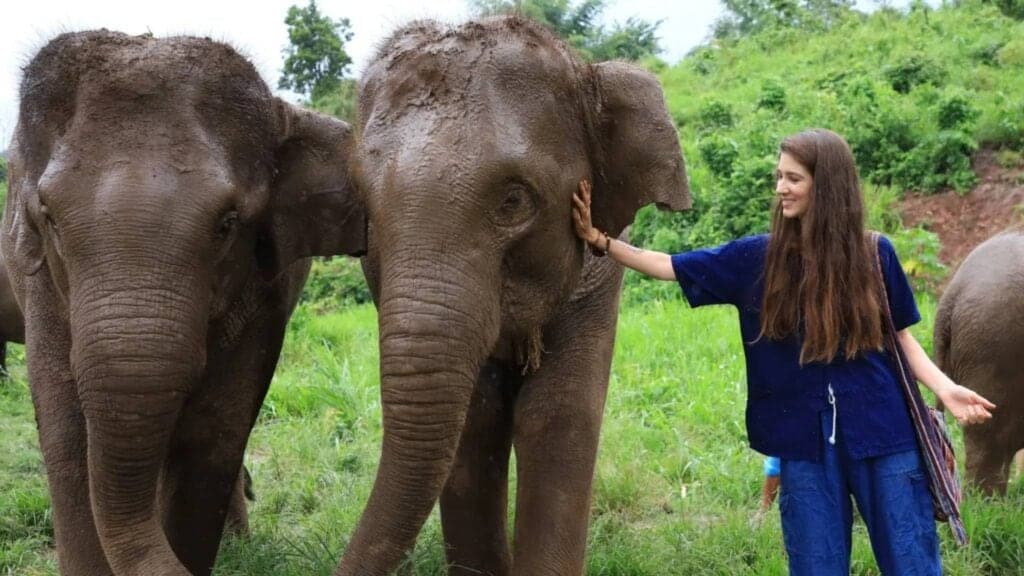
Full-day ethical elephant sanctuary trip, typically 08:00–17:00. The camp is 60–90 minutes outside the city. Lunch is included. Day 2 is the trip's emotional centrepiece for most visitors.
The day pattern is standard across most ethical sanctuaries: hotel pickup 07:30–08:30, drive to camp arriving 09:30–10:00, observation and feeding session 10:00–11:30, lunch 12:00–13:00, river bathing or jungle walk 13:30–15:00, return drive 15:00–17:00. Most camps include the lunch, fruit-feeding, and bathing in the published price; some charge extra for "mahout training" experiences which we'd skip — they cross into petting-zoo territory.
The ethical-camp screening question deserves real attention because the spectrum is wide and rebranded riding camps still use the word "sanctuary" in their listings. Our ethical elephant sanctuaries guide walks through the 3-Question Test in detail. For a day that passes the test, the Karen Hill Tribe elephant sanctuary experience is our standard Day 2 pick, or compare the full range on the elephant tours page.
What does Day 3 look like — cooking class and Walking Street?
Morning Thai cooking class (08:30–13:00 or 09:00–14:00), early-afternoon free time, evening Sunday Walking Street if it's Sunday. Saturday Walking Street if Saturday. Independent food walk and quiet evening if Day 3 is any other day.
The cooking class is the third pillar of the headline Chiang Mai experience for most visitors. A half-day Thai cooking class at Siam Garden is a reliable Day 3 morning option; the food tours page lists the alternatives. The typical class includes a morning market visit (genuine local market, not a tourist demonstration), 4–5 dishes cooked by you with instructor support, lunch eating what you've cooked, and a printed recipe booklet. Half-day classes (4–5 hours) cost ฿900–฿1,400. Full-day options exist but the half-day delivers most of the value.
Walking Street logistics:
- Sunday Walking Street. Ratchadamnoen Road from Thapae Gate west to Wat Phra Singh. Setup 17:00, peak 19:00–22:00, dismantle 23:00. Best food row on the road's middle section.
- Saturday Walking Street. Wualai Road south of the moat. Smaller than Sunday but more focused on traditional crafts. Setup 17:00, peak 18:30–21:30.
- Mid-week Day 3. Skip the night market route — do an independent food walk hitting 3–4 stalls from our street food guide.
What if my Day 3 includes evening departure?
Cooking class morning, light afternoon (one final temple or a Nimmanhaemin coffee), taxi at 16:30–17:00 for an 18:30+ flight. The cooking class fits the morning-departure constraint better than any other Day 3 activity.
For domestic flights to Bangkok, 90 minutes' airport lead is generous. For international flights, 2 hours. Chiang Mai International is small enough that security is rarely the bottleneck.
What should I skip on a 3-day trip?
Skip Chiang Rai (full day each way, eats two days). Skip Pai (3-hour drive, needs overnight). Skip multi-day trekking. Skip ATV adventure parks. Skip ziplining if you'd rather do an elephant sanctuary. Three days isn't enough time to do everything well; cutting is the discipline.
The decision tree for cuts:
- Anything requiring 6+ hours of driving in a day — skip on 3-day trip.
- Anything requiring overnight outside Chiang Mai — skip.
- Anything that duplicates an experience already in the itinerary — second cooking class, second temple-heavy day, second food tour.
- Anything you can do in your home country — fancy international restaurants, mall shopping, generic spas (Thai massage is a different category — keep that).
What to keep instead: a slow morning at a local cafe, a long lunch at a recommended stall, the time to walk back from a temple rather than taxi.
How does the budget look for 3 days?
Tight budget: ฿8,000–฿12,000 per person all-in. Comfortable: ฿15,000–฿20,000. Comfortable-plus: ฿25,000+. Excludes flights to Chiang Mai. Three days is short enough that splurging a bit doesn't break the trip budget.
| Category | Tight budget | Comfortable | Comfortable-plus |
|---|---|---|---|
| Accommodation (3 nights) | ฿2,400 (budget guesthouse) | ฿5,400 (mid-range) | ฿15,000 (4-star) |
| Food and drinks | ฿1,200 (street food) | ฿2,400 (mix street and restaurant) | ฿5,000 (restaurants) |
| Elephant sanctuary | ฿2,100 | ฿2,500 | ฿3,200 (premium) |
| Cooking class | ฿900 | ฿1,200 | ฿1,800 |
| Doi Suthep transport | ฿200 (songthaew) | ฿900 (private Grab) | ฿2,500 (private guide) |
| Local transport (3 days) | ฿300 | ฿900 | ฿1,800 |
| Walking Street souvenir budget | ฿300 | ฿1,000 | ฿2,500 |
| Total per person, 3 days | ~฿7,400 | ~฿14,300 | ~฿31,800 |
The mid-tier budget delivers most of the trip's quality; the high-tier mostly buys hotel comfort which matters less on a 3-day trip than on a longer stay.
What about transport between activities?
Grab and songthaews handle 90%+ of trip logistics. Avoid taxi flag-downs (they invent prices). Avoid scooter rental on a 3-day trip — the time cost of learning isn't worth it for the savings.
Grab is the dominant ride-hail app in Chiang Mai. The interface is familiar (similar to Uber), drivers are accountable, and prices are 20–40% lower than walked-up tuk-tuk or taxi negotiations. Cash and card both work. Typical fares: ฿50–฿80 inside the Old City and immediate surrounds, ฿80–฿150 to Nimmanhaemin or the airport, ฿250–฿350 to Doi Suthep.
Songthaews (the red shared trucks) are the local alternative. Stand on a main road, flag one down, tell the driver your destination, agree the price before getting in. Standard fares are ฿30–฿50 for most short city trips, ฿100–฿150 for longer ones. They share the truck with other passengers, so the route isn't direct.
When in the week should the 3 days fall?
The sweet spot is Saturday–Monday, hitting both Saturday Walking Street and Sunday Walking Street with the elephant sanctuary day on Monday. Avoid Tuesday–Thursday only itineraries that miss both markets.
If your dates are fixed and miss both markets, the Chang Phueak Gate market runs nightly and absorbs the gap. The Saturday and Sunday Walking Streets are larger and more focused on crafts and food, but Chang Phueak alone delivers a decent night-market experience any night of the week.
The bottom line on a 3-day Chiang Mai trip
Day 1 temples, Day 2 elephants, Day 3 cooking class plus a Walking Street if the dates align. Stay inside the Old City, use Grab for most transport, skip Chiang Rai and Pai entirely. Three days is genuinely workable for the headline experiences if you don't try to do everything.
If you have a fourth day, add a half-day cycling tour of the moat ring or a half-day spa-and-coffee morning before flying. If you only have three days, the structure above hits what most first-time visitors most want.
Book the Karen elephant sanctuary dayThe Day 2 centrepiece: ethical camp, lunch included, hotel pickupInternal reading worth your time:
- How many days in Chiang Mai: 3, 5, 7, or 14?
- Chiang Mai airport transfer guide: Grab, songthaew, hotel pickup compared
- Ethical elephant sanctuaries in Chiang Mai: the camp test in detail
- Tourism Authority of Thailand — Chiang Mai itinerary suggestions (external)
Frequently asked questions
Is 3 days enough for Chiang Mai?
For the headline experiences yes; for actually understanding the city no. Three days lets you fit Doi Suthep and the Old City temples, an ethical elephant sanctuary day, and a Thai cooking class plus the Sunday Walking Street. That covers what most first-time visitors most want from Chiang Mai. What three days doesn't allow: Pai, the Mae Hong Son loop, Chiang Rai's White Temple, multi-day trekking, or unhurried evenings in different neighbourhoods. If you can stretch to five or seven days, the trip becomes meaningfully better — but three days is genuinely workable for the highlights.
Where should I stay for a 3-day Chiang Mai trip?
Inside or directly bordering the Old City. The walking access to temples, food, and Sunday Walking Street saves you 30–45 minutes of transit daily compared to staying in Nimmanhaemin or further out. Specifically: the area between Thapae Gate and Wat Phra Singh inside the moat, or just outside Chang Phueak Gate to the north. Budget ฿800–฿2,500 per night for a clean mid-range option with English-speaking reception. Avoid the Night Bazaar area east of the moat (more tourist-priced, less walkable to the temple core), and avoid the far edge of Nimmanhaemin (cooking class and elephant day pickup adds 15 minutes each way).
Which day should the elephant sanctuary be?
Day 2, ideally. Day 1 is the temple-and-arrival day when you're recovering from the flight and want short distances. Day 3 needs to be flexible for departure logistics. Day 2 is the dedicated 'big experience' day — typical sanctuary trips run 08:00–17:00 with the camp 60–90 minutes outside the city, and you want to be fresh and not flying that night. If your flight is morning Day 4, this all works clean. If your flight is evening Day 3, swap the elephant day to Day 3 only if you're confident about the return-to-city timing.
What about departure logistics on Day 3?
Chiang Mai International Airport is 10 minutes from the Old City by Grab (typically ฿80–฿150). Domestic flights to Bangkok take 70 minutes; international flights vary. For a noon flight: have brunch in the Old City, taxi at 10:30, you're at the gate by 11:15. For an evening flight: cooking class in the morning (most run 08:30–13:00 or 09:00–14:00), one final temple or coffee stop, then a 16:30–17:00 taxi for an 18:30 flight. The airport's small enough that 90 minutes' lead time covers domestic departures and 120 minutes is plenty for international.
Frequently asked questions
Is 3 days enough for Chiang Mai?
For the headline experiences yes; for actually understanding the city no. Three days lets you fit Doi Suthep and the Old City temples, an ethical elephant sanctuary day, and a Thai cooking class plus the Sunday Walking Street. That covers what most first-time visitors most want from Chiang Mai. What three days doesn't allow: Pai, the Mae Hong Son loop, Chiang Rai's White Temple, multi-day trekking, or unhurried evenings in different neighbourhoods. If you can stretch to five or seven days, the trip becomes meaningfully better — but three days is genuinely workable for the highlights.
Where should I stay for a 3-day Chiang Mai trip?
Inside or directly bordering the Old City. The walking access to temples, food, and Sunday Walking Street saves you 30–45 minutes of transit daily compared to staying in Nimmanhaemin or further out. Specifically: the area between Thapae Gate and Wat Phra Singh inside the moat, or just outside Chang Phueak Gate to the north. Budget ฿800–฿2,500 per night for a clean mid-range option with English-speaking reception. Avoid the Night Bazaar area east of the moat (more tourist-priced, less walkable to the temple core), and avoid the far edge of Nimmanhaemin (cooking class and elephant day pickup adds 15 minutes each way).
Which day should the elephant sanctuary be?
Day 2, ideally. Day 1 is the temple-and-arrival day when you're recovering from the flight and want short distances. Day 3 needs to be flexible for departure logistics. Day 2 is the dedicated 'big experience' day — typical sanctuary trips run 08:00–17:00 with the camp 60–90 minutes outside the city, and you want to be fresh and not flying that night. If your flight is morning Day 4, this all works clean. If your flight is evening Day 3, swap the elephant day to Day 3 only if you're confident about the return-to-city timing.
What about departure logistics on Day 3?
Chiang Mai International Airport is 10 minutes from the Old City by Grab (typically ฿80–฿150). Domestic flights to Bangkok take 70 minutes; international flights vary. For a noon flight: have brunch in the Old City, taxi at 10:30, you're at the gate by 11:15. For an evening flight: cooking class in the morning (most run 08:30–13:00 or 09:00–14:00), one final temple or coffee stop, then a 16:30–17:00 taxi for an 18:30 flight. The airport's small enough that 90 minutes' lead time covers domestic departures and 120 minutes is plenty for international.