Ten Chiang Mai desserts worth seeking out beyond mango sticky rice: khanom krok, sai mai (Thai cotton candy with roti), kanom buang, Thai sweet roti, ais kacang, khao niao tat, Lod Chong with coconut milk, tub-tim-grob, the Yunnanese fried-banana toast at the Wualai night market, and a properly made nam kang sai at any Warorot stall. The order below is the order we eat them, with where to find each, what to pay, and which week of the year they peak.
What's the first Chiang Mai dessert to try if mango sticky rice is overrated to you?
Khanom krok — small coconut pancakes from a cast-iron pan, ฿30 a portion, available everywhere. Warm, crispy-edged, custardy centre. The most accessible Thai dessert that isn't sticky rice mango.
Khanom krok is the dessert we send first-time Chiang Mai visitors to find because it's universally easy to eat (small bite-sized pancakes, no cutlery needed), cheap (฿30–฿50 a portion of 12–18 pieces), and available at almost every morning and evening market in town. Warorot Market has at least four khanom krok stalls open by 8am. The Sunday Walking Street has a row of them outside Wat Phan On.
The technique matters more than the recipe. A good vendor pre-warms the cast-iron pan, pours sweetened rice flour into each well as the base, then a coconut-cream top layer that bubbles and crisps the outer edge. The result is a slightly burnt, slightly creamy bite that disappears in two seconds. You will eat a second portion before you have finished thinking about the first.
What's the difference between khanom krok and kanom buang?
Khanom krok is a half-sphere pancake. Kanom buang is a folded crispy taco-shaped wafer with a sweet filling. Same family, completely different texture.
Kanom buang is what most foreign visitors mistake for "Thai crepes" — a thin crispy yellow wafer about the size of a small taco shell, filled with sweetened coconut meringue and either a sweet (sliced fried egg yolk threads called foi thong) or savoury (shredded coconut and chopped scallion) topping. The sweet version is what you want first. ฿15–฿25 each. Available at Warorot, at the Saturday Walking Street, and from a small handful of dedicated kanom buang carts that move around the Old City.
The wafer crisp is the whole point. A good kanom buang shatters when you bite into it. A stale one bends. Buy from a vendor who is cooking the wafers in batches as you order, not from a pre-stacked tray.
What about Thai roti? Is the sweet condensed-milk version too much?
Sweet roti with banana and condensed milk is sugar overload but worth doing once. The savoury egg-and-vegetable version is the everyday one. Both ฿40–฿80 a piece, cooked on a griddle in front of you.
Thai sweet roti is the Indian-Muslim influenced version of the wider South Asian flatbread, simplified for street-vendor speed. The dough is whirled and stretched paper-thin, slapped onto a hot griddle with butter, topped with sliced banana, folded, scored, and finished with a heavy drizzle of sweetened condensed milk and sometimes Nutella for the tourist menu.
| Roti variant | Where to find it | Price | Verdict |
|---|---|---|---|
| Banana + condensed milk | Loi Kroh, Sunday Walking Street | ฿40–฿60 | The classic. One per person max. |
| Banana + Nutella | Tourist-heavy stalls | ฿60–฿80 | Nutella is unnecessary on top of a good banana roti. |
| Egg + onion + ham | Late-night street carts | ฿35–฿50 | Savoury alternative, eats like a folded omelette. |
| Plain + sugar | Morning vendors | ฿20–฿30 | Cheapest. The plain version respects the dough. |
| Stuffed Indian (Muslim Quarter) | Chang Khlan halal area | ฿50–฿70 | A different roti tradition entirely. Worth knowing. |
If you eat one sweet roti and one savoury during your visit, you have covered the form. Two banana-Nutella versions in one day is too much.
Where does mango sticky rice actually sit in this ranking?
Top three when mango is in season (March to June), middle of the list otherwise. The dish only works with a properly ripe nam dok mai mango. Out of season, the dish is just sticky rice in coconut cream.
The structural rules of mango sticky rice are simple. The sticky rice is steamed glutinous rice, soaked in warm coconut cream mixed with palm sugar and a pinch of salt, then served warm or at room temperature. The mango is one half of a peeled, sliced ripe nam dok mai. The coconut sauce on top is a saltier coconut cream with a small drizzle of sesame seeds.
The most common Chiang Mai version uses pandan-tinted sticky rice (green) alongside the standard white, served on a banana leaf. The pandan version is mainly aesthetic — the flavour difference is negligible.
What's the Yunnanese fried-banana toast at the Wualai night market?
Sweet-savoury Yunnanese specialty — banana slices fried with butter and finished on toasted bread with condensed milk, sometimes egg. ฿50 a piece. Open Saturdays only, after sunset.
This one is a Chiang Mai-only dessert that comes via the Yunnanese-Chinese community that settled in the Wualai silver quarter generations ago. The version sold at the Saturday Walking Street is half-banana-pancake, half-french-toast. Two slices of toasted white bread sandwich a banana-and-butter middle, the whole thing is dunked briefly in egg, fried again, and finished with condensed milk and a small handful of crushed peanut. ฿50 a sandwich.
It is rich. It is also one of the more interesting tourist-versus-local moments in Chiang Mai — almost no English-language guide books mention it, but the line at the stall is half local Yunnanese-Thai families.
What's ais kacang and where do you find a real one?
Malay-Singaporean shaved ice with red beans, sweet corn, palm seeds, jellies, coconut milk, condensed milk, and rose-and-palm-sugar syrup. ฿60–฿100 in Chiang Mai. The Wualai night market and Chinatown have the most authentic versions.
The Thai shaved-ice tradition (nam kang sai) is more about palm sugar simplicity. Ais kacang, when it appears in Chiang Mai, comes via the Malay-Muslim diaspora and is heavier on syrups and colour — typically red rose syrup, sweetened condensed milk, and a contrast of jelly textures.
What's khao niao tat, and is it the same as sticky rice?
Khao niao tat is grilled sticky rice patties brushed with egg yolk, served sweet (with palm sugar) or savoury (with shrimp paste). ฿30 a piece at morning markets. Adjacent dessert family rather than directly equivalent.
This is the Northern Thai breakfast-snack version of sticky rice — a patty of sticky rice grilled over charcoal, coated in beaten egg yolk that crisps on the surface. The sweet version with palm sugar syrup is borderline-dessert. The savoury version with shrimp paste is firmly a snack.
Sold mostly at morning markets (Warorot, Mae Hia Saturday, Talad Thanin) rather than evening tourist markets. ฿30 a piece, two pieces makes a snack.
What about Lod Chong and tub tim grob?
Lod Chong: pandan-flavoured rice-flour "worms" in cold coconut milk with palm sugar. Tub tim grob: water chestnuts coated in pink tapioca, served chilled with coconut milk. Both ฿40–฿60 a bowl. Both Thai dessert classics that beat mango sticky rice for hot-weather drinking.
These are the desserts that travellers under-rate because they look unfamiliar in the bowl. Lod Chong (sometimes spelt Lord Chong on tourist menus) is green pandan-flavoured short noodles in a slightly sweet coconut milk soup. The texture is the appeal — chewy noodles, cold coconut milk, a hit of palm sugar.
Tub tim grob translates roughly as "red rubies": water-chestnut pieces coated in pink-dyed tapioca, served in a sweetened iced coconut milk. The water chestnuts are crunchy under the soft tapioca. ฿50 in central Chiang Mai. Best after a hot midday temple session — it functions as both dessert and cold drink.
What's sai mai about, and is it the same as cotton candy?
Sai mai is Thai cotton candy — pulled palm-sugar sugar threads wrapped in a thin coloured roti pancake. ฿20 a piece. Sold around the Sunday Walking Street and at festival markets. Not the same texture as supermarket cotton candy.
Pulled-sugar candy is a Persian-influenced tradition that arrived in Thailand via Indian-Muslim traders. Thai sai mai uses palm sugar rather than refined white sugar, which gives the threads a darker amber colour and a more caramelised flavour. The wrapping pancake (the small coloured roti the sugar threads sit inside) makes the whole thing portable and snackable.
This is a one-piece-each kind of dessert. Eat it warm, walk five minutes, and the structure collapses into a sticky mess. Buy, eat, move on.
What are the dessert mistakes tourists make in Chiang Mai?
Three: only eating mango sticky rice, judging dessert by the night-market prices (which are ฿20–฿30 above morning-market prices), and skipping the cold ones in monsoon humidity.
The monsoon-and-cold-dessert point matters more than visitors realise. June through October, Chiang Mai humidity sits in the 70 to 85 percent range. A warm khanom krok at noon in August feels heavy. A bowl of Lod Chong in coconut milk over crushed ice is the right answer. Switch to cold desserts after lunch in the rainy months.
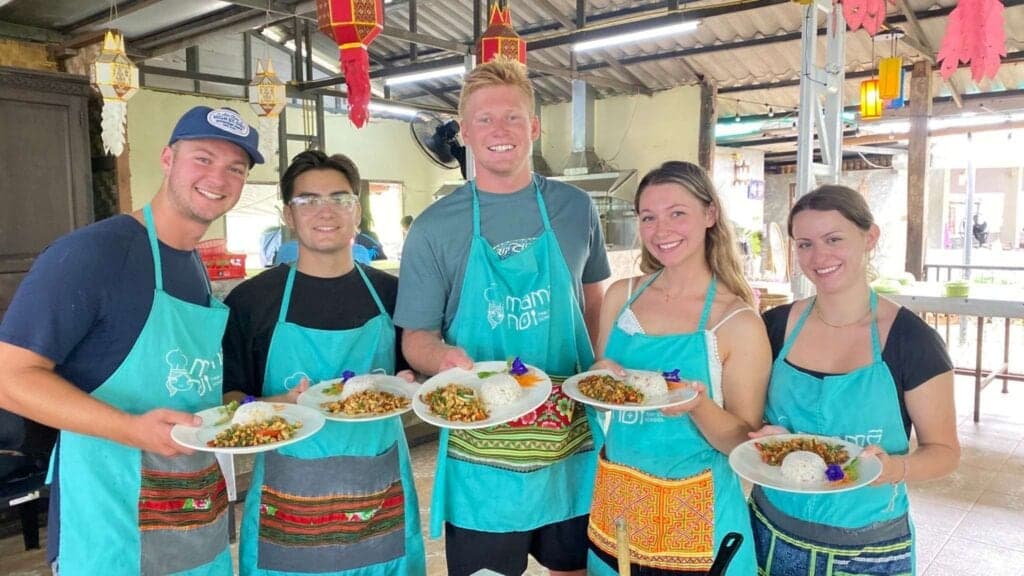
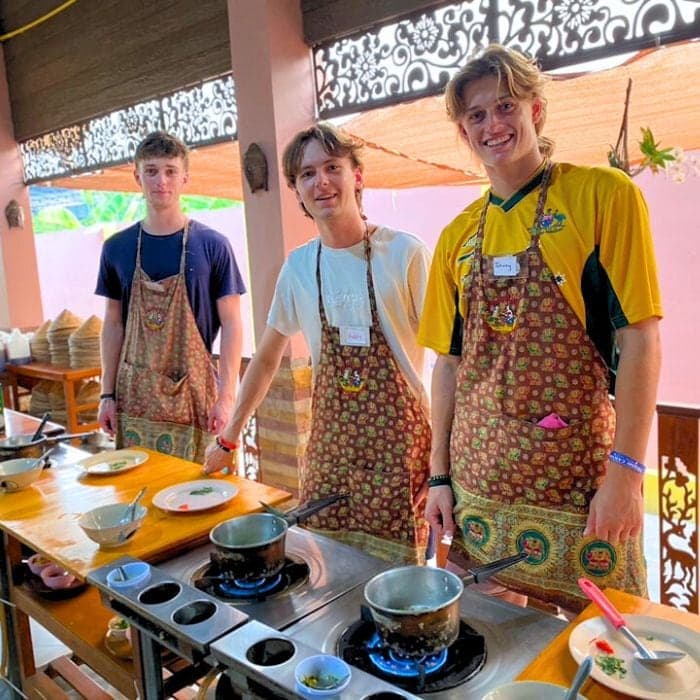
For a wider look at Chiang Mai street food including the salty side, see our Chiang Mai street food guide. For the broader Northern Thai cuisine context including khao soi and Lanna specialties, the Northern Thai food guide is the right starting point. If you want to learn to make the sweet coconut-cream base behind half these desserts, the Thai cooking class at Siam Garden and the class at Mamanoi both cover the basics.
A short list of where to go this week
Saturday: Wualai night market for Yunnanese fried-banana toast and sai mai. Sunday: Walking Street outside Wat Phan On for khanom krok and sweet roti. Any morning: Warorot Market for kanom buang and morning khao niao tat.
Three trips covers eight of the ten desserts on this list. The remaining two — proper mango sticky rice and a serious ais kacang — are worth a dedicated sit-down stop at a known shop rather than chasing them through markets.
Learn to make Thai sweets at Siam GardenHalf-day cooking class, small groups, market visit and hotel pickupPrefer to taste rather than cook? Browse the full Chiang Mai food tours line-up for evening street-food walks.
Frequently asked questions
Where is the best mango sticky rice in Chiang Mai?
There is no single answer, but the consistent picks come up in three categories. For the famous version, Mae Varee in Bangkok gets the press but Chiang Mai's equivalent is Wawee Sticky Rice on Loi Kroh Road — ฿120 a portion in mango season. For market-stall pricing, the Sunday Walking Street stall outside Wat Phan On runs ฿80 a portion. For breakfast pairing, the Mae Hia Saturday market sells fresh-pressed coconut cream over warm sticky rice with mango for ฿70. The differences are real but small. Mango quality matters more than vendor.
What exactly is khanom krok and where do I find it?
Khanom krok is a coconut-rice-flour pancake cooked in a half-sphere cast-iron pan with about 18 indents. The bottom layer is sweetened coconut rice, the top is salted coconut cream, sometimes with corn kernels, spring onion or taro inside. Each pan-load gives you 18 small bite-sized cups for ฿30–฿50. The texture is the appeal — crispy edge, custardy centre. The best Chiang Mai versions are sold from morning carts inside Warorot Market and from the evening stall outside Wat Phra Singh on Walking Street nights.
Are street roti vendors safe to eat from?
Almost universally yes, with a single rule: only buy from a vendor who is actively cooking the roti to order and griddling the bananas fresh, not from a pre-made tray. The roti dough is stretched, fried in butter and topped on the spot, which means surface temperatures exceed 180C for long enough to kill anything. Pre-stacked roti that has been sitting wrapped for an hour is fine for short waits but worse value. The famous vendors on Loi Kroh and at Sunday Walking Street are all cook-to-order operations.
Is shaved ice a Thai thing or imported?
Imported, then localised. Shaved ice as a Southeast Asian dessert came via Chinese and Malay-Muslim communities. The Thai version, nam kang sai, traditionally uses small ice flakes over sweetened red beans, jackfruit, mung-bean jelly, palm seeds, with coconut milk and palm sugar syrup over the top. Ais kacang, the Malay-Singaporean variant, is heavier on the syrups and includes condensed milk. Both versions are sold in Chiang Mai. Chinese-Yunnanese ais kacang turns up most often around the Wualai silver-quarter and the night market food courts.
Do I need to worry about ice in Chiang Mai desserts?
Almost never. Commercial ice in Thailand is manufactured under licence and arrives at restaurants and stalls in sealed plastic bags. Look for ice cubes with a uniform hole through the centre — that is the standard commercial cube. Crushed or shaved ice from a stall using its own block is also generally fine as long as the block is on a tray off the floor. The handful of food-safety incidents linked to ice in Thailand over the last decade have involved small rural vendors using untreated well water — not a problem in Chiang Mai's central tourist zones.
Frequently asked questions
Where is the best mango sticky rice in Chiang Mai?
There is no single answer, but the consistent picks come up in three categories. For the famous version, Mae Varee in Bangkok gets the press but Chiang Mai's equivalent is Wawee Sticky Rice on Loi Kroh Road — ฿120 a portion in mango season. For market-stall pricing, the Sunday Walking Street stall outside Wat Phan On runs ฿80 a portion. For breakfast pairing, the Mae Hia Saturday market sells fresh-pressed coconut cream over warm sticky rice with mango for ฿70. The differences are real but small. Mango quality matters more than vendor.
What exactly is khanom krok and where do I find it?
Khanom krok is a coconut-rice-flour pancake cooked in a half-sphere cast-iron pan with about 18 indents. The bottom layer is sweetened coconut rice, the top is salted coconut cream, sometimes with corn kernels, spring onion or taro inside. Each pan-load gives you 18 small bite-sized cups for ฿30–฿50. The texture is the appeal — crispy edge, custardy centre. The best Chiang Mai versions are sold from morning carts inside Warorot Market and from the evening stall outside Wat Phra Singh on Walking Street nights.
Are street roti vendors safe to eat from?
Almost universally yes, with a single rule: only buy from a vendor who is actively cooking the roti to order and griddling the bananas fresh, not from a pre-made tray. The roti dough is stretched, fried in butter and topped on the spot, which means surface temperatures exceed 180C for long enough to kill anything. Pre-stacked roti that has been sitting wrapped for an hour is fine for short waits but worse value. The famous vendors on Loi Kroh and at Sunday Walking Street are all cook-to-order operations.
Is shaved ice a Thai thing or imported?
Imported, then localised. Shaved ice as a Southeast Asian dessert came via Chinese and Malay-Muslim communities. The Thai version, nam kang sai, traditionally uses small ice flakes over sweetened red beans, jackfruit, mung-bean jelly, palm seeds, with coconut milk and palm sugar syrup over the top. Ais kacang, the Malay-Singaporean variant, is heavier on the syrups and includes condensed milk. Both versions are sold in Chiang Mai. Chinese-Yunnanese ais kacang turns up most often around the Wualai silver-quarter and the night market food courts.
Do I need to worry about ice in Chiang Mai desserts?
Almost never. Commercial ice in Thailand is manufactured under licence and arrives at restaurants and stalls in sealed plastic bags. Look for ice cubes with a uniform hole through the centre — that is the standard commercial cube. Crushed or shaved ice from a stall using its own block is also generally fine as long as the block is on a tray off the floor. The handful of food-safety incidents linked to ice in Thailand over the last decade have involved small rural vendors using untreated well water — not a problem in Chiang Mai's central tourist zones.