Chiang Mai's burning season runs roughly February 15 to April 30, with the worst air quality in the last two weeks of March. We cancel outdoor high-exertion tours when AQI exceeds 200 sustained, and recommend rescheduling trips for travellers with respiratory conditions. The rest of the year (May through January) is one of the cleanest air windows in mainland Southeast Asia. This guide covers when to come, when to mask up, and what we actually do operationally.
What is "burning season" and why does it happen?
Burning season is the late-dry-season stretch when farmers across northern Thailand, Myanmar, and Laos burn rice and corn stubble to clear fields for the next planting. The smoke from millions of small fires accumulates in valleys and pushes Chiang Mai's AQI into hazardous territory for 4-6 weeks.
The agricultural cause is structural. Northern Thailand and the upper Mekong region grow rice in the wet season and corn or rotational crops in the dry. After harvest, the cheapest way to clear residue is to burn it. There are roughly 8-12 million hectares of farmland involved across the region. Multiply that by the number of small farmers burning per hectare, and you get a continental-scale air-quality event.
Thailand's official "burning ban" runs February 15 to April 30 each year. Enforcement is uneven and most burning happens at night to evade detection. The Royal Thai government has invested in satellite monitoring and farmer-incentive programs since 2018, but the problem persists.
The geography compounds it. Chiang Mai sits in a valley surrounded by mountains on three sides. Late-dry-season temperature inversions trap smoke in the valley for days. A typical March morning starts with clear-looking sky and degrades through the day as smoke accumulates.
The numbers are stark but the time window is short. May 1 onward, the first monsoon storms typically scrub the air within 48 hours. From May to mid-February, Chiang Mai's air is among the cleanest of any major Asian city.
How do we actually operate during burning season?
We track AQI daily and cancel high-exertion outdoor tours at sustained AQI 200+. We continue lower-exertion outdoor and indoor-leaning tours. We're transparent with guests about conditions before they pay.
The internal rule we use is based on PM2.5 sustained over 6+ hours, mapped to AQI:
| AQI level | What it feels like | Our policy | Tour categories affected |
|---|---|---|---|
| 0-100 | Mild haze, healthy | All tours run normally | None |
| 101-150 | Visible haze, sensitive groups feel it | All tours run; warn vulnerable guests | Optional mask for high-exertion |
| 151-200 | Hazy day, healthy people notice | Most tours run; flag to all guests | Multi-day trekking shortened |
| 201-300 | Smoke clearly visible, eyes sting | Cancel high-exertion outdoor tours | Trekking, biking, photography day trips cancelled |
| 301+ | Smoke smell heavy, sky orange-brown | Limit to indoor and shaded outdoor only | Most outdoor activities cancelled |
This is more conservative than most operators. The Thai government tourism guidance is more lenient. We've made the call that customer-facing transparency is worth the cancellation cost.
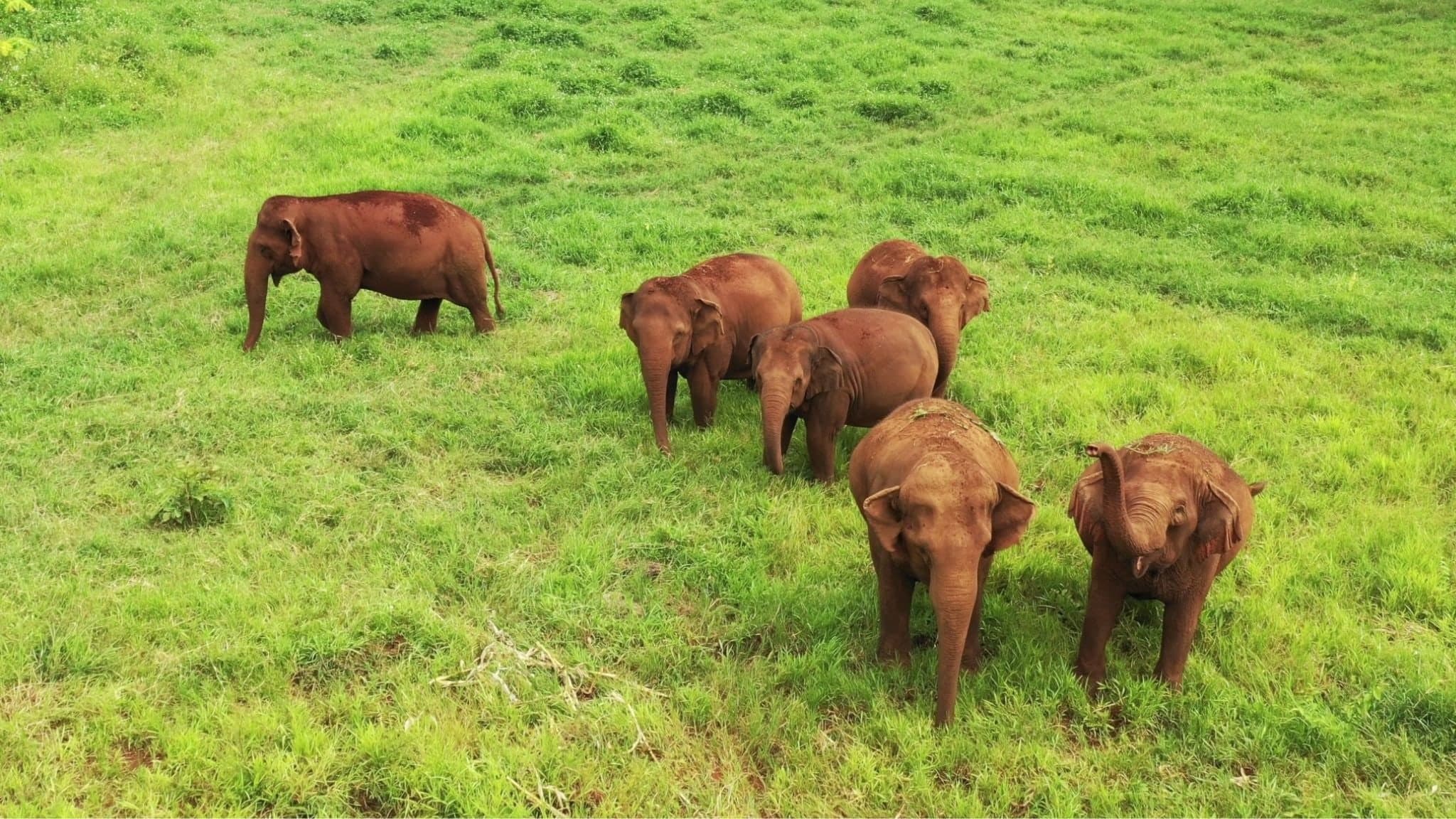
In practice that means we keep running indoor-leaning experiences like the Thai cooking class at Siam Garden and modest-exposure days such as the half day elephant experience at the Karen sanctuary, while pausing the high-exertion trekking and biking.
If your tour is cancelled by us due to air quality, we refund or reschedule. We don't pocket the deposit and hand-wave about force majeure.
Which weeks specifically are the worst?
The worst window is typically March 18 through April 8 each year. Mid-February to mid-March is bad but variable. Late April starts clearing as pre-monsoon rains arrive.
Year-by-year variation is real — 2023 was the worst on record (sustained AQI 400+ for a full week in late March), 2024 was bad but shorter, 2025 was milder due to early monsoon rains. The averaged worst-window has been:
- February 15-28. Smoke beginning to build. Sensitive groups feel it. AQI 100-150 typical.
- March 1-15. Building toward peak. Some 200+ days, some clearer days. Forecast-dependent.
- March 16-April 8. Worst window. Sustained 200-400 most days. The two weeks to actually avoid.
- April 9-25. Slow improvement as occasional rainstorms scrub the air briefly.
- April 26-May 5. First sustained monsoon-pattern rain. Air clears within days.
If you're flexible on travel dates, target May through early February. If you must come in March-April, target the very beginning of February or after April 25.
What masks actually work?
Properly-fitted N95 or KN95 masks with a good seal. Surgical masks don't filter PM2.5. Cloth masks don't filter PM2.5. The fit matters as much as the mask spec.
The science: PM2.5 particles are 2.5 micrometres or smaller. They penetrate deep into the lungs. Standard surgical masks block 30-50% of particles that small with a perfect seal, which most don't have. N95 and KN95 masks rated for non-oil-particle filtration block 95% with proper fit.
Brands widely available in Chiang Mai:
- 3M Aura 9332 (most preferred). Disposable N95, ฿80-฿150 each at major pharmacies and Boots. Excellent seal due to the moulded form.
- 3M 8210. Cup-style N95, similar performance, slightly less comfortable. ฿60-฿100.
- KN95 (various Chinese brands). Bulk packs ฿15-฿30 per mask at 7-Eleven and Family Mart. Quality varies wildly between brands. Pick one that has clear stamping and a metal nose bridge.
- Cambridge Mask Pro. Reusable, washable, the urban-cyclist favourite. ฿1,500-฿2,000 each from specialty retailers. Worth it for repeat visitors.
The fit-test: put on the mask, cup hands around the edges, and exhale. If you feel air leaking around the nose or cheeks, the seal isn't good enough. Adjust the nose-bridge wire or restrap. Re-test. If you have a beard, you cannot get a good seal — shave or trim.
What about indoor air at hotels and cafes?
Variable. The better mid-range and upscale hotels run HEPA-grade air filtration in lobbies and rooms. Budget guesthouses typically don't. Cafes and restaurants are usually no better than outdoor.
The hotel air-filtration question matters because you'll spend 8-10 hours per day indoors. The pattern:
- Major international chains (Hilton, Marriott, Anantara, etc.). Usually have HEPA filtration system-wide. Indoor PM2.5 typically 30-60% of outdoor.
- Premium boutique hotels. Some have proper filtration, some don't. Email and ask before booking during burning season.
- Mid-range Thai-owned hotels. Variable. Some have window-unit air purifiers in rooms; lobby is usually unfiltered.
- Budget hostels and guesthouses. Almost never have proper filtration. Bring your own air purifier (small portable HEPA units run ฿2,500-฿5,000 in Chiang Mai pharmacies).
If you're staying multiple weeks during burning season, buying a portable HEPA purifier for your room is the highest-impact thing you can do for your health.
Where can you escape the smoke without leaving Chiang Mai province?
Above 1,200m elevation, the air is usually 50-70% cleaner than the city. Mae Kampong, Doi Suthep summit, Doi Inthanon, and the upper Mae Wang valley are all viable escape options.
The valley-trapped smoke is a function of the temperature inversion. Above the inversion layer (usually 800-1,200m in burning season), air mixes more freely and AQI drops significantly. The practical destinations:
- Mae Kampong (1,300m). Hill-tribe village 50km east. Genuinely cleaner air. Day trip or 1-2 night stay.
- Doi Suthep summit area (1,676m). 30 minutes from the city. Air is clearly cleaner; AQI often 70-100 when city is 200+.
- Doi Inthanon (1,500-2,565m). Higher = cleaner. Worth a day trip even just for the air quality difference.
- Mae Wang upper valley (~900m). Borderline. Sometimes notably cleaner, sometimes the smoke creeps up.
We sometimes shift outdoor tours from city-area activities to Doi Inthanon during bad weeks specifically for the air-quality benefit. The day trip to Doi Inthanon National Park spends most of the day above the inversion layer, and a private Doi Inthanon trekking and sightseeing tour lets us pick the cleanest-air route on the day. It's worth asking about when you book.
Is there any reason to come during burning season?
Specific, narrow yes: significantly lower prices, fewer tourists, and some indoor-focused experiences (cooking classes, temple tours, monk chat, museum visits) are unaffected.
Prices: Chiang Mai hotel rates drop 30-50% versus December peak. Tour prices drop 10-20%. Flights to and from Chiang Mai are at their cheapest of the year.
Crowds: most tourist-heavy temples and attractions are notably quieter. Doi Suthep on a March weekend has 60% fewer visitors than a December weekend.
Indoor activities: a 5-hour cooking class is unaffected by air quality once you're inside. Temple visits are short outdoor exposure. Museum visits, spa days, and shopping mall trips are essentially indoor.
The trade-off math: if you have respiratory health to protect, the savings aren't worth it. If you're healthy and your itinerary is indoor-leaning, March-April can work — just don't expect the trekking-and-elephants Chiang Mai you've seen in travel magazines.
Should I just go to Pai or Mae Hong Son instead?
No — those northern valleys often have worse air than Chiang Mai during burning season, with less monitoring and fewer mask-and-purifier resources.
A common assumption is that smaller, more remote towns escape the smoke. They don't. Pai (550m, valley-trapped) and Mae Hong Son (200m, deeper valley) both have AQI peaks similar to Chiang Mai, sometimes worse. The mountain road between them passes through smoke layers that can be visibly opaque.
If you want a smoke-escape destination during burning season, head south, not north. Bangkok is bad but at coastal-altitude. The Thai islands (Koh Samui, Phuket, Krabi) are minimally affected. The Cambodian border and southern Thailand are essentially clear.
Escape the haze on a Doi Inthanon day tripHigh above the inversion layer, often the cleanest air available in MarchFurther reading worth your time:
- Best time to visit Chiang Mai by month
- Is Chiang Mai safe? The honest operator answer
- What to pack for Chiang Mai by season
External references: World Air Quality Index Project's Chiang Mai station for live AQI readings, the Thai Pollution Control Department's air-quality portal for official Thai government readings, and the Greenpeace Thailand Right to Clean Air campaign reports for advocacy context. All accessed 2026-03-10.
Frequently asked questions
When does burning season start?
Roughly mid-February through mid-April, with the worst air quality typically in the last two weeks of March. The 'official' burning ban in northern Thailand runs from approximately February 15 to April 30 each year, though the dates shift by a week or two based on weather. The two worst weeks are usually March 20-April 5, when stubble burning peaks across northern Thailand, Myanmar, and Laos at the same time. The first rainstorm of May typically clears the air within 48 hours.
Is Chiang Mai's AQI worse than Delhi during burning season?
Briefly, yes — Chiang Mai routinely peaks above 300 AQI on the worst days of March, sometimes hitting 400-500. Delhi averages higher annually but Chiang Mai's peak weeks are often the world's worst air. The crucial difference is duration: Delhi sustains high AQI 4-5 months per year, Chiang Mai's peak is 4-6 weeks. If you're respiratory-vulnerable, neither city is good in the bad windows. Chiang Mai outside burning season (May through January) is genuinely clean — better than most major Asian cities.
What's the best mask for Chiang Mai haze?
A properly-fitted N95 or KN95 mask with valve-free design and good seal. Surgical masks and cloth masks don't filter PM2.5 particles. The best options widely available in Chiang Mai are 3M Aura 9332 (~฿80-฿150 per mask at pharmacies), 3M 8210 (similar), and KN95 brands sold in bulk packs at convenience stores. The key is fit: shave or trim facial hair where the mask seals, pinch the nose-bridge wire tight, and check the seal with a quick exhale. A loose N95 is no better than a surgical mask.
Do tours still run during burning season?
Most outdoor tours run with adjustments. We cancel high-exertion outdoor activities (multi-day trekking, long bike rides) when AQI exceeds 200 sustained. We continue elephant sanctuary day trips, cooking classes, temple visits, and Mae Wang/Mae Taeng excursions because they involve modest outdoor exposure and indoor or shaded settings. Doi Inthanon and the higher-elevation trips are often above the haze layer (1,500m+) and are sometimes the cleanest activities available. We give honest advice by tour type rather than blanket cancelling.
Should I postpone my Chiang Mai trip if booking for March-April?
Depends on your respiratory health and trip purpose. If you have asthma, COPD, or pulmonary conditions, postpone — the air is genuinely bad and indoor air filtration at most hotels isn't enough. If you're healthy and your trip is built around indoor cooking classes, temple tours, and cafe culture, the experience is muted but workable. If your trip centred on multi-day trekking or outdoor adventure, you'll be unhappy. November-February is the obvious better window.
What's the air quality difference between Chiang Mai city and the mountains?
Significant — and not always in the direction you'd expect. The smoke layer sits in the Chiang Mai valley because the surrounding mountains trap the inversion. Above ~1,200m elevation, the air clears notably. Doi Suthep summit (1,676m), Doi Inthanon (2,565m), and Mae Kampong (1,300m) often have AQI 50-100 when the city is at 250+. Conversely, going to Mae Hong Son or Pai during burning season can be worse — those valleys also trap smoke and have less monitoring.
Frequently asked questions
When does burning season start?
Roughly mid-February through mid-April, with the worst air quality typically in the last two weeks of March. The 'official' burning ban in northern Thailand runs from approximately February 15 to April 30 each year, though the dates shift by a week or two based on weather. The two worst weeks are usually March 20-April 5, when stubble burning peaks across northern Thailand, Myanmar, and Laos at the same time. The first rainstorm of May typically clears the air within 48 hours.
Is Chiang Mai's AQI worse than Delhi during burning season?
Briefly, yes — Chiang Mai routinely peaks above 300 AQI on the worst days of March, sometimes hitting 400-500. Delhi averages higher annually but Chiang Mai's peak weeks are often the world's worst air. The crucial difference is duration: Delhi sustains high AQI 4-5 months per year, Chiang Mai's peak is 4-6 weeks. If you're respiratory-vulnerable, neither city is good in the bad windows. Chiang Mai outside burning season (May through January) is genuinely clean — better than most major Asian cities.
What's the best mask for Chiang Mai haze?
A properly-fitted N95 or KN95 mask with valve-free design and good seal. Surgical masks and cloth masks don't filter PM2.5 particles. The best options widely available in Chiang Mai are 3M Aura 9332 (~฿80-฿150 per mask at pharmacies), 3M 8210 (similar), and KN95 brands sold in bulk packs at convenience stores. The key is fit: shave or trim facial hair where the mask seals, pinch the nose-bridge wire tight, and check the seal with a quick exhale. A loose N95 is no better than a surgical mask.
Do tours still run during burning season?
Most outdoor tours run with adjustments. We cancel high-exertion outdoor activities (multi-day trekking, long bike rides) when AQI exceeds 200 sustained. We continue elephant sanctuary day trips, cooking classes, temple visits, and Mae Wang/Mae Taeng excursions because they involve modest outdoor exposure and indoor or shaded settings. Doi Inthanon and the higher-elevation trips are often above the haze layer (1,500m+) and are sometimes the cleanest activities available. We give honest advice by tour type rather than blanket cancelling.
Should I postpone my Chiang Mai trip if booking for March-April?
Depends on your respiratory health and trip purpose. If you have asthma, COPD, or pulmonary conditions, postpone — the air is genuinely bad and indoor air filtration at most hotels isn't enough. If you're healthy and your trip is built around indoor cooking classes, temple tours, and cafe culture, the experience is muted but workable. If your trip centred on multi-day trekking or outdoor adventure, you'll be unhappy. November-February is the obvious better window.
What's the air quality difference between Chiang Mai city and the mountains?
Significant — and not always in the direction you'd expect. The smoke layer sits in the Chiang Mai valley because the surrounding mountains trap the inversion. Above ~1,200m elevation, the air clears notably. Doi Suthep summit (1,676m), Doi Inthanon (2,565m), and Mae Kampong (1,300m) often have AQI 50-100 when the city is at 250+. Conversely, going to Mae Hong Son or Pai during burning season can be worse — those valleys also trap smoke and have less monitoring.