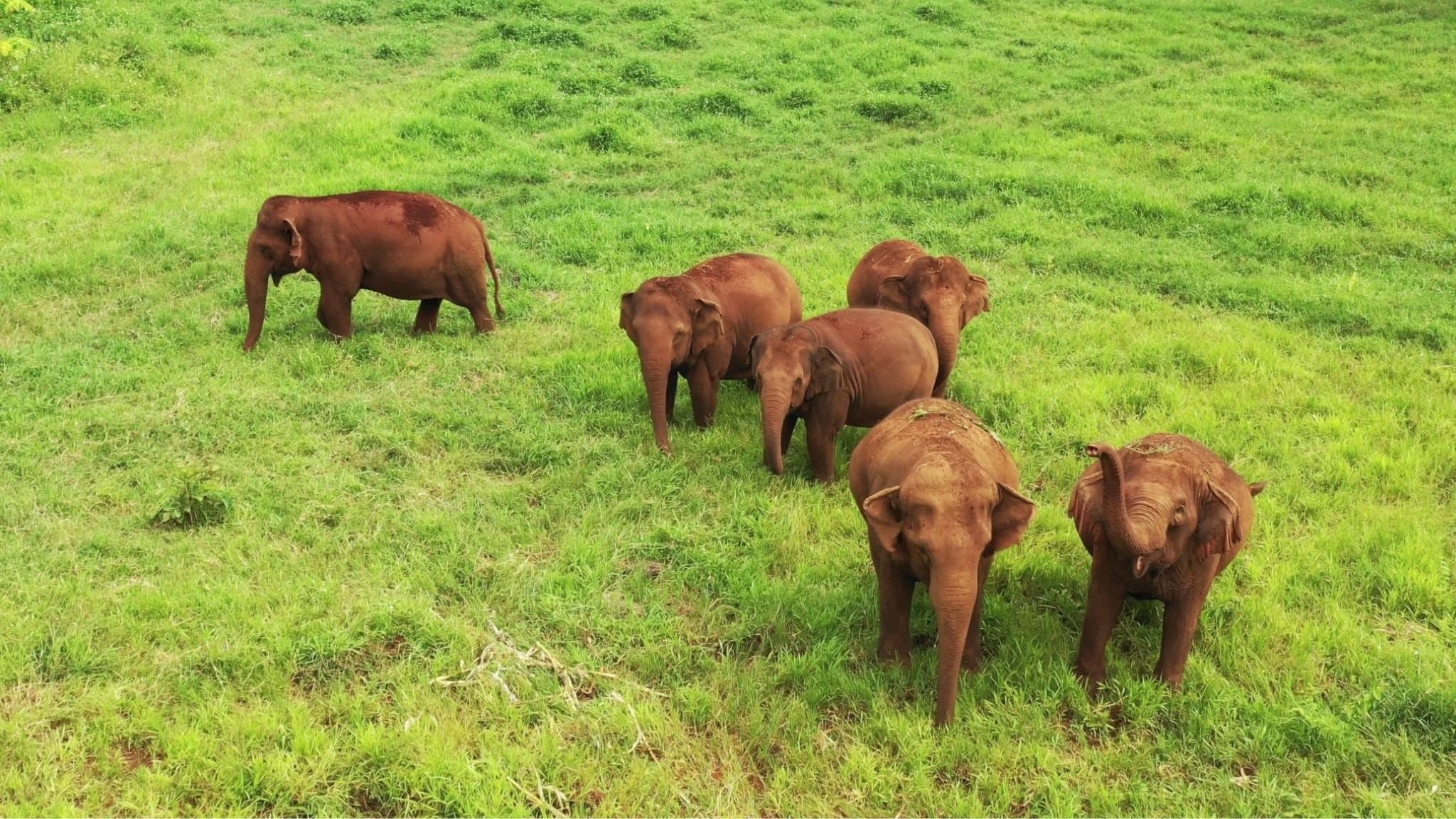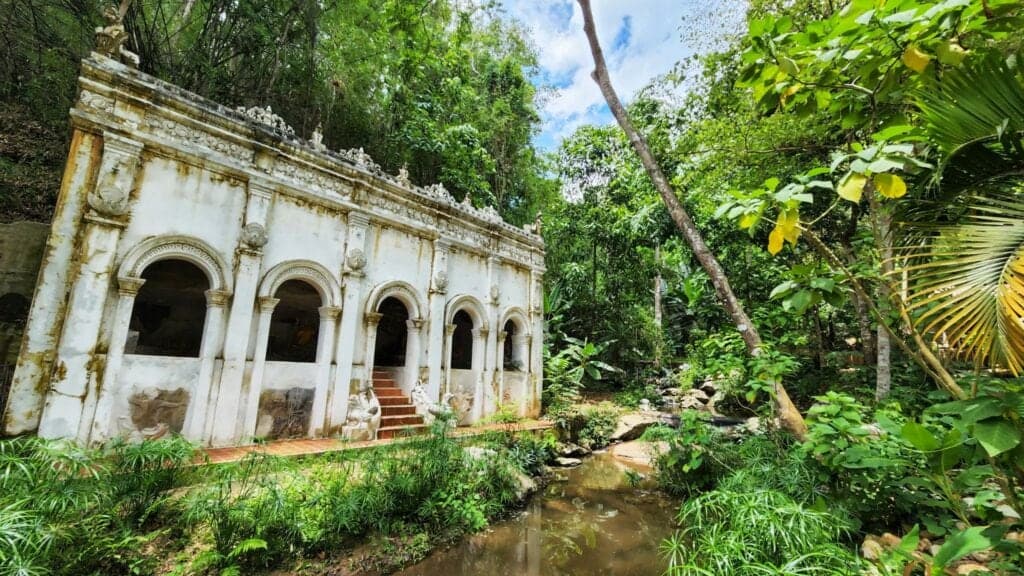
The best time to visit Chiang Mai is mid-November through early February — cool nights, near-zero rain, AQI in the green-yellow range, and Yi Peng lanterns in November. Avoid mid-February to mid-April for burning season smoke unless you have a specific reason (Songkran, festival, work). May to October is wetter but cheaper, with mornings usually clear. This guide is month-by-month from an operator running tours through all twelve.
Why does the month you pick matter so much for Chiang Mai?
The right month changes everything — air quality, hotel prices, herd visibility at elephant camps, even whether the waterfalls flow. Chiang Mai sits in a mountain basin, which traps both pollutants and weather patterns more sharply than coastal Thailand.
The four variables that actually move trip quality are: air quality (driven by agricultural burning), rainfall (driven by the southwest monsoon), temperature (mild swing, but cool season feels markedly different), and crowd density (driven by festivals and Western school holidays). Get all four right and Chiang Mai feels relaxed and photogenic. Get them wrong and you spend three days indoors watching the smoke index climb on your phone.
What is Chiang Mai actually like in January?
January is high season's quiet sibling — same cool weather as December but post-New-Year crowds thin out and hotel rates dip slightly. Daytime highs sit around 28 to 30 degrees Celsius. Nights drop to 14 to 18 degrees, cool enough for a fleece on early-morning elephant trips.
Rainfall is essentially zero. AQI is typically 30 to 70, which the World Health Organization treats as moderate. The first two weeks see a quiet bump from Chinese New Year travellers and Western tourists extending their holidays. From around January 20, the city resets to a calmer rhythm. This is the month we tell repeat clients to come for landscape photography — the morning fog over the Ping River and Doi Suthep is at its best.
Is February still safe, or has the smoke started?
February is a coin flip — the first two weeks are usually clean, the last two start showing burn-off haze, especially on the Mae Hong Son side. Daytime temperatures rise to 30 to 33 degrees Celsius.
The first weekend of February is the Chiang Mai Flower Festival, which is genuinely worth a trip if you are already in the region. Parade floats run through the moat-square Old City and end at Buak Hard Park. By Valentine's Day, agricultural fires start in lowland fields. By the last week, PM2.5 in the western valleys (Mae Wang, Doi Inthanon) jumps above 80 µg/m³ on bad days. Bookings in our system show February tail-week cancellations climb each year.
How bad is March in Chiang Mai, honestly?
March is the worst month in Chiang Mai — burning season at peak, hot days, hazy views, and the only month we actively discourage first-time visitors from booking.
The exception is hardcore travellers on a budget. Hotel rates drop 30 to 50 percent. Tours have small groups. If you are willing to centre your trip on indoor experiences (cooking class, massage school, museum, mall, well-filtered cafe), March can work. We do not recommend it.
What about April — is Songkran worth planning around?
April splits cleanly in two: the first ten days are still smoky and hot, then Songkran from April 11 to 16 turns Chiang Mai into the largest water festival in Southeast Asia, then post-festival is empty and starts to rain.
Songkran in Chiang Mai is genuine, multi-generational and intense. The moat becomes a 6.5 km loop of water guns, pickup trucks with barrels, and ice-cold soakings. Many tour operators (including us) suspend northern day-trips during these dates because drivers are with family. Temples hold the traditional Buddha-bathing ceremony on April 13. Hotel rates jump 30 to 60 percent. Restaurants close half their floor.
By April 20 to 25, the first real pre-monsoon rains arrive. The air clears within five to ten days. This window — say April 22 to May 5 — is one of the most underrated times to visit if you can move travel dates flexibly.
Does May actually have decent weather?
May is when locals quietly book holidays — air cleared, rains mostly in late afternoon, hotel rates dropping back, and rice-paddy green starting to fill in.
The trade-off is that rain happens, mostly between 3 pm and 7 pm. Our Thai cooking classes and morning elephant tours run normally. Late-afternoon ziplining sometimes shifts forward an hour. Waterfalls (Sticky Falls, Mae Sa, Bua Tong) are at their photogenic best. May is also a strong month to combine Chiang Mai with the surrounding villages — Mae Kampong, Mae Wang — because the air is clear enough for valley views again.
Is June a complete monsoon washout?
No — June is the start of real rainy season, but rains are still mostly localised thunderstorms, and the cooler air and lighter crowds are the trade for occasional wet afternoons.
Daily rainfall averages around 140 mm across the month. Mornings are typically dry, which is when 70 percent of our day-tours run. Afternoon storms last 45 to 120 minutes, then clear. The bigger logistical issue is occasional washouts on jungle roads near Mae Taeng and Doi Inthanon — we substitute itineraries with about three days' notice when our drivers report unsafe conditions.
June bookings in our system run 35 to 45 percent below December levels. Solo travellers and couples often get private-feeling group tours by default.
What about July, August and September — peak monsoon?
July through September is wettest but not unworkable. August is the heaviest. September is the sleeper-hit month for travel writers and photographers because everything is green and the air is clean.
July sees roughly 160 mm of rain. August jumps to 230 mm — the heaviest month of the year. September drops slightly to 200 mm. Temperatures stay comfortable, daytime highs around 30 to 32 degrees.
Why September works: rice paddies on the surrounding plains are emerald green, mountain mist sits in the valleys at dawn, and there are practically no tourists. We run smaller-group tours by default, often 4 to 6 guests where December would have 14. The risk is one or two genuinely wet days where outdoor itineraries get reshuffled.
Why is October the best secret of the year?
October is the underrated month. Rain has started to ease, temperatures are dropping into shoulder-comfortable range, hotel rates are still low, and the air is at its annual cleanest.
Late October sees the end of the southwest monsoon. The last big rains usually finish by October 25. AQI readings of 15 to 35 are common. Daytime highs settle around 30 degrees, nights around 21. The 30-year climate data backs this up: October is statistically the lowest-PM2.5 month for northern Thailand.
October is also pre-Yi Peng pricing. November rates start climbing two to three weeks before the festival. Late October bookings get the best value-to-quality ratio of the year.
How busy is November for Yi Peng?
November is the festival month — Loy Krathong and Yi Peng overlap around the full moon, usually early-to-mid November. It is the most photogenic and most expensive month.
| Yi Peng / Loy Krathong dates by year | Date range | Peak pricing window |
|---|---|---|
| 2026 | Nov 24 – Nov 26 | Nov 20 – Nov 28 |
| 2027 | Nov 13 – Nov 15 | Nov 9 – Nov 17 |
| 2028 | Nov 1 – Nov 3 | Oct 28 – Nov 5 |
Hotel rates jump 50 to 120 percent versus October. Book eight to twelve weeks ahead. The Mae Jo mass lantern release is ticketed and expensive — around 5,500 to 12,000 THB depending on package. Community lantern releases along the Ping River and Tha Phae Gate are free and arguably more atmospheric.
What about December — straight peak season?
December is high season at its busiest, with the trade-off being the most reliably good weather of the year.
Temperatures: 28 to 31 degrees daytime, 14 to 18 at night. Rainfall essentially nil. AQI usually 30 to 60. Mountain views are clear from Doi Suthep to Doi Inthanon. Hotel rates peak around December 27 to January 3 — Christmas-week bookings can cost double their January equivalent.
The crowds are real. Walking Street markets are shoulder-to-shoulder. Cooking classes book out a week ahead. Elephant sanctuaries run full daily capacity. If you can shift to early December (December 1 to 15), you get the same weather for 25 to 35 percent less.
The Operator's Six-Variable Month Test
We use this internally — score each month on six variables and pick the highest total.
| Month | Air quality | Rain | Crowds | Festivals |
|---|---|---|---|---|
| January | Good | None | Moderate | Quiet |
| February | Declining | None | Moderate | Flower Festival |
| March | Poor | None | Low | — |
| April | Recovering | Starting | Songkran spike | Songkran |
| May | Good | Afternoon | Low | — |
| June–July | Good | Daily | Low | Buddhist Lent |
| August | Good | Heavy | Low | — |
| September | Excellent | Daily | Lowest | — |
| October | Excellent | Ending | Low | — |
| November | Excellent | None | High | Yi Peng / Loy Krathong |
| December | Good | None | Highest | Christmas / NYE |
How should festival timing change your plan?
Festivals concentrate experience but also pricing and friction. Three are worth designing a trip around: Yi Peng and Loy Krathong (early-mid November), Songkran (April 13 to 15), Flower Festival (first weekend of February).
Yi Peng visuals are the strongest case for accepting peak pricing. Songkran is a participation event — if you do not want to be soaked, plan around it. Flower Festival is gentle and runs alongside good weather.
What does this look like as actual trip-planning advice?
Pick your priority first, then pick the month. Different priorities point to different months:
- Best overall weather: late November to early February. Accept peak pricing.
- Cheapest, still pleasant: late September to late October. Best value of the year.
- Festival-led trip: Yi Peng in November or Flower Festival in early February.
- Photography focused: September for green paddies, January for clear-air mountain views.
- Family with young kids: November or December for predictable weather. Avoid March completely.
- Wellness retreat: May, June, October. Cooler weather, fewer crowds, lower stress — a good window for a Chiang Mai wellness retreat.
Whatever month you pick, build in a 24-hour weather-flex buffer for outdoor itineraries. The mountain weather around Chiang Mai changes quickly, and rigid day-by-day plans cause more stress than skipping a single morning.
Book the Karen elephant sanctuary daySmall ethical groups, hotel pickup, reschedule penalty-free in burning seasonWorth your time before you book the trip:
- Chiang Mai elephant tours: full price breakdown
- Chiang Mai trip budget calculator
- Songkran in Chiang Mai: a survival guide
External references used in this guide:
- Thai Meteorological Department climate normals
- IQAir Chiang Mai air quality
- World Health Organization air quality guidelines
- Tourism Authority of Thailand festival calendar
Frequently asked questions
When is burning season really in Chiang Mai?
Burning season peaks late February through early April, with March almost always the worst month. PM2.5 readings routinely cross 150 µg/m³ on bad March days, well above the World Health Organization 24-hour guideline of 15 µg/m³. The smoke is from agricultural burning in northern Thailand, Myanmar and Laos, trapped by the basin's geography. If you have asthma, cardiovascular issues, or are travelling with young kids, we tell clients to skip these six weeks. Late April rains usually clear the air within five to ten days.
Should I skip Songkran in Chiang Mai?
Skip it if you want quiet temples and predictable traffic. Embrace it if you want the biggest water festival in Southeast Asia. April 13 to 15 is the official holiday, but Chiang Mai effectively shuts down for water-fighting from around April 11 to 16. Hotels charge 30 to 60 percent more, half the restaurants close, and you will get soaked walking anywhere near the moat. Many tour operators (including us) pause northern day-trips during these dates because drivers are needed at home with family.
Is November worth it for Yi Peng?
Yes, if you plan ahead and accept that the lantern release is more crowded and more commercial than the photos suggest. Yi Peng falls on the full moon of the second northern Thai month, usually early-to-mid November. The mass lantern release at Mae Jo is invite-only or paid ticket. Genuine community celebrations happen along the Ping River and around Tha Phae Gate. Book accommodation eight to twelve weeks ahead. Tour pricing is at peak. The temples lit by thousands of small lanterns remain genuinely beautiful.
Are May rains a deal-breaker for Chiang Mai?
No. May, June and early July rains are mostly late-afternoon thunderstorms lasting 45 to 90 minutes, not all-day washouts. Mornings are typically clear, which is when most of our tours run anyway. Waterfalls and rice paddies look their best in this window. Hotel rates drop 20 to 40 percent versus high season. The only real risk is the occasional washed-out road on jungle routes — we substitute itineraries when needed. Pack a light rain shell and a waterproof phone pouch and you are fine.
Which month has the best weather overall for Chiang Mai?
November and December, then January. Daytime highs of 28 to 31 degrees Celsius, nights cool enough for a sweater, low humidity, near-zero rain, and AQI typically in the green-yellow range. The downside is that everyone else knows this too — these are peak-pricing months. If you can travel mid-week and book early, November and December deliver the best overall experience. Late January through mid-February also work but start to see the first agricultural burn-off.
What is the cheapest time to visit Chiang Mai?
Mid-May to early July, and September. Hotels are 30 to 50 percent below peak. Tours run with smaller groups, which actually improves the experience for things like cooking classes and trekking. The trade-offs are afternoon rain and lower elephant-camp herd visibility because cooler weather is gone. Avoid mid-April Songkran inflation and the November Yi Peng spike, and you can run a four-day Chiang Mai trip for roughly 40 percent less than December pricing.
Frequently asked questions
When is burning season really in Chiang Mai?
Burning season peaks late February through early April, with March almost always the worst month. PM2.5 readings routinely cross 150 µg/m³ on bad March days, well above the World Health Organization 24-hour guideline of 15 µg/m³. The smoke is from agricultural burning in northern Thailand, Myanmar and Laos, trapped by the basin's geography. If you have asthma, cardiovascular issues, or are travelling with young kids, we tell clients to skip these six weeks. Late April rains usually clear the air within five to ten days.
Should I skip Songkran in Chiang Mai?
Skip it if you want quiet temples and predictable traffic. Embrace it if you want the biggest water festival in Southeast Asia. April 13 to 15 is the official holiday, but Chiang Mai effectively shuts down for water-fighting from around April 11 to 16. Hotels charge 30 to 60 percent more, half the restaurants close, and you will get soaked walking anywhere near the moat. Many tour operators (including us) pause northern day-trips during these dates because drivers are needed at home with family.
Is November worth it for Yi Peng?
Yes, if you plan ahead and accept that the lantern release is more crowded and more commercial than the photos suggest. Yi Peng falls on the full moon of the second northern Thai month, usually early-to-mid November. The mass lantern release at Mae Jo is invite-only or paid ticket. Genuine community celebrations happen along the Ping River and around Tha Phae Gate. Book accommodation eight to twelve weeks ahead. Tour pricing is at peak. The temples lit by thousands of small lanterns remain genuinely beautiful.
Are May rains a deal-breaker for Chiang Mai?
No. May, June and early July rains are mostly late-afternoon thunderstorms lasting 45 to 90 minutes, not all-day washouts. Mornings are typically clear, which is when most of our tours run anyway. Waterfalls and rice paddies look their best in this window. Hotel rates drop 20 to 40 percent versus high season. The only real risk is the occasional washed-out road on jungle routes — we substitute itineraries when needed. Pack a light rain shell and a waterproof phone pouch and you are fine.
Which month has the best weather overall for Chiang Mai?
November and December, then January. Daytime highs of 28 to 31 degrees Celsius, nights cool enough for a sweater, low humidity, near-zero rain, and AQI typically in the green-yellow range. The downside is that everyone else knows this too — these are peak-pricing months. If you can travel mid-week and book early, November and December deliver the best overall experience. Late January through mid-February also work but start to see the first agricultural burn-off.
What is the cheapest time to visit Chiang Mai?
Mid-May to early July, and September. Hotels are 30 to 50 percent below peak. Tours run with smaller groups, which actually improves the experience for things like cooking classes and trekking. The trade-offs are afternoon rain and lower elephant-camp herd visibility because cooler weather is gone. Avoid mid-April Songkran inflation and the November Yi Peng spike, and you can run a four-day Chiang Mai trip for roughly 40 percent less than December pricing.