October is the shoulder-season sweet spot — drying-out monsoon, ~20% cheaper hotels, the greenest hills of the year, and almost-empty tours. Pack a rain shell and waterproof shoes, plan temple visits for mornings, and book elephant tours for the afternoon mud-baths. By late October, the city feels like early high season. Most tours run, prices haven't ramped, and the locals you meet aren't yet outnumbered by visitors.
What does October weather actually feel like in Chiang Mai?
Warm and humid at 24–32°C, with short afternoon showers in the first half of the month tapering to dry weeks by the end. Mornings are nearly always clear.
October sits between September (the wettest month, with 15+ rain days) and November (the start of high season's dry-clear weather). On average, October brings 8–12 rain days, but the rain pattern is what matters more than the count. Mornings tend to be bright and humid; afternoon thunderstorms roll in between 14:00 and 17:00 and clear within 45–90 minutes. The mid-month transition is the visible shift — by week three, you'll go four or five days between any rain at all.
The Thai Meteorological Department's Chiang Mai climatology page (accessed 2026-03-20) shows the long-term October average rainfall at roughly 150mm, vs 240mm in September and 50mm in November. That's the curve you're riding.
How does October compare to other months for tour-running?
Better than September (cancellations are roughly 5% vs 15%) and almost as good as November. October is the start of the reliable-tour stretch.
| Month | Rain days | Tour cancellation rate | Hotel premium vs October | Vibe |
|---|---|---|---|---|
| September | 15–18 | ~15% | −5% | Lush, wet, quiet |
| October (early) | 8–12 | ~7% | 0 | Drying, green, very quiet |
| October (late) | 4–7 | ~3% | +5–10% | Pre-season, almost dry |
| November | 2–4 | ~1% | +25% | High season opens |
| December | 1–2 | <1% | +40% | Peak — book ahead |
| January | 1–2 | <1% | +35% | Cool, dry, busy |
| February | 1–3 | ~2% | +20% | Late high season, burning starts |
Which tours work best in October?
Elephant sanctuaries (peak vegetation, active mud-bathing), cooking classes (indoor), temples (umbrella weather), city walking tours (morning timing), and most short hikes. White-water rafting is the only category we routinely flag for risk.
The October mix is some of our favourite of the year:
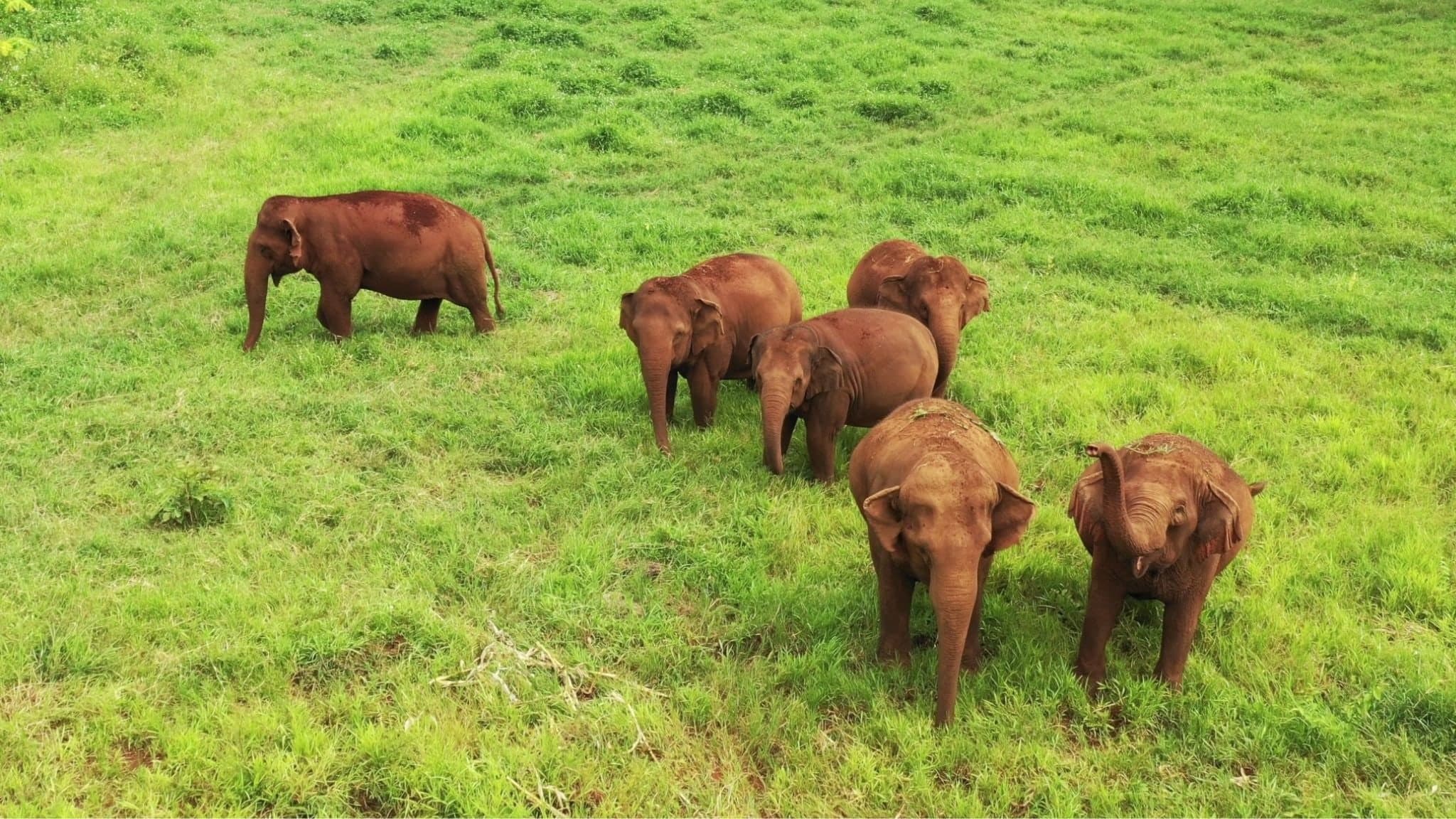
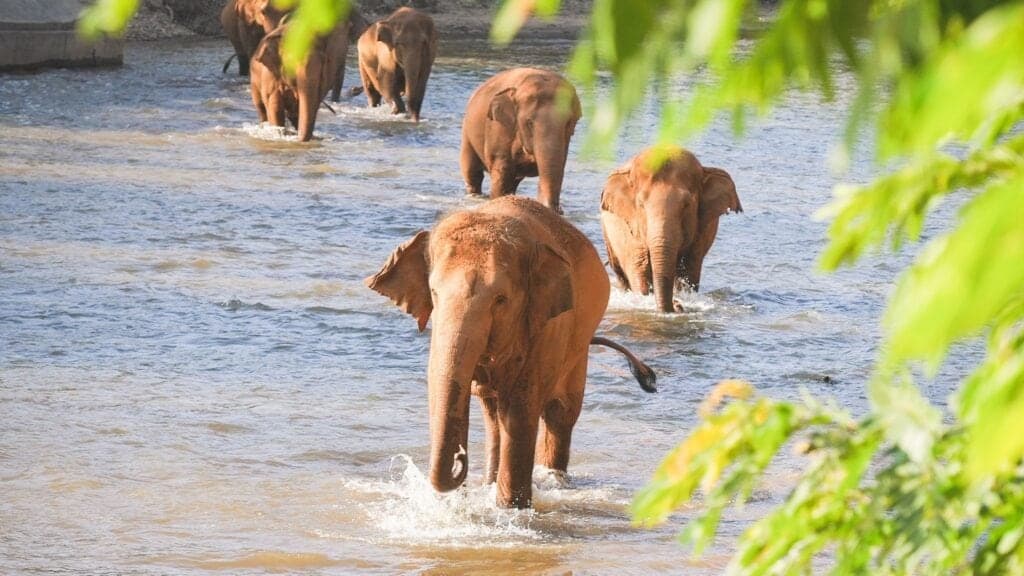
- Elephant sanctuaries. The hills around Mae Taeng are at their greenest. Elephants are visibly happy in the cooler, wetter weather. Mud-bathing sessions are longer and more active. The half-day Karen hill tribe elephant sanctuary visit is the one we book most in October.
- Cooking classes. Indoor, year-round. October is actually a great month for the market shopping component because the produce is post-monsoon and at its freshest. The Thai cooking class at Siam Garden is the indoor afternoon anchor.
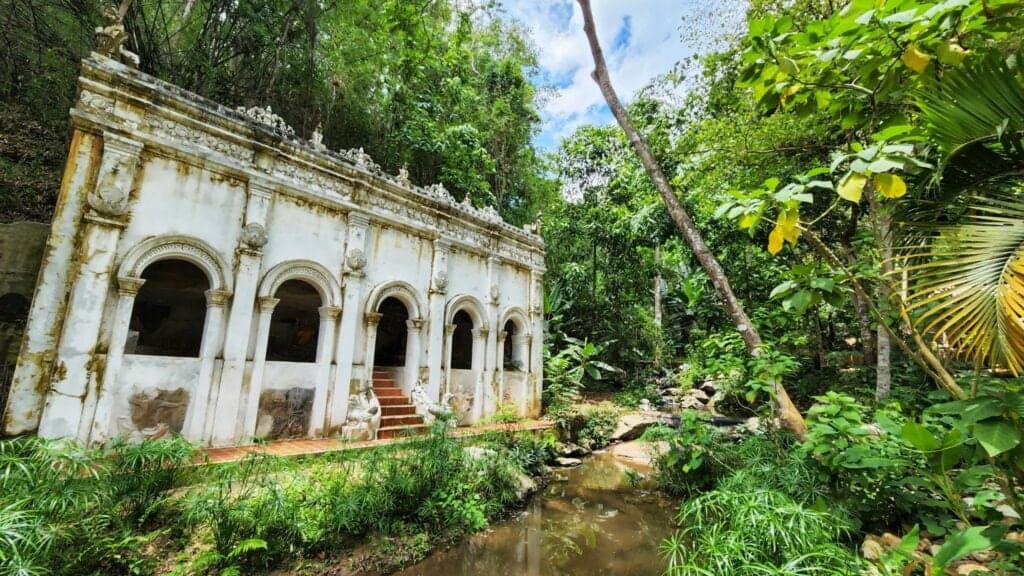
- Half-day city temple walks. Morning timing avoids the afternoon showers. Wat Phra Singh and Wat Chedi Luang in soft post-rain light is one of the prettier photographic windows of the year.
- Doi Suthep half-day. Morning only. The temple complex is beautiful in October haze. The Doi Suthep temple and Hmong village half-day fits the morning window.
- Cooking and craft workshops. Same logic as cooking classes — indoor, weather-proof.
What about the harder-weather activities?
White-water rafting can be cancelled after major storms. Long mountain treks (Doi Inthanon summit, Mae Wang multi-day) get reshuffled. Everything else runs.
The two activity categories that drop in October:
- White-water rafting on Mae Taeng. When upstream rainfall is heavy, the Mae Taeng River runs at higher volume than guides will operate. Cancellation tends to be 1–2 days after a major storm. Operators reschedule rather than refund. Our internal cancellation rate on rafting in October is roughly 12%, vs 1% in December.
- Multi-day mountain trekking. Routes that include river crossings or unsealed mountain roads can be cut short or rerouted. The 2-day Mae Wang trek runs roughly 80% of the time in October; the version that crosses three rivers runs less.
For anything else — elephants, cooking, temples, ziplining, city tours, day-trips to Doi Suthep, half-day excursions — assume it runs.
What should I pack for Chiang Mai in October?
A packable rain shell (not an umbrella), quick-dry trousers, waterproof or quick-dry shoes, and one warm layer for cool mountain mornings.
The list that works: a packable breathable rain shell (Decathlon's Quechua range, ~฿900 at Promenada Mall); one pair quick-dry trousers; sandals for everyday plus closed shoes for elephant-sanctuary mud (avoid suede or fabric trainers); one thin fleece for 06:30 starts that can hit 14–17°C in the hills; a small dry-bag (~฿200 at any market stall) for phone and passport on songthaew rides.
How does October compare to "low season" pricing?
October sits in shoulder season, not low season. Hotels run 15–30% below December but not the 40%+ discount you see in May–June. Worth it for the trade-off.
The Thai tourism year breaks roughly:
- High season (Nov 1 – Feb 28). Peak prices, peak occupancy, peak temple-and-elephant crowds.
- Late low / early shoulder (Mar 1 – Apr 30). Hot and smoky from burning. Discounted but rough on lungs.
- True low season (May 1 – Aug 31). Hot and rainy. Biggest discounts. Smaller crowds but humidity is real.
- Shoulder / pre-season (Sep – Oct). Wet but cooling. 15–30% off high-season rates.
October has the best risk/reward of the year for a price-sensitive traveller who can pack a rain shell. May–August is cheaper but harder on the trip; November–February is busier and 25–40% more expensive. Coverage of broader timing tradeoffs lives in the best time to visit Chiang Mai guide.
When does Loy Krathong / Yi Peng happen in 2026?
The exact date moves with the lunar calendar. In 2026, Loy Krathong is November 24; Yi Peng (the Lanna lantern festival) runs roughly the same dates, November 23–25.
Most years, the festival is the first big draw of high season — late November rather than October. October's festival presence is quieter: the Awk Phansa (end of Buddhist Lent) typically falls in mid-to-late October and brings morning food-offerings at temples, plus end-of-rains "tak bat devo" processions. Smaller in scale than Yi Peng but worth seeing if you're at Wat Suan Dok or Wat Doi Suthep on the right day.
The Tourism Authority of Thailand publishes the lunar calendar festival dates (accessed 2026-03-20) 6+ months ahead.
Should I book ahead in October, or just show up?
Book ahead for tours you specifically want; show up for hotels (you'll find a better walk-in deal than the website).
October's tour capacity isn't the constraint — the constraint is our small ethical-camp roster. The Mae Taeng sanctuaries we work with have daily caps of 20–30 visitors. In December that fills 4 weeks ahead; in October it often has same-week availability, but the most-requested camps (the ones with multi-elephant family groups) still sell out 3–5 days ahead. Book your elephant day at least a week before.
For hotels, October walk-in rates often beat Booking.com by 10–15% because the property would rather have an empty room filled at any rate. Best play: book the first one or two nights online, then negotiate the rest at the front desk on arrival. This is one of the few months of the year that works for.
Book the Karen elephant sanctuary dayActive October mud-baths, small groups, shoulder-season pricingRelated reading:
- Best time to visit Chiang Mai: month-by-month
- Chiang Mai in November: high season opens with Yi Peng
- Ethical elephant sanctuaries in Chiang Mai
- Chiang Mai complete travel guide 2026
Frequently asked questions
Is October too rainy for a Chiang Mai trip?
No, but the rain pattern matters. October averages 8–12 rain days, almost all of which are short afternoon showers (45–90 minutes) rather than all-day downpours. The first two weeks are the wettest; the last two weeks are usually drying out. Mornings are typically clear through mid-October and clear all of late October, which is when you want temple visits and hiking. The cliche 'rainy season ends in October' is roughly true — by Halloween, Chiang Mai often feels like early high season. Pack a packable rain shell, not a rain umbrella.
What tours close in heavy rain?
Most tours run year-round, but a few categories are weather-dependent. White-water rafting on the Mae Taeng River can be cancelled when the river runs too high (typically 1–2 days after a major storm). Some longer hikes — Doi Inthanon summit, the Mae Wang trekking routes — get cancelled on full-rain days for safety. Elephant sanctuary visits run rain or shine; elephants are largely unbothered by rain. Cooking classes are indoor. Temple tours run with umbrellas. October cancellations on our roster are roughly 5% — significantly lower than September's ~15%.
Is October cheaper than high season?
Yes, by 15–30%. October still sits in shoulder season — high season runs November 1 through February 28 — so hotels, tours and flights are priced 15–30% below their December peaks. Hotels in the Old City that hit ฿4,500 in December run ฿2,800–฿3,500 in October. Tour prices are roughly the same year-round (our operator costs don't change much), but availability is wide open, which means smaller groups and more flexible pickups. The economic case for October vs December is real.
Are elephants still visible at sanctuaries in October mud?
Yes, and arguably better. Elephants love water and mud, so October sees the most active bathing-and-rolling behaviour of the year. The mud also slows them down, which makes for closer observation. The visitor downside is wet boots and muddy clothes — wear quick-dry trousers and waterproof footwear (or sandals you don't mind washing). Most ethical sanctuaries provide gumboots. The classic Mae Taeng valley visit in October is genuinely one of the best in the calendar — peak vegetation, active elephants, and far fewer visitors than December.
Is October a good month for digital nomads to arrive?
Yes, with the caveat that the burning-season exodus hasn't happened yet, so the nomad population is at its annual low. Most of the November-through-March crowd hasn't arrived yet. That's a feature if you want quieter cafes and easier coworking access, a bug if you want the social density. October cafe-and-condo availability is at its peak — most monthly rentals will negotiate ฿2,000–฿3,000 off the November rate. Air quality is excellent (the burning season ends in late April; October is post-monsoon clean). Internet works — most condo fibre runs through 100Mbps lines that don't degrade in rain.
What festivals happen in Chiang Mai in October?
Two big ones, though dates shift annually with the lunar calendar. The Tak Bat Devo and the Awk Phansa (end of Buddhist Lent) typically fall in October — monks process through temples and locals offer food at dawn. The Yi Peng / Loy Krathong floating-lantern festival usually falls in November but sometimes slides into late October. If you're planning around festivals, the Tourism Authority of Thailand publishes the lunar dates 6+ months ahead. Otherwise, October's smaller festivals are the kind you stumble into — temple-fair lights at Wat Suan Dok, Saturday Walking Street events.
Frequently asked questions
Is October too rainy for a Chiang Mai trip?
No, but the rain pattern matters. October averages 8–12 rain days, almost all of which are short afternoon showers (45–90 minutes) rather than all-day downpours. The first two weeks are the wettest; the last two weeks are usually drying out. Mornings are typically clear through mid-October and clear all of late October, which is when you want temple visits and hiking. The cliche 'rainy season ends in October' is roughly true — by Halloween, Chiang Mai often feels like early high season. Pack a packable rain shell, not a rain umbrella.
What tours close in heavy rain?
Most tours run year-round, but a few categories are weather-dependent. White-water rafting on the Mae Taeng River can be cancelled when the river runs too high (typically 1–2 days after a major storm). Some longer hikes — Doi Inthanon summit, the Mae Wang trekking routes — get cancelled on full-rain days for safety. Elephant sanctuary visits run rain or shine; elephants are largely unbothered by rain. Cooking classes are indoor. Temple tours run with umbrellas. October cancellations on our roster are roughly 5% — significantly lower than September's ~15%.
Is October cheaper than high season?
Yes, by 15–30%. October still sits in shoulder season — high season runs November 1 through February 28 — so hotels, tours and flights are priced 15–30% below their December peaks. Hotels in the Old City that hit ฿4,500 in December run ฿2,800–฿3,500 in October. Tour prices are roughly the same year-round (our operator costs don't change much), but availability is wide open, which means smaller groups and more flexible pickups. The economic case for October vs December is real.
Are elephants still visible at sanctuaries in October mud?
Yes, and arguably better. Elephants love water and mud, so October sees the most active bathing-and-rolling behaviour of the year. The mud also slows them down, which makes for closer observation. The visitor downside is wet boots and muddy clothes — wear quick-dry trousers and waterproof footwear (or sandals you don't mind washing). Most ethical sanctuaries provide gumboots. The classic Mae Taeng valley visit in October is genuinely one of the best in the calendar — peak vegetation, active elephants, and far fewer visitors than December.
Is October a good month for digital nomads to arrive?
Yes, with the caveat that the burning-season exodus hasn't happened yet, so the nomad population is at its annual low. Most of the November-through-March crowd hasn't arrived yet. That's a feature if you want quieter cafes and easier coworking access, a bug if you want the social density. October cafe-and-condo availability is at its peak — most monthly rentals will negotiate ฿2,000–฿3,000 off the November rate. Air quality is excellent (the burning season ends in late April; October is post-monsoon clean). Internet works — most condo fibre runs through 100Mbps lines that don't degrade in rain.
What festivals happen in Chiang Mai in October?
Two big ones, though dates shift annually with the lunar calendar. The Tak Bat Devo and the Awk Phansa (end of Buddhist Lent) typically fall in October — monks process through temples and locals offer food at dawn. The Yi Peng / Loy Krathong floating-lantern festival usually falls in November but sometimes slides into late October. If you're planning around festivals, the Tourism Authority of Thailand publishes the lunar dates 6+ months ahead. Otherwise, October's smaller festivals are the kind you stumble into — temple-fair lights at Wat Suan Dok, Saturday Walking Street events.