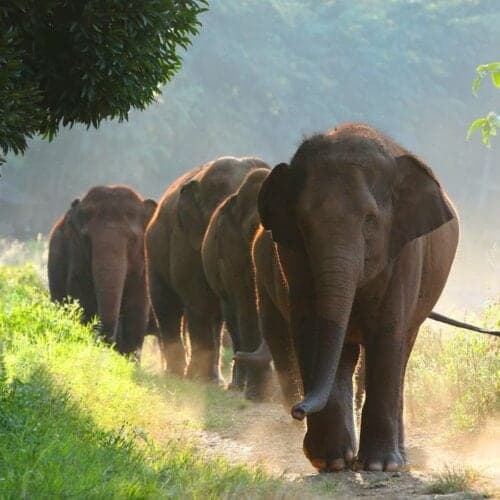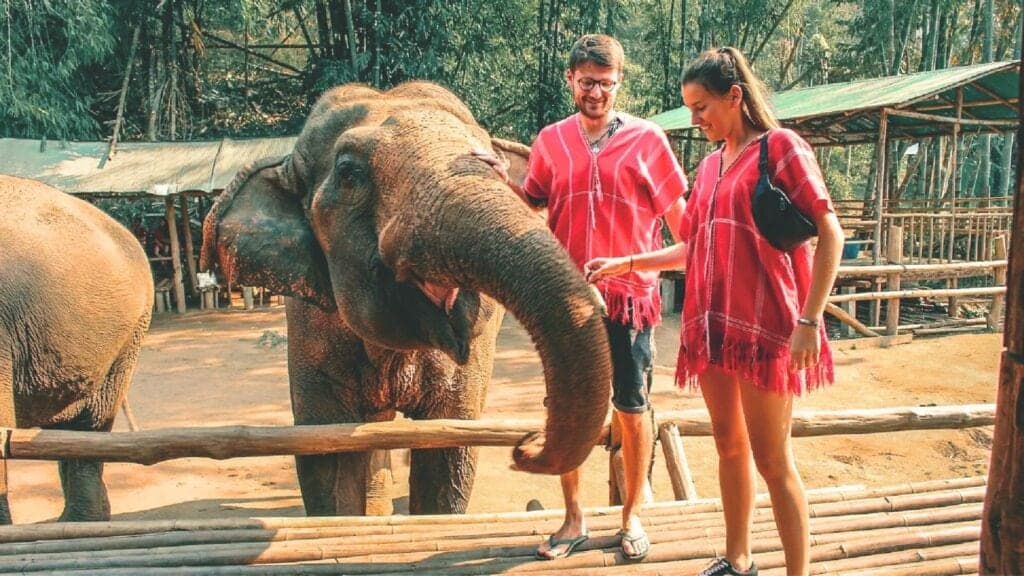
For most travellers in 2026, the ethical-and-accessible Chiang Mai elephant sanctuary picks are: Elephant Nature Park (largest, most famous, runs at scale), BLES in Sukhothai (smallest, deepest ethics, hardest to book), Boon Lott's in Sukhothai (overnight-only, intimate), and a tight roster of community-run Karen-village camps in Mae Wang valley for affordable day trips. Skip everything in Mae Sa valley. This is a ranked operator opinion based on visits to all camps mentioned.
Disclosure: We publish chiangmaigotours.com and sell Chiang Mai elephant tours. We've visited every camp discussed below and reviewed their public policies as of 2026-04-29. We don't pay competitors for placement. Where we mention competitor platforms (Viator, GetYourGuide), the source is each platform's public listings.
What makes one sanctuary better than another?
Three factors define ethical quality: passes the 3-Question Test (no riding, no chains, no shows), has a herd size appropriate to its land, and operates on the elephants' schedule rather than the tour bus's.
We covered the 3-Question Test in detail in our ethical screening framework. It's the baseline. Above that baseline, camps differ on:
- Herd-to-land ratio. ENP has ~80 elephants on 250 acres (3.1 acres per elephant). BLES has 8 elephants on 600 acres (75 acres per elephant). Lower density means lower stress and more natural foraging behaviour.
- Daily visitor count. A camp that sees 20 visitors per day allows quieter, calmer interaction. A camp hosting 200+ runs more like a working farm-with-tourists.
- Mahout-to-elephant ratio. One mahout per elephant is industry standard. The mahout relationship is the most important welfare variable — a long-tenured mahout reads the elephant's stress signals; a part-time mahout doesn't.
- Veterinary care. Onsite vet vs visiting vet matters for older elephants.
- Sourcing transparency. Does the camp publicly disclose where each elephant came from?
The ranking below considers all five factors, not just the 3-Question Test floor.
Where does Elephant Nature Park rank?
ENP is the pioneer and remains the most-visible ethical camp. Genuinely ethical at the policy level but increasingly crowded — day-visit experience has become noticeably more theme-park-like since 2020.
Lek Chailert founded ENP in 1996 after rescuing her first elephant. The organisation has rescued 80+ elephants over three decades, runs community partnerships, and built the Save Elephant Foundation as a regional umbrella. ENP also lobbies the Thai government on elephant welfare policy and trains staff at smaller camps across Southeast Asia.
The policy ethics are airtight: no riding, no chains during the day (overnight tethering in some pens is briefly used), no shows, no painting, no circus tricks.
The experience criticism is real: peak-day visitor counts reach 400. The bathing zones become busy. The walks through the elephant-feeding area are crowded. Lek's reputation gets some elephants surrendered to ENP that other camps would reject, which means the operation is necessarily large.
| Aspect | ENP day visit | ENP overnight |
|---|---|---|
| Cost per person | ~฿2,500 | ~฿6,000 per night |
| Time on site | 5-6 hours | 20+ hours |
| Elephant proximity | Moderate (busy crowds) | Higher (smaller group at night) |
| Educational depth | Tour briefing + observation | Daily talks, behind-scenes |
| Booking lead time | 1-4 weeks | 1-3 months |
Our recommendation: ENP day visit is a fine first elephant experience for travellers who want the iconic-name option. The overnight is better. For more intimate ethics, look elsewhere.
What about BLES (Boon Lott's Elephant Sanctuary)?
BLES is the gold standard for elephant welfare in Thailand — but it's in Sukhothai province (5-6 hours south of Chiang Mai), only takes overnight guests, and books out months ahead.
Boon Lott's was founded in 2007 by Katherine Connor in memory of her rescued elephant Boon Lott ("Survivor"). The sanctuary has 8 elephants on roughly 600 acres of forest with two staff houses for overnight guests. No day visits. Maximum 3-4 guests per night.
What makes BLES different:
- Pure observation model. Guests follow elephants on their daily walks through forest at distance. No feeding except naturally-fallen fruit. No bathing-as-activity.
- Long-term commitment. Connor's policy is permanent retirement — elephants that arrive stay for life. The herd is closed; new elephants only arrive when funding allows expansion.
- Mahout-led, not visitor-led. Each elephant has its mahout. Visitor activities follow the elephant's day, not the reverse.
- No on-site veterinary tourism. Vets visit on schedule but BLES doesn't allow guest participation in care procedures.
The catches: location (Sukhothai is genuinely far from Chiang Mai), price (฿12,000-฿15,000 per night), and availability (book 6-12 months ahead). If you're doing a longer Thailand trip and can spare three days, BLES is the cleanest possible elephant experience in the country.
Boon Lott's vs BLES — same or different?
They're affiliated but separate operations. Boon Lott's is the elephant name. BLES is the sanctuary named after him. Some marketing material uses both names interchangeably — they refer to the same place.
This is a common confusion online. The sanctuary's official short name is BLES (Boon Lott's Elephant Sanctuary). Boon Lott was the founding elephant who died in 2008. Some travel articles refer to the sanctuary as "Boon Lott's." Both names point at the same place in Sukhothai.
Where does Mae Lao Elephant Nursery fit?
Mae Lao is the strongest mid-tier option — community-operated, smaller scale (~10 elephants), passes the 3-Question Test, and is affordable at ฿1,800-฿2,300 per day visit.
Mae Lao Elephant Nursery is about 70km north of Chiang Mai in Wiang Pa Pao district. It's a Karen-community-run operation founded around 2016 with the help of a small NGO. The herd includes several former logging-camp elephants and two calves born at the sanctuary.
What works:
- Smaller scale. 30-50 day visitors maximum. Less crowded than ENP.
- Community ownership. Local Karen families operate the camp; tourism revenue stays in the village.
- 3-Question compliant. No riding, no chains during day, no shows.
- Reasonable price. ฿1,800-฿2,300 day rates undercut ENP and most of the larger sanctuaries.
What's weaker:
- Less educational programming. The mahouts are excellent but English-language tour content is thinner than at ENP.
- Newer operation. Founded 2016 means less institutional history. Funding stability isn't guaranteed long-term.
- Smaller herd means less diversity of elephant personalities to observe.
For travellers wanting a smaller, more affordable, genuinely ethical first elephant experience, Mae Lao is our most-recommended pick in the Chiang Mai region. The closest bookable equivalent on our roster is our half-day Karen hill tribe sanctuary experience, which runs the same small-group, no-riding model.
What about the larger camps in Mae Taeng?
Mixed. Mae Taeng valley has both genuinely ethical camps and rebranded riding camps within minutes of each other. Specific names matter — vet each camp individually rather than trusting the valley name.
Mae Taeng was historically the most touristy elephant valley (closest to Chiang Mai, easiest road access). The cluster of "elephant parks" along the Mae Taeng road still includes camps that offer riding, shows, and chained-leg displays.
The ethical Mae Taeng options as of 2026:
- Several Karen-village camps in upper Mae Taeng. Smaller scale, properly ethical, harder to book without local operator help.
- Elephant Jungle Sanctuary (multiple brands using similar names). Mixed reviews — some locations have improved practices, others have not. Vet by specific location, not brand name.
The avoid list (broad guidance, not specific accusation): any camp with "ride" or "trekking" in its package names, any camp under ฿1,500 day rate, and any camp that won't answer the 3-Question Test in writing.
Day visit vs overnight: which is right for you?
Day visit is enough for first-time visitors and families. Overnight makes sense for repeat elephant enthusiasts, photographers, and travellers with 7+ days and budget for the upgrade.
| Factor | Day visit | Overnight |
|---|---|---|
| Cost | ฿1,800-฿3,500 | ฿8,000-฿15,000+ per night |
| Total time | 5-9 hours | 2 days minimum, often 3 |
| Elephant exposure | 2-4 hours active | 12-15 hours active |
| Photography opportunities | Limited to one light window | Multiple golden hours |
| Welfare impact | Modest (you're a tourist) | Lower per-day stress on elephants |
| Education depth | Tour briefing + observation | Daily classes, behind-scenes |
| Right for | First-timers, families, short trips | Repeat visitors, photographers, longer trips |
The overnight argument is strongest at BLES and Boon Lott's because their model doesn't have day visits — overnight is the only access. At ENP, the overnight upgrade is a genuine improvement but not a transformation. At smaller Mae Lao or Karen-village camps, overnight options may not exist, though our 2-day ethical elephant sanctuary overnight homestay gives the longer-observation experience without travelling all the way to Sukhothai.
What does an ethical day look like end-to-end?
Pickup 7-8am, transit 1-2 hours, arrive sanctuary, brief safety talk, feed elephants (banana/sugarcane), walk with herd or observe from distance, lunch, optional bathing observation, return drive, hotel by 4-5pm.
The standard ethical-camp day:
- Hotel pickup (7-8am). Air-conditioned minivan, typically 8-10 guests max for ethical camps.
- Drive to sanctuary (60-120 min). Most camps are 60-90 km from Chiang Mai. Roads vary from highway to dirt-track depending on camp.
- Welcome and safety briefing (15-30 min). Camp ethics explained, behaviour rules clarified, change into camp clothes if provided.
- Feeding session (45-60 min). You offer bananas, sugarcane, watermelon to elephants. They take food from your hands. Mahouts supervise.
- Walk or observation (1-2 hours). Walk alongside the herd at distance, or sit in an observation area while the elephants forage.
- Lunch (45-60 min). Usually a Thai meal, sometimes Karen village food. Vegetarian options usually available.
- Bathing session (45-60 min, optional). The elephant goes in the river or pond on its own; guests can splash water from a distance. Some camps skip this entirely.
- Return drive (90-120 min). Back at hotel 4-5pm typically.
This pattern repeats across ethical Mae Wang, Mae Taeng, and Wiang Pa Pao camps with minor variations. If you want to pair the elephant time with a second activity in the same valley, our elephant sanctuary with bamboo rafting day keeps the ethical-camp visit and adds a gentle river leg.
How do you actually verify a camp before booking?
Email the camp directly with the three questions. If they answer specifically and offer a written welfare policy, proceed. If they evade or send marketing language without addressing specifics, skip.
The verification process:
- Email or messenger the camp with the three test questions verbatim: rides, chains, shows.
- Wait 48-72 hours for response. Good camps reply within 2 business days.
- Read the response carefully. "We are a fully ethical sanctuary" is not an answer. "No guest is permitted on an elephant at any point. Elephants are housed in fenced pens overnight without chains. No painting, music, or performance activities" is an answer.
- Cross-check on third-party sources. Search the camp name plus "review" plus the current year. Recent traveller blogs are more current than TripAdvisor.
- Book through a direct operator that vets the camp themselves (us, ToursByLocals' Chiang Mai guides, Withlocals' Chiang Mai network) rather than a marketplace.
What's our actual ranked recommendation?
For most Chiang Mai visitors with 5-7 days: day trip to either Mae Lao Elephant Nursery or a Karen-village Mae Wang camp. For deeper experiences: ENP overnight or BLES (with the lead time and budget).
Our typical recommendation tree:
- Short trip (2-3 days), need an elephant day, average budget: Mae Lao Elephant Nursery day trip. ฿2,000 per person, 3-Question compliant, smaller scale than ENP.
- Standard trip (5-7 days), iconic-name preference: Elephant Nature Park day visit. ฿2,500 per person, the famous one.
- Standard trip, smaller-scale preference: Karen-village Mae Wang day trip. Smaller herd, quieter day.
- Longer trip (7+ days), deeper experience, willing to spend: ENP 2-night volunteer programme. ฿12,000-฿15,000 total, hands-on but ethics-led.
- Long trip, premium experience, lead time to spare: BLES (Sukhothai), 2-3 nights. ฿25,000+ total. Best welfare ethics in Thailand.
We don't recommend Mae Sa valley camps to anyone, regardless of budget.
Book the Karen hill tribe elephant sanctuary daySmall groups, ethical camp, hotel pickup — passes the 3-Question TestFurther reading worth your time:
- Ethical elephant sanctuary screening: the 3-Question Camp Test
- Chiang Mai elephant tours: real price breakdown
- Best Viator alternatives for Chiang Mai elephant tours
- Chiang Mai with kids: family-friendly elephant options
External references for elephant welfare framework: Save Elephant Foundation (ENP's parent organisation), BLES Sukhothai, and the World Animal Protection captive elephant welfare framework. All accessed 2026-04-29.
Frequently asked questions
Is Elephant Nature Park overcrowded?
Yes, on most days. ENP hosts 200-400 day-visitors and accepts 30-80 overnight volunteers across its 250-acre property. The herd is also large (~80 elephants in the main project plus partner-village groups). Critics say it's become a small theme park; defenders point out the scale is necessary to fund the operation. Our take: ENP is genuinely ethical (no riding, no chains, no shows) but the experience is less intimate than smaller sanctuaries. If proximity to fewer elephants matters, look at BLES or Boon Lott's instead. If you want the pioneering organisation that built Thai elephant rescue, ENP.
BLES vs ENP — which is better?
Different things. BLES (Boon Lott's Elephant Sanctuary) in Sukhothai province is smaller (8 elephants, ~3 overnight guests per night), no day visitors, and entirely observation-based. It's the cleanest ethics in Thailand. ENP is larger, more accessible, more famous, and runs better educational programming. BLES costs roughly 3x per night and books out 6-12 months ahead. If you want intimate observation of a small herd and have the budget and lead time, BLES. If you want to see a working rescue at scale within easy day-trip distance of Chiang Mai, ENP.
Day visit or overnight?
For most travellers, a day visit is enough — you get the elephant experience without the cost and travel commitment of overnight. Overnight is genuinely better for the elephants (fewer transitions, calmer environment) and gives you longer observation periods. But the day rate at most ethical camps (฿2,100-฿3,500) versus the overnight rate (฿8,000-฿15,000 per night) is a 4-5x premium. Worth it if you have time and budget; not necessary for the average traveller's first elephant experience in Thailand.
Cheapest ethical option?
Mae Lao Elephant Nursery, a smaller community-run camp 70km north of Chiang Mai, runs day trips from ฿1,800 per person and passes our 3-Question Test (no riding, no chains, no shows). The Karen-village setup at Elephants of Mae Wang valley has similar pricing. Anything advertised below ฿1,500 for a 'sanctuary' day trip should be viewed skeptically — the unit economics don't work without rides or shows. The cheapest genuinely-ethical day options will be in the ฿1,800-฿2,300 range from operator-direct booking.
Is bathing the elephants ethical?
Once-daily bathing on the elephant's natural cooling schedule is fine — it's normal behaviour they'd do in the wild. Multiple scheduled bathing sessions per day to fit tour-group schedules is not fine, even at otherwise-good camps. The clean test: ask the camp how many bathing sessions per day and on whose schedule. One session at midday: fine. Four sessions to match four daily tour groups: borderline. The bathing-experience-as-feature is more about photo opportunities than welfare.
What about the camps in Mae Sa Valley?
Largely avoid. Mae Sa Valley is the most touristy of the Chiang Mai elephant-camp zones and most of the camps there still offer riding, shows, or both. A few have rebranded with 'sanctuary' or 'rescue' language but maintain the practices. Mae Wang and Mae Taeng valleys have better ratios of ethical-to-not, though both have failed camps too. The mountain camps in Chiang Dao district are the cleanest cluster but require longer transit. Our roster intentionally skips Mae Sa Valley entirely.
Frequently asked questions
Is Elephant Nature Park overcrowded?
Yes, on most days. ENP hosts 200-400 day-visitors and accepts 30-80 overnight volunteers across its 250-acre property. The herd is also large (~80 elephants in the main project plus partner-village groups). Critics say it's become a small theme park; defenders point out the scale is necessary to fund the operation. Our take: ENP is genuinely ethical (no riding, no chains, no shows) but the experience is less intimate than smaller sanctuaries. If proximity to fewer elephants matters, look at BLES or Boon Lott's instead. If you want the pioneering organisation that built Thai elephant rescue, ENP.
BLES vs ENP — which is better?
Different things. BLES (Boon Lott's Elephant Sanctuary) in Sukhothai province is smaller (8 elephants, ~3 overnight guests per night), no day visitors, and entirely observation-based. It's the cleanest ethics in Thailand. ENP is larger, more accessible, more famous, and runs better educational programming. BLES costs roughly 3x per night and books out 6-12 months ahead. If you want intimate observation of a small herd and have the budget and lead time, BLES. If you want to see a working rescue at scale within easy day-trip distance of Chiang Mai, ENP.
Day visit or overnight?
For most travellers, a day visit is enough — you get the elephant experience without the cost and travel commitment of overnight. Overnight is genuinely better for the elephants (fewer transitions, calmer environment) and gives you longer observation periods. But the day rate at most ethical camps (฿2,100-฿3,500) versus the overnight rate (฿8,000-฿15,000 per night) is a 4-5x premium. Worth it if you have time and budget; not necessary for the average traveller's first elephant experience in Thailand.
Cheapest ethical option?
Mae Lao Elephant Nursery, a smaller community-run camp 70km north of Chiang Mai, runs day trips from ฿1,800 per person and passes our 3-Question Test (no riding, no chains, no shows). The Karen-village setup at Elephants of Mae Wang valley has similar pricing. Anything advertised below ฿1,500 for a 'sanctuary' day trip should be viewed skeptically — the unit economics don't work without rides or shows. The cheapest genuinely-ethical day options will be in the ฿1,800-฿2,300 range from operator-direct booking.
Is bathing the elephants ethical?
Once-daily bathing on the elephant's natural cooling schedule is fine — it's normal behaviour they'd do in the wild. Multiple scheduled bathing sessions per day to fit tour-group schedules is not fine, even at otherwise-good camps. The clean test: ask the camp how many bathing sessions per day and on whose schedule. One session at midday: fine. Four sessions to match four daily tour groups: borderline. The bathing-experience-as-feature is more about photo opportunities than welfare.
What about the camps in Mae Sa Valley?
Largely avoid. Mae Sa Valley is the most touristy of the Chiang Mai elephant-camp zones and most of the camps there still offer riding, shows, or both. A few have rebranded with 'sanctuary' or 'rescue' language but maintain the practices. Mae Wang and Mae Taeng valleys have better ratios of ethical-to-not, though both have failed camps too. The mountain camps in Chiang Dao district are the cleanest cluster but require longer transit. Our roster intentionally skips Mae Sa Valley entirely.