Chiang Dao is a 75km drive north of Chiang Mai delivering a day-trip combo that's hard to beat — a 12km cave system with optional gas-lantern guides, the Doi Luang Chiang Dao limestone massif looming overhead, a working monastery with a Burmese-style reclining Buddha, and a herb-steam bath in town for ฿100. It's the day trip we recommend for second-time visitors who've already done Doi Inthanon and want something quieter without sacrificing scenery.
What's actually at the Chiang Dao caves?
A 12-kilometre limestone cave system at the base of Doi Luang Chiang Dao, with five named caves — Tham Phra Non, Tham Mae, Tham Kaeo, Tham Naam, and Tham Si Yom — plus a working Buddhist monastery at the entrance.
The first cave, Tham Phra Non (Cave of the Reclining Buddha), is electrified and walkable in flip-flops if needed. It contains a 9-metre reclining Buddha, several smaller shrines, and the main chamber's mineral formations. Most tourists do this cave only and leave thinking they've "seen Chiang Dao caves." They've seen maybe 20% of it.
The deeper caves require a lantern guide. The Tham Mae and Tham Kaeo sections are 1km of low-ceiling passages, water-pool chambers, and limestone formations with names like the Golden Elephant and the Buddha's Pillow. Tham Naam contains the underground stream that emerges as the Mae Naam Ping tributary half a kilometre downstream. Our Chiang Dao cave exploring and kayaking tour covers the deeper sections with a guide and adds a paddle on the stream below.
| Cave | Lighting | Difficulty | Time | Worth it? |
|---|---|---|---|---|
| Tham Phra Non (Cave 1) | Electric | Easy, partial wheelchair | 20-30 min | Yes — main reclining Buddha |
| Tham Mae (Cave 2) | Gas lantern + guide | Medium, some stooping | 40-60 min | Yes — best chamber |
| Tham Kaeo (Cave 3) | Gas lantern + guide | Medium, low ceilings | 30-40 min | Yes — water pools |
| Tham Naam (Cave 4) | Gas lantern + guide | Hard, water passages | 60+ min | Only if avid caver |
| Tham Si Yom (Cave 5) | Guide-only, restricted | Hard | Permit required | Skip for day trip |
What's the right itinerary for a day trip?
Leave Chiang Mai at 8am. Cave by 9:30, lantern tour to deeper caves, lunch in Chiang Dao village, herb steam bath, Pha Daeng viewpoint hike, back to Chiang Mai by 7pm.
A solid day looks like this:
- 8:00 — Pickup from Chiang Mai. Highway 107 north.
- 9:30 — Park at Wat Tham Chiang Dao. Walk past the fish pond to the cave entrance.
- 9:45 — First cave (Tham Phra Non). Self-guided, 30 minutes.
- 10:15 — Hire lantern guide for deeper caves. ฿200 per group of 1-5. Cover Tham Mae and Tham Kaeo, ~80 minutes.
- 11:45 — Coffee or fruit at the monastery's outer courtyard.
- 12:30 — Lunch in Chiang Dao town. Chiang Dao Nest's open kitchen is the standard recommendation — northern Thai plus Western fusion.
- 14:00 — Herb steam bath. ฿100, 30-40 minutes.
- 15:00 — Pha Daeng viewpoint hike. 1km up, 1km down. 90 minutes.
- 17:00 — Drive back to Chiang Mai.
How does Chiang Dao compare to Doi Inthanon?
Chiang Dao is closer (75km vs Doi Inthanon's 105km drive to the summit road), quieter, lower elevation, and the cave-plus-mountain combo is more varied than Doi Inthanon's series of waterfalls and summit. Doi Inthanon wins on the boardwalk and the twin pagodas.
For first-time Chiang Mai visitors with one day to spare, Doi Inthanon is the safer pick — it's the more famous experience, the boardwalk and twin pagodas deliver clear hero-shot moments, and tour logistics are easier. If that's you, our Doi Inthanon and Kew Mae Pan trek is the comparison point. For second-time visitors or anyone wanting fewer crowds, Chiang Dao is the better choice.
What's the herb steam bath about?
A community-run wood-fired sauna in Chiang Dao town that pumps Thai herbal steam (lemongrass, kaffir lime, ginger) into a small wooden hut for ฿100. Twenty to thirty minutes of sweating then a cold-water rinse — locally beloved post-hike.
The herb steam bath sits about 500m from the cave parking, on the road into Chiang Dao town. It's a basic wooden hut with separate men's and women's chambers, attended by a couple of local women who keep the fire going and refresh the herbs every few sessions. You'll smell it before you see it — the lemongrass-eucalyptus steam carries on the wind.
Bring your own towel (or rent for ฿20) and flip-flops. Plan 30-45 minutes total — 20 inside, 10-15 cooling down with cold ginger tea served at the bench outside. Cardio patients and pregnant women should skip.
Are the deeper caves safe?
Yes, with the lantern guide. The guides are women from the local village association who've worked the caves for years. The route they take stays well inside the safe sections — no flooding risk except in heavy rain (August through October), no bat-roost zones, no carbon-dioxide pockets.
Two genuine risks: slippery limestone floors and head-bumps on low ceilings. Wear closed shoes with grip. Tall visitors will duck repeatedly — anything over 6 feet is going to crouch in three or four spots.
The cave is closed only when the river floods (rare, 2-3 days per year in August-October). In dry months it's open daily 8am-5pm.
What about the Pha Daeng viewpoint hike?
A 2-kilometre round-trip hike to a cliff outcrop with a panoramic view of Doi Luang Chiang Dao's main face. The hardest 30 minutes are at the start — a 200m climb up a forest trail. The viewpoint itself is rope-fenced and safe.
The trailhead is 4km past the cave parking on the road that climbs west toward the lower ranger station. Cars park at a small dirt pull-out marked with a faded sign. From there it's 50 minutes up at a moderate pace, 30 minutes down, plus 20-30 minutes at the viewpoint itself for photos.
Late afternoon (4-5pm) is the best light — the limestone cliff face glows orange-pink as the sun drops. Sunset itself is risky for the descent if you don't have headlamps; aim to start back down 45 minutes before sunset.
This is the only spot near Chiang Dao town where you get a full view of Doi Luang Chiang Dao's south face without committing to the 2-day summit climb.
Should we add a hill-tribe stop?
Maybe — but only the genuinely community-run village of Muang Khong, not the Long Neck Karen photo-op villages further north. Muang Khong is 25 minutes north of Chiang Dao caves on a turn-off most tourists don't take.
Muang Khong is a Tai Lue (Lanna ethnic minority) village that runs a small visitor program with weaving demonstrations, a herbal-tea tasting, and a small lunch operation. Entry by donation (฿100-200 suggested). Visitors leave on their own timeline rather than as a tour group.
We do not recommend the Long Neck Karen displays further north along the Burma border. The Padaung women in those villages live in refugee-camp conditions and don't receive most of the entry-fee revenue — it's exploitative tourism, not cultural exchange. If you want hill-tribe cultural learning, the hill-tribe trekking guide covers the better options.
What does it cost as a tour?
Direct operator: ฿2,200-2,800 per person for a group day trip. Private car-and-driver: ฿4,800-6,000 for the day. Self-drive: ฿1,200-1,500 in rental, fuel and entry fees plus ฿200 for the cave guide.
The cave entry itself is ฿40 per foreign adult, plus the ฿200 group fee for the lantern guide. Lunch in town runs ฿200-400 per person. Herb steam bath ฿100. The Pha Daeng viewpoint is free.
If you're a confident driver, self-drive is the cheapest option — the road is straightforward two-lane highway most of the way, well-signed, with petrol stations every 20km. The drive itself is part of the day's pleasure on a clear morning.
When is the best time to visit?
November through February. Cool weather, dry caves, clear viewpoint air. March through May is hot and the viewpoint is hazy from burning season. June through October has the most cave-stream water but occasional flooding closes the deeper sections.
January and December are peak month for the Pha Daeng viewpoint — air clarity is at its annual best and Doi Luang Chiang Dao's limestone catches the light beautifully. Bring a light jacket for the cave (cool inside, around 18-20C year-round) and a warm layer for the viewpoint if you're doing it for sunset.
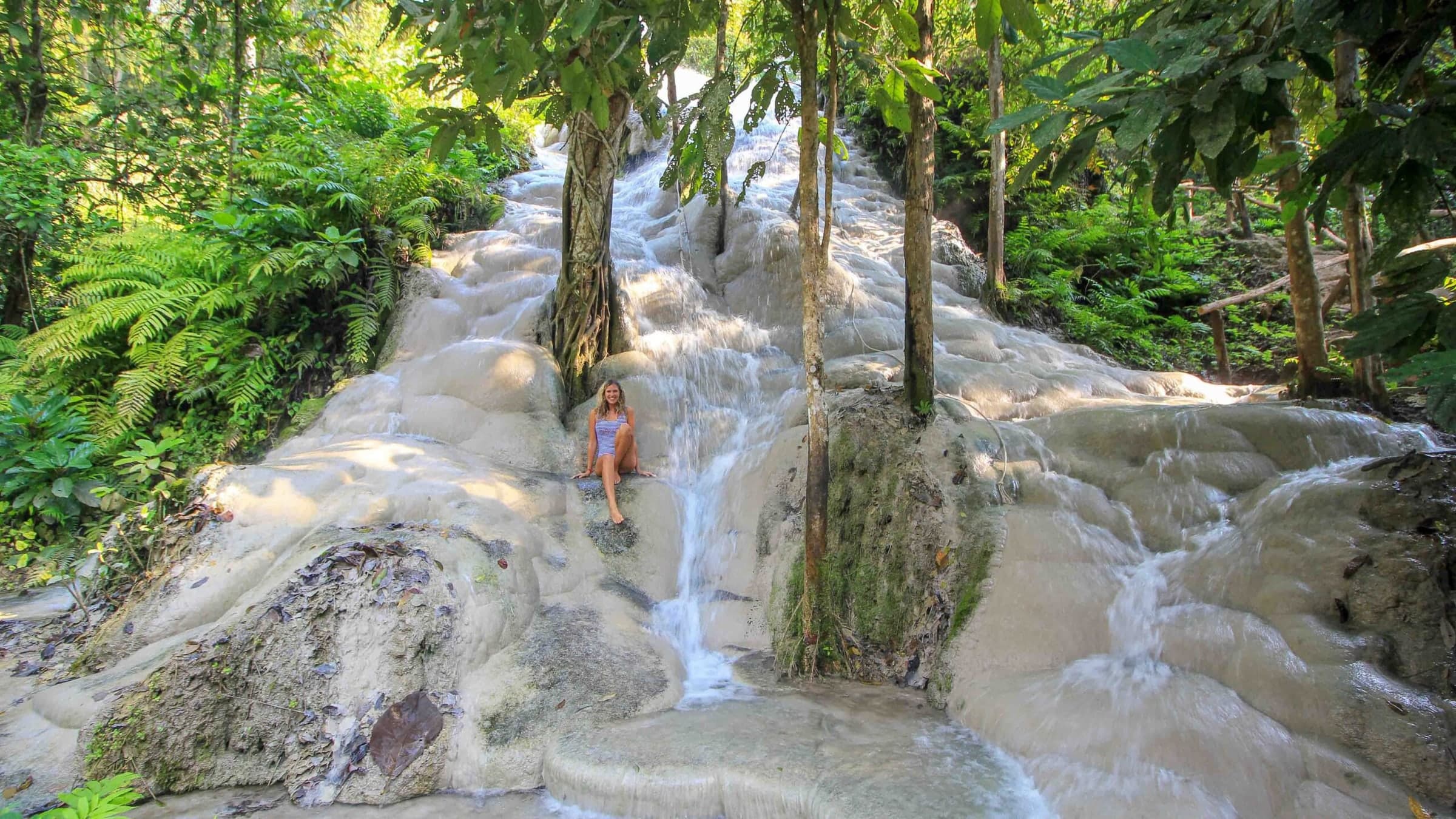
For the related broader-area planning, see our sticky waterfalls guide — the Bua Tong sticky falls combine well with Chiang Dao on a two-day northern loop. The hill-tribe trekking guide covers multi-day options if Chiang Dao whets your appetite.
For more cave-specific reference, the Department of National Parks Thailand covers official park information.
Book the Chiang Dao cave exploring and kayaking dayLantern-guided deeper caves, stream paddle, hotel pickupMore northern Thailand day trips:
- Sticky waterfalls — the natural rock climb without the rope
- Hill-tribe trekking from Chiang Mai — the multi-day version
Frequently asked questions
Are the Chiang Dao caves wheelchair accessible?
The first cave (Tham Phra Non) is partially accessible — the entrance and the reclining Buddha chamber have flat concrete floors and a ramp. Wheelchairs can manage roughly 150m of cave. The deeper caves (Tham Mae, Tham Kaeo, Tham Naam) require lantern guides, low ceilings, and a few stair sections — not wheelchair-friendly. The walk from the parking lot to the cave entrance is paved and gentle. For visitors with limited mobility, the temple, fish pond and first cave deliver about 70% of the experience without the deeper sections.
Are the gas-lantern guides at Chiang Dao caves tip-only?
There's a fixed fee of around ฿200 per group for the deeper-cave guided tour, which covers the lantern and guide for up to five people. The guide is run by the local women's collective. Most visitors add a ฿100-200 tip at the end if the tour was good. The fixed fee is non-negotiable and posted at the cave office. Some operators advertise this as 'tip-only' which is misleading. Don't try to enter the deeper caves without a guide — the passages are unmarked and locals do find lost tourists once or twice a year.
Can you climb Doi Chiang Dao in a single day from Chiang Mai?
Technically yes, but you'll regret it. The summit climb is two days minimum (one night camping near the summit). Day-trip access stops at the lower ranger station around 1,400m — the actual summit (2,225m) is a 9-hour round trip from that station and requires a permit issued at Mae Cho ranger station the day before. If you want a mountain view without the climb, the day-trip alternative is the Pha Daeng cliff viewpoint (1km hike from the road), which gives you the iconic Doi Luang Chiang Dao silhouette without the overnight.
Is Chiang Dao kid-friendly?
Yes, for kids 5+. The first cave is short and well-lit. The fish pond outside the temple is a hit for any age. The herb steam bath in town is fine for older kids but not toddlers. The deeper caves with gas-lantern guides are too dark and uneven for under-7s — most parents leave one adult with the smaller kids at the first cave while the other does the deeper tour. Bring closed-toe shoes for kids (cave floors are wet) and a small flashlight as backup.
How long does a Chiang Dao day trip take?
Plan a full day — 9 hours door-to-door from Chiang Mai. The drive is 75km each way and takes 90 minutes outside peak. Time at the cave is 90-120 minutes including the deeper tour. Lunch in Chiang Dao town adds another hour. If you add the herb steam bath (40 min) and the Pha Daeng viewpoint hike (2 hours round trip), you've used the entire day. Half-day tours exist but skip the viewpoint and rush the cave — they're not worth the drive.
Is Chiang Dao busier than Doi Inthanon?
Significantly quieter. Doi Inthanon gets 1.5-2 million visitors annually; Chiang Dao caves get 200-300,000 (Department of National Parks, 2024). On a typical December weekday, the deeper caves see fewer than 40 visitors all day. Even at Songkran or Chinese New Year peak, you're rarely waiting more than 15 minutes for a lantern guide. This is the main reason we recommend Chiang Dao for travellers on their second Chiang Mai trip or anyone who wants Doi Inthanon's terrain without Doi Inthanon's crowds.
Frequently asked questions
Are the Chiang Dao caves wheelchair accessible?
The first cave (Tham Phra Non) is partially accessible — the entrance and the reclining Buddha chamber have flat concrete floors and a ramp. Wheelchairs can manage roughly 150m of cave. The deeper caves (Tham Mae, Tham Kaeo, Tham Naam) require lantern guides, low ceilings, and a few stair sections — not wheelchair-friendly. The walk from the parking lot to the cave entrance is paved and gentle. For visitors with limited mobility, the temple, fish pond and first cave deliver about 70% of the experience without the deeper sections.
Are the gas-lantern guides at Chiang Dao caves tip-only?
There's a fixed fee of around ฿200 per group for the deeper-cave guided tour, which covers the lantern and guide for up to five people. The guide is run by the local women's collective. Most visitors add a ฿100-200 tip at the end if the tour was good. The fixed fee is non-negotiable and posted at the cave office. Some operators advertise this as 'tip-only' which is misleading. Don't try to enter the deeper caves without a guide — the passages are unmarked and locals do find lost tourists once or twice a year.
Can you climb Doi Chiang Dao in a single day from Chiang Mai?
Technically yes, but you'll regret it. The summit climb is two days minimum (one night camping near the summit). Day-trip access stops at the lower ranger station around 1,400m — the actual summit (2,225m) is a 9-hour round trip from that station and requires a permit issued at Mae Cho ranger station the day before. If you want a mountain view without the climb, the day-trip alternative is the Pha Daeng cliff viewpoint (1km hike from the road), which gives you the iconic Doi Luang Chiang Dao silhouette without the overnight.
Is Chiang Dao kid-friendly?
Yes, for kids 5+. The first cave is short and well-lit. The fish pond outside the temple is a hit for any age. The herb steam bath in town is fine for older kids but not toddlers. The deeper caves with gas-lantern guides are too dark and uneven for under-7s — most parents leave one adult with the smaller kids at the first cave while the other does the deeper tour. Bring closed-toe shoes for kids (cave floors are wet) and a small flashlight as backup.
How long does a Chiang Dao day trip take?
Plan a full day — 9 hours door-to-door from Chiang Mai. The drive is 75km each way and takes 90 minutes outside peak. Time at the cave is 90-120 minutes including the deeper tour. Lunch in Chiang Dao town adds another hour. If you add the herb steam bath (40 min) and the Pha Daeng viewpoint hike (2 hours round trip), you've used the entire day. Half-day tours exist but skip the viewpoint and rush the cave — they're not worth the drive.
Is Chiang Dao busier than Doi Inthanon?
Significantly quieter. Doi Inthanon gets 1.5-2 million visitors annually; Chiang Dao caves get 200-300,000 (Department of National Parks, 2024). On a typical December weekday, the deeper caves see fewer than 40 visitors all day. Even at Songkran or Chinese New Year peak, you're rarely waiting more than 15 minutes for a lantern guide. This is the main reason we recommend Chiang Dao for travellers on their second Chiang Mai trip or anyone who wants Doi Inthanon's terrain without Doi Inthanon's crowds.