Mae Kampong is a working Northern Thai village 50 km from Chiang Mai, 1,300 metres up in the forest, where ฿900 to ฿1,400 buys you a homestay night with tea-plantation walks, a small waterfall, and a 5 to 8 degree temperature drop from the city. As a half-day trip it is rushed. As a slow overnight, it is one of the most genuine village experiences within easy reach of Chiang Mai. This is what to expect and how to plan it.
Why does everyone keep recommending Mae Kampong?
Because it is the closest authentic village stay to Chiang Mai, the elevation drop makes it pleasantly cool, and the community-tourism model means the money stays in the village rather than going to outside operators.
Mae Kampong joined the community-based tourism (CBT) network in the early 2000s. The Tourism Authority of Thailand has held it up as a CBT model village since 2012 (source: Tourism Authority of Thailand, CBT village programme, accessed 2026-01-28). Roughly 25 households operate homestays on a shared rotation system, so no single family carries all the load, and bookings are channelled through a village committee. The result is uneven but generally fair distribution of tourist income across the village.
For travellers, the value is a working Northern Thai village that has not been rebuilt as a stage set. Houses are real houses, the people are real residents, and the tea slopes are commercially worked rather than tended for show.
What does the drive from Chiang Mai actually look like?
About 50 km, 70 to 90 minutes door to door, on a mix of highway and mountain road. The last 8 km is steep and twisty — fine in a private car or van, demanding for first-time scooter riders.
The route runs east on Highway 1317 through San Kamphaeng (the famous handicraft-and-hot-springs district), then turns north onto Mountain Road 4019 for the climb. The climb is the section that matters. It is paved, two lanes, and has switchbacks that drop visibility around blind corners. Local pickup trucks drive it twice a day at speed. Drive defensively.
| Transport option | Cost (return, 2 pax) | Travel time | Comfort | When it makes sense |
|---|---|---|---|---|
| Self-drive car (rental) | ฿1,200–฿1,800/day + fuel | 70 min each way | High | Comfort with Thai roads |
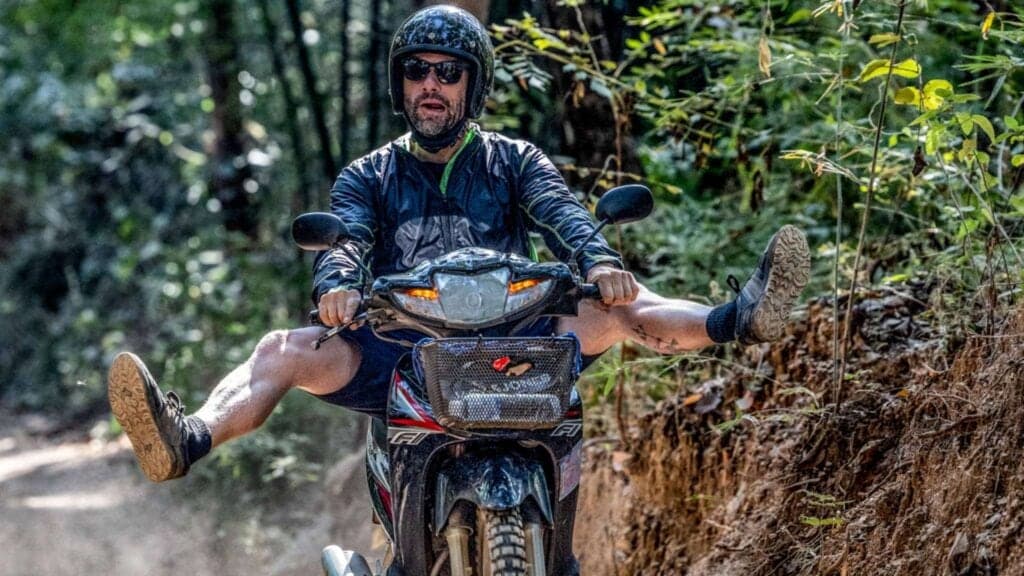
| Self-drive scooter | ฿250–฿400/day + fuel | 90 min each way | Low (mountain road) | Experienced riders only |
| Songthaew red truck (charter) | ฿1,500–฿2,000 round trip | 80 min each way | Medium | Mid-day day trips |
| Grab/InDriver car | ฿800–฿1,200 one-way | 70 min each way | High | Booking back from village is harder |
| Guided tour (Chiang Mai Go Tours) | ฿1,800–฿2,400 per person | Door-to-door | High, plus guide | First-timers, language barrier worry |
The cheapest option (scooter at ฿250 plus ฿80 fuel) is risky for the mountain section. The most comfortable independent option is the songthaew charter — ask any red truck at Tha Phae Gate, agree the round-trip fare before you climb in, and the driver will wait while you walk the village.
What's actually in the village to see and do?
Tea-slope walk, small waterfall (Mae Kampong Waterfall, 4 tiers), village viewpoint, hand-pressed paper workshop, a few homestay-restaurants for lunch. Total: 3 to 5 hours of real activity.
The village is organised along a single main road that follows a creek down the mountain. The walking loop is about 1.5 km. The major points of interest:
- The tea plantation slope. Visible from the village viewpoint, walkable via a short trail off the main road. The tea here is mostly Assam-strain, not the Oolong you see further north — it goes into local breakfast tea rather than export.
- Mae Kampong Waterfall. 700 metres up a trail from the village centre. Four tiers, each small. It is not Doi Inthanon's Mae Klang. It is a pleasant 25-minute round-trip walk through forest. ฿20 entry collected at the trail head some weekends.
- The village viewpoint. Free, signposted. Panoramic view of the valley below. Best in morning light. The wooden viewing platform was rebuilt in 2022.
- Mulberry-paper workshop. Small artisan house demonstrating hand-pressed Sa paper made from local mulberry bark. About ฿60 for a demo, ฿80–฿250 for a piece of finished paper as a souvenir.
- The elephant viewpoint. Five minutes' drive further up the mountain. Just a roadside lay-by with a view down to the valley. Sometimes elephants from working camps below are visible. Not always. If you want actual contact rather than a distant glimpse, book a proper Karen hill tribe elephant sanctuary visit instead — it is a separate day with no riding and small groups.
Is the homestay overnight worth the extra effort?
For travellers who want a deliberate slow-down, yes. For travellers who want comfort and convenience, no — stay in Chiang Mai and do the village as a half-day.
The homestay experience, plainly described:
- A futon on a polished wooden floor in a host family's house. Some homestays now offer beds; most are still floor mattresses.
- Mosquito net included. Bring earplugs if you are a light sleeper — Thai village mornings start with roosters before sunrise.
- Shared bathroom in most homestays. A handful have ensuite. Hot water is hit-and-miss; the shower is fine if you are not winter-fussy.
- Dinner cooked by the host family — usually 4 to 5 Northern Thai dishes including local sausage, sticky rice and a clear soup. Vegetarian works if you ask in advance.
- Breakfast around 7am, often Thai-style with rice porridge, tea and fruit.
- Wi-Fi exists in most homestays. Speed is variable. 4G works fine in the village.
Total cost ฿900–฿1,400 per person, sometimes including a guided morning walk. The price varies by which homestay the village rotation assigns you to.
What's the right time of year to visit?
November to February for cool dry weather. July to October for green tea slopes and mist (with afternoon rain). March to May for hot daytime but evening relief. Avoid the burning-season smog in late March and early April if at all possible.
The seasonal calls in plain language:
- December–January: Best mix of cool weather, no rain, clear views. Peak homestay demand — book a week ahead.
- February–March (early): Still cool, still clear. Decent value.
- Late March–mid-April: Burning season. Air quality drops, views vanish. Skip unless you absolutely cannot reschedule.
- May: Hot but tolerable at altitude. First rain showers start late May.
- June–October: Wet but green. Mist hangs in the morning. Afternoon rain often clears the air. Cheaper homestay rates.
- November: The shoulder month. Clear, cool, fewer visitors. Underrated.
What about food in the village?
Three or four homestay-restaurants serve Northern Thai lunches and snacks. Expect khao soi, sai oua (Northern Thai sausage), gaeng hung lay (Burmese-influenced pork curry), and seasonal local greens.
The cluster of restaurants around the village centre is unflashy. Wooden tables, paper menus translated into rough English. A typical lunch for two costs ฿200–฿350 including drinks. The same dishes in central Chiang Mai cost the same or slightly more — Mae Kampong is not a budget-saving lunch stop, just an in-village convenience.
The standout local thing to try is sai oua, the Northern Thai herb-and-pork sausage. Mae Kampong sausages are made in small local batches, often slightly fresher than the Old City versions. ฿40 a portion as a snack.
Can you combine Mae Kampong with other day trips?
Yes, two good combinations: Mae Kampong morning + San Kamphaeng hot springs afternoon, or Mae Kampong overnight + Doi Saket Lake on the return. Both fit a full day comfortably.
The San Kamphaeng combination works because the hot springs are on the same Highway 1317 corridor on the way back. Open 7am to 7pm, entry around ฿100, with a public outdoor pool and private hot-tub rooms. The hot tub plus tea-soaked-egg snack pairing is a small local ritual worth keeping for the end of the day.
For sticky-waterfall enthusiasts, see our sticky waterfalls Chiang Mai guide — that trip is a different direction (north, not east) and works as its own day rather than a combination. For scooter routing advice on the climb, the Chiang Mai scooter rental guide covers what to look for in a bike that can actually handle the mountain road. If you would rather have someone else handle the riding and routing, our Chiang Mai scooter adventure and river cruise tour takes the guesswork out of the mountain roads.
What's the catch with Mae Kampong?
Three: weekend crowds, limited English at most homestays, and the road quality after heavy rain. None are deal-breakers but all are worth knowing.
Saturday and Sunday lunchtime sees 200 to 400 day trippers cycle through the village. The waterfall trail becomes congested. Parking spills onto the road. Mid-week (Tuesday to Thursday) the same village feels half-empty.
English at the homestays is functional but limited. A guided trip removes this friction. Self-drivers should download Google Translate's Thai offline pack before the climb.
Road conditions are normally good. After heavy monsoon rain, occasional small mudslides close the climb temporarily. Check ahead during August and September.
Book a guided Chiang Mai countryside dayDoor-to-door from your Chiang Mai hotel, English-speaking guide, no mountain-road stressFrequently asked questions
Is Mae Kampong too touristy now?
It's busy at weekend lunchtime and quiet by 4pm. Mae Kampong has been on the day-trip radar for about 15 years, so it is no longer undiscovered. About 200 visitors come through on a typical Saturday and the small village (around 130 households) feels it. Mid-week visits, especially Tuesday to Thursday, are noticeably calmer. The homestay villagers are still local Northern Thai families, not relocated operators. The community-managed tourism model means village income is split, which is what keeps the place feeling lived-in rather than purpose-built for tour buses.
Is the Mae Kampong homestay overnight actually worth it?
If you want one slow-paced night out of Chiang Mai, yes. The homestay is a basic Thai-style room (futon on the floor, mosquito net, shared bathroom in most houses), included in a package that runs about ฿900–฿1,400 per person with dinner and breakfast. The morning after — mist over the tea slopes, no day trippers yet, village waking up — is the part you cannot get on a day trip. If you want comfort, Wi-Fi and a hot shower, stay in Chiang Mai. If you want a quiet rural evening and a slow start, the homestay is genuinely good.
Can you drive to Mae Kampong yourself, or do you need a guided tour?
You can drive yourself if you are comfortable on Thai mountain roads. The route from Chiang Mai is about 50 km, mostly on Highway 1317 then a winding mountain road up from San Kamphaeng. It takes about 70 minutes by car and 90 minutes by scooter. The last 8 km is steep and twisty — fine in a 125cc scooter if you have ridden mountain switchbacks before, awkward if not. Mae Kampong has free village parking. Self-drive saves ฿800–฿1,200 versus a guided trip, but you lose the village context that a Northern Thai guide adds.
Is Mae Kampong cool in May, or just as hot as Chiang Mai?
Noticeably cooler. Mae Kampong sits at about 1,300 metres elevation, where Chiang Mai city sits at about 310. The temperature difference runs 5–8 degrees Celsius year-round. In May, when Chiang Mai city hits 38–40C in the afternoon, Mae Kampong sits around 30–32C with a breeze. Evenings in the village stay around 22–25C even in hot season. It is the closest cool-air escape from Chiang Mai that doesn't require driving all the way to Doi Inthanon's summit.
What's the deal with the elephant viewpoint? Is it ethical?
The elephant viewpoint near Mae Kampong is exactly what it sounds like — a roadside hill where you can sometimes spot working elephants in the valley below from a distance. There is no riding, no feeding, no direct contact at the viewpoint itself. The elephants visible are usually from one of the nearby project camps, including one we work with. If you want a structured ethical-sanctuary experience, that needs a separate booking — the viewpoint is a passing photo opportunity, not a substitute for a proper camp visit. Read our ethics guide for the difference.
Frequently asked questions
Is Mae Kampong too touristy now?
It's busy at weekend lunchtime and quiet by 4pm. Mae Kampong has been on the day-trip radar for about 15 years, so it is no longer undiscovered. About 200 visitors come through on a typical Saturday and the small village (around 130 households) feels it. Mid-week visits, especially Tuesday to Thursday, are noticeably calmer. The homestay villagers are still local Northern Thai families, not relocated operators. The community-managed tourism model means village income is split, which is what keeps the place feeling lived-in rather than purpose-built for tour buses.
Is the Mae Kampong homestay overnight actually worth it?
If you want one slow-paced night out of Chiang Mai, yes. The homestay is a basic Thai-style room (futon on the floor, mosquito net, shared bathroom in most houses), included in a package that runs about ฿900–฿1,400 per person with dinner and breakfast. The morning after — mist over the tea slopes, no day trippers yet, village waking up — is the part you cannot get on a day trip. If you want comfort, Wi-Fi and a hot shower, stay in Chiang Mai. If you want a quiet rural evening and a slow start, the homestay is genuinely good.
Can you drive to Mae Kampong yourself, or do you need a guided tour?
You can drive yourself if you are comfortable on Thai mountain roads. The route from Chiang Mai is about 50 km, mostly on Highway 1317 then a winding mountain road up from San Kamphaeng. It takes about 70 minutes by car and 90 minutes by scooter. The last 8 km is steep and twisty — fine in a 125cc scooter if you have ridden mountain switchbacks before, awkward if not. Mae Kampong has free village parking. Self-drive saves ฿800–฿1,200 versus a guided trip, but you lose the village context that a Northern Thai guide adds.
Is Mae Kampong cool in May, or just as hot as Chiang Mai?
Noticeably cooler. Mae Kampong sits at about 1,300 metres elevation, where Chiang Mai city sits at about 310. The temperature difference runs 5–8 degrees Celsius year-round. In May, when Chiang Mai city hits 38–40C in the afternoon, Mae Kampong sits around 30–32C with a breeze. Evenings in the village stay around 22–25C even in hot season. It is the closest cool-air escape from Chiang Mai that doesn't require driving all the way to Doi Inthanon's summit.
What's the deal with the elephant viewpoint? Is it ethical?
The elephant viewpoint near Mae Kampong is exactly what it sounds like — a roadside hill where you can sometimes spot working elephants in the valley below from a distance. There is no riding, no feeding, no direct contact at the viewpoint itself. The elephants visible are usually from one of the nearby project camps, including one we work with. If you want a structured ethical-sanctuary experience, that needs a separate booking — the viewpoint is a passing photo opportunity, not a substitute for a proper camp visit. Read our ethics guide for the difference.