Disclosure: We publish chiangmaigotours.com and run day-trips to both Chiang Rai and Pai. We've reviewed our own pricing and direct competitor pricing as of 2026-05-01. This is the comparison most travellers ask us for after they've planned the core Chiang Mai days.
Chiang Rai is the day-trip-able cultural pick (White Temple, Black House, Blue Temple — three artist-designed sites, 3-hour straight drive). Pai is the overnight mountain-village vibe pick (3-hour 762-turn drive, hot springs, canyon, hippie cafes). They solve completely different trip needs and most travellers who have time should do both. Pick Chiang Rai if you want serious art-and-temple culture in a structured day. Pick Pai if you want a slow mountain pause.
What's the actual difference between Chiang Rai and Pai?
Chiang Rai is a small city (population 200,000) with three world-known artist temples and a Burmese-Laotian border culture. Pai is a 3,000-resident mountain village with a backpacker hippie scene wrapped around a hot springs, a canyon, and a bamboo bridge.
The cities don't compete in the way "which is better" framing suggests. They're solving different problems:
- Chiang Rai solves "I want to see distinctive Northern Thai art and culture without going too far". The three artist temples are the headline. The Golden Triangle border zone is the sub-story.
- Pai solves "I want a slower mountain detour with cafes and yoga and a soft pace". The village is small enough to walk. The canyon sunset is the headline. The hot springs and bamboo bridge are the sub-stories.
If you want both, plan both. If you have time for one, decide based on whether you want structured cultural sightseeing (Chiang Rai) or unstructured mountain village pace (Pai).
Which is the better day-trip from Chiang Mai?
Chiang Rai, clearly. The drive is 3 hours of straight highway each way and the three artist temples fit in a 6-hour on-the-ground window. Pai is the worse day-trip because the road eats 6 hours for a 4-hour visit.
A Chiang Rai day-trip routine: 7am pickup, 3-hour drive (with a coffee stop), arrive at White Temple by 10:30am, 90 minutes there, lunch nearby, Blue Temple and Black House in the afternoon, 5pm departure, back at the Chiang Mai hotel by 8pm. Total 13-hour day, 6 hours on the ground. Our White Temple, Blue Temple, and Black House day-trip runs exactly this shape.
A Pai day-trip routine: 7am pickup, 3-hour winding drive, arrive by 10am, lunch in town, Pai Canyon at 11am, hot springs at noon, bamboo bridge at 1:30pm, head back by 3pm to avoid driving the curves in the dark, back at Chiang Mai by 6pm. Total 11-hour day, 5 hours on the ground but spent rushed.
The Chiang Rai day works. The Pai day doesn't really. Pai needs an overnight to make sense.
Which has the better cultural sites?
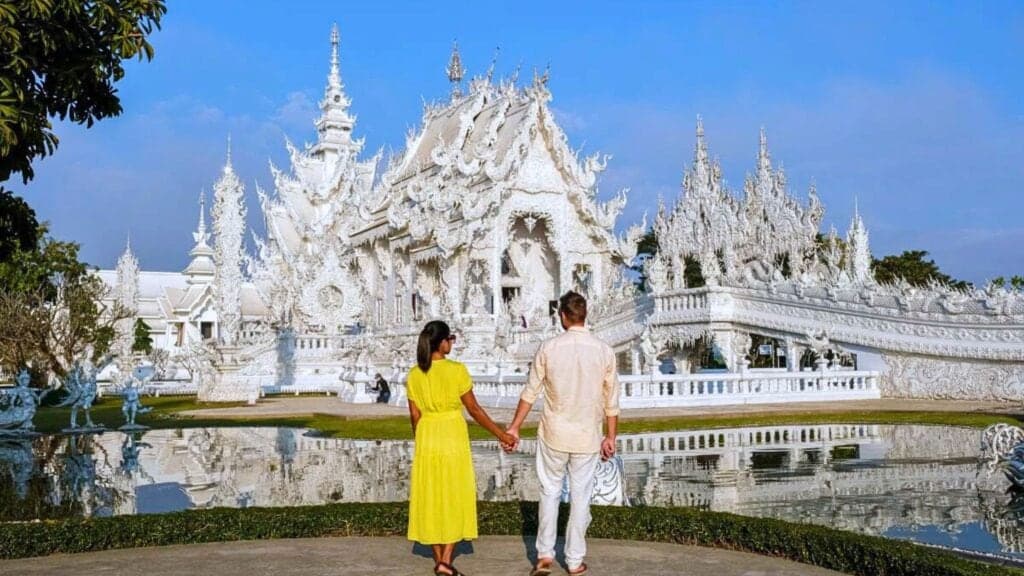
Chiang Rai, by a wide margin. Three artist temples — Wat Rong Khun (White Temple), Baan Dam (Black House), and Wat Rong Suea Ten (Blue Temple) — are each genuinely unusual works built by Thai contemporary artists with strong visions. Pai's cultural offering is the relaxed-mountain-village vibe.
| Site | Artist | Year completed | What makes it unique |
|---|---|---|---|
| Wat Rong Khun (White Temple) | Chalermchai Kositpipat | 1997 (still expanding) | All-white temple with mirror inlays, modern pop-culture murals inside |
| Baan Dam (Black House) | Thawan Duchanee | 1976 (40+ buildings) | Dark teak compound exploring mortality, animal-bone sculpture |
| Wat Rong Suea Ten (Blue Temple) | Phuttha Kabkaew (Chalermchai protégé) | 2016 | Cobalt-blue temple with white-and-gold Buddha |
Pai's equivalents: Pai Canyon (geological viewpoint), the Memorial Bridge (WWII Japanese-built), the Sai Ngam hot springs, the Boon Ko Ku So bamboo bridge across rice fields. All are pleasant. None are world-class in the way the Chiang Rai temples are.
What about the drive — really?
Chiang Rai's drive is fine. Pai's drive is famous and not in a good way. 762 hairpin turns over 3 hours triggers motion sickness in roughly 30% of first-time foreign passengers.
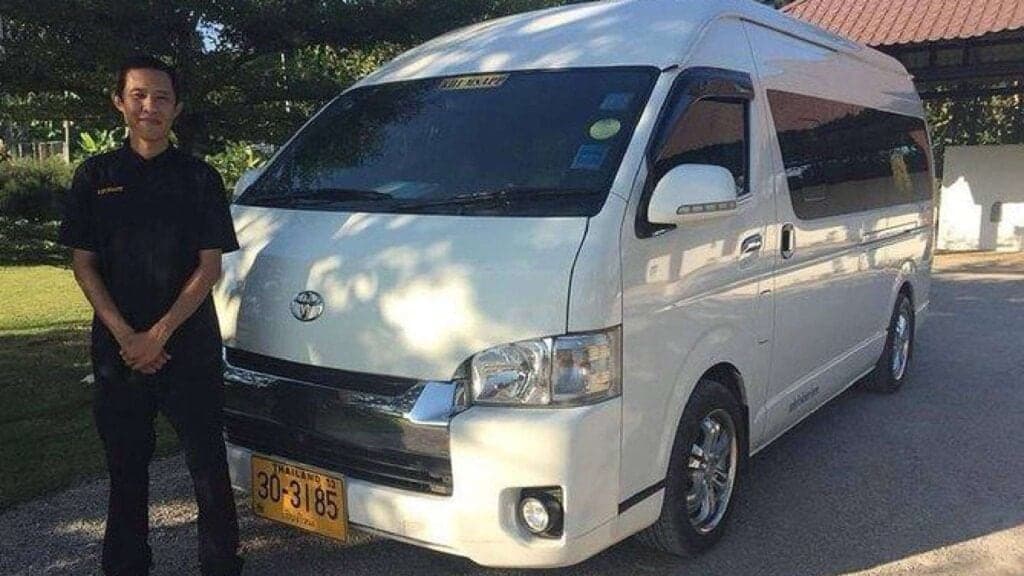
The Pai-bound minivans depart every 1-2 hours from Chiang Mai's Arcade Bus Terminal. Cost: ฿150–฿200 per person. The vans pack 9 passengers tight and the drivers push the schedule. Hiring a private one-way transfer to Pai (฿2,500–฿3,500 for the drive) is dramatically more comfortable.
For Chiang Rai, the drive is 3 hours on Highway 118 — a wide, straight, modern road. Minivans run from Arcade Bus Terminal for ฿200 each way. Tour buses run from the Old City pickup points. Self-drive is straightforward.
Which is better for first-timers?
Chiang Rai for travellers wanting structured cultural sightseeing on a tight schedule. Pai for travellers wanting an unstructured slow detour with mountain scenery.
The trip-mood question matters more than the geography. If your Chiang Mai trip is high-energy (Doi Inthanon, elephants, cooking class, temple-heavy days), Chiang Rai adds more of the same. Pai is the counter-program — a deliberately slow couple of days.
If your trip is already mellow (longer stay, more cafe time), Pai compounds the vibe. Chiang Rai injects more activity.
Most first-timers benefit more from Pai because the trip-mood balance ends up healthier. But if you're a cultural-sightseeing maximiser, Chiang Rai is the right pick.
What's the cost difference?
Chiang Rai day-trip: ฿1,400–฿2,000 per person on a group tour, ฿2,500–฿3,500 per person with private driver. Pai overnight: ฿3,000–฿6,000 for transport + 2 nights' lodging + meals.
| Format | Chiang Rai | Pai |
|---|---|---|
| Group day-tour from Chiang Mai | ฿1,400–฿2,000/person | Not recommended (rushed) |
| Private driver day-trip | ฿2,500–฿3,500/person | Not recommended (rushed) |
| Overnight (DIY) | ฿3,500–฿6,000/person (transport + 1 night + meals) | ฿3,000–฿6,000/person (transport + 2 nights + meals) |
| 2-night overnight with private guide | ฿8,000–฿14,000/person | ฿7,000–฿12,000/person |
The day-trip format works for Chiang Rai. The overnight format works for Pai. Mismatching the format to the destination is the most common booking mistake.
What about families with kids?
Chiang Rai for kids 10+ (the art temples land if they're old enough to ask questions; the drive is straight, no motion sickness). Pai for under-10s if your kids handle hairpin roads (the village is walkable, the activities are gentle, the heat is lower in the mountains).
The Pai-with-young-kids calculation has two big factors: motion sickness and pace. The pace works (small village, gentle walking distance between activities, hot springs are kid-friendly). The motion sickness is the dealbreaker for some families. Test the drive with a 1-hour winding road in your home country before committing.
Chiang Rai-with-kids works better for school-age children (8+) because the art temples reward curious-question kids. The White Temple's mirror inlays and pop-culture murals (Predator, Harry Potter, Hello Kitty) catch kid attention. The Black House is darker — some kids find the animal-bone sculpture upsetting, so preview a few photos before booking.
Should you do both?
If you have 4+ extra days beyond your Chiang Mai core, yes. The standard sequence: Chiang Mai 5 days → Chiang Rai 2 nights → drive back to Chiang Mai → Pai 2 nights. Or do the full Mae Hong Son Loop.
The Mae Hong Son Loop is the classic Northern Thailand multi-day drive: Chiang Mai → Mae Hong Son (via Mae Sariang or the northern route) → Pai → back to Chiang Mai. Roughly 600km, 5–7 days, 4–5 overnight stops. Hits Pai, Mae Hong Son, hill-tribe villages, and several waterfalls. Skips Chiang Rai (different direction).
The Chiang Rai-and-Pai combination as add-ons to a Chiang Mai trip is the more common shape. Add 4 days minimum: 2 nights Chiang Rai (with a day-trip up to the Golden Triangle on day 2), then drive back to Chiang Mai, then 2 nights Pai. Total trip: 11+ days.
The bottom line
Chiang Rai is the better day-trip — straight drive, three artist temples, structured cultural sightseeing. Pai is the better overnight — mountain village, hot springs, slow vibe. They solve different trip needs and most travellers who have the time should do both. The wrong move is mixing the formats: Pai-as-day-trip doesn't work, and Chiang Rai-as-overnight is fine but underuses the time.
If you have to pick one and you're a cultural sightseer, Chiang Rai. If you're a slow-pace mountain-vibe traveller, Pai. If you're motion-sickness-prone, Chiang Rai is the only sensible answer.
Book the Chiang Rai artist-temples day-tripWhite Temple, Blue Temple, and Black House in one day from Chiang MaiFurther reading:
- Chiang Rai day-trip: White Temple, Blue Temple, Black House
- Chiang Mai vs Pai: when to pick each as a base
Outbound references:
- Wikipedia — Wat Rong Khun (White Temple history)
- Wikipedia — Pai, Thailand (drive and history)
- Tourism Authority of Thailand — Chiang Rai overview
Frequently asked questions
Which is closer to Chiang Mai — Chiang Rai or Pai?
Chiang Rai is farther by distance (180km) but closer by experience — the drive is 3 hours of mostly straight highway via the new road. Pai is 130km but feels farther because the road is 3 hours of 762 hairpin turns over the mountains. Chiang Rai works as a long day-trip; Pai effectively requires an overnight unless you're a glutton for punishment. If you're motion-sick prone, Chiang Rai is the only sensible pick. If you want mountain scenery and you're fine with curves, Pai is the more atmospheric destination but requires more time.
Which has more art and culture?
Chiang Rai, by a wide margin. The White Temple (Wat Rong Khun), Black House (Baan Dam), and Blue Temple (Wat Rong Suea Ten) are three of Northern Thailand's most distinctive artist-designed sites — all built by Thai contemporary artists with strong individual visions. Pai's culture is more vibe-led: bamboo bridges, canyon viewpoints, market food, hippie cafes. Pai is the place you go to relax. Chiang Rai is the place you go for serious cultural sightseeing. Pick based on the trip mood you want.
Which is better for kids?
Pai for under-10s (small village, easy to walk, gentle activities, less heat). Chiang Rai for 10+ (the artist temples land better with kids old enough to ask questions; the drive is straighter, less motion sickness). The Pai car ride triggers motion sickness in roughly 30% of first-time foreign passengers, so the under-10 advantage for Pai depends on your kid's stomach. Chiang Rai's day-trip format also means no overnight logistics, which simplifies trips with young children.
Can you do both in one trip?
Yes if you have 4+ extra days beyond the Chiang Mai core. Standard sequence: Chiang Mai 5 days, then drive north to Chiang Rai (2 nights), then southwest to Pai (2 nights, via the slow Mae Hong Son loop) or back to Chiang Mai and then up to Pai separately. The full loop Chiang Mai → Chiang Rai → Mae Hong Son → Pai → Chiang Mai is the classic 'Mae Hong Son Loop' and takes 5–7 days. Doing Chiang Rai and Pai both as day-trips from Chiang Mai is technically possible but exhausting and not worth it.
Frequently asked questions
Which is closer to Chiang Mai — Chiang Rai or Pai?
Chiang Rai is farther by distance (180km) but closer by experience — the drive is 3 hours of mostly straight highway via the new road. Pai is 130km but feels farther because the road is 3 hours of 762 hairpin turns over the mountains. Chiang Rai works as a long day-trip; Pai effectively requires an overnight unless you're a glutton for punishment. If you're motion-sick prone, Chiang Rai is the only sensible pick. If you want mountain scenery and you're fine with curves, Pai is the more atmospheric destination but requires more time.
Which has more art and culture?
Chiang Rai, by a wide margin. The White Temple (Wat Rong Khun), Black House (Baan Dam), and Blue Temple (Wat Rong Suea Ten) are three of Northern Thailand's most distinctive artist-designed sites — all built by Thai contemporary artists with strong individual visions. Pai's culture is more vibe-led: bamboo bridges, canyon viewpoints, market food, hippie cafes. Pai is the place you go to relax. Chiang Rai is the place you go for serious cultural sightseeing. Pick based on the trip mood you want.
Which is better for kids?
Pai for under-10s (small village, easy to walk, gentle activities, less heat). Chiang Rai for 10+ (the artist temples land better with kids old enough to ask questions; the drive is straighter, less motion sickness). The Pai car ride triggers motion sickness in roughly 30% of first-time foreign passengers, so the under-10 advantage for Pai depends on your kid's stomach. Chiang Rai's day-trip format also means no overnight logistics, which simplifies trips with young children.
Can you do both in one trip?
Yes if you have 4+ extra days beyond the Chiang Mai core. Standard sequence: Chiang Mai 5 days, then drive north to Chiang Rai (2 nights), then southwest to Pai (2 nights, via the slow Mae Hong Son loop) or back to Chiang Mai and then up to Pai separately. The full loop Chiang Mai → Chiang Rai → Mae Hong Son → Pai → Chiang Mai is the classic 'Mae Hong Son Loop' and takes 5–7 days. Doing Chiang Rai and Pai both as day-trips from Chiang Mai is technically possible but exhausting and not worth it.