TL;DR — Baan Dam (the 'Black House') isn't a temple, despite the marketing. It's the lifelong art compound of Thai national-artist Thawan Duchanee — 40+ black wooden buildings filled with bones, hides and Lanna craft. It's the dark counterweight to the White Temple's heaven-imagery and the Blue Temple's serenity. Worth 60–90 minutes as part of a Chiang Rai overnight, not as a standalone destination.
What is Baan Dam, really?
Baan Dam is Thawan Duchanee's life-work museum compound — 40+ teak buildings painted black, filled with animal remains, traditional Lanna craft and the artist's own paintings, opened to the public from 1976 and still curated by his foundation.
Duchanee (1939–2014) was one of Thailand's most celebrated contemporary artists, awarded the National Artist of Thailand title in 2001 for work exploring Buddhism, mortality and what he called the 'shadow' of human existence. Calling it the 'Black Temple' for symmetry with the White and Blue Temples is convenient but misleading. There's no religious function. The buildings reference Lanna temple forms but they're not consecrated.
How does Baan Dam fit with the White and Blue Temples?
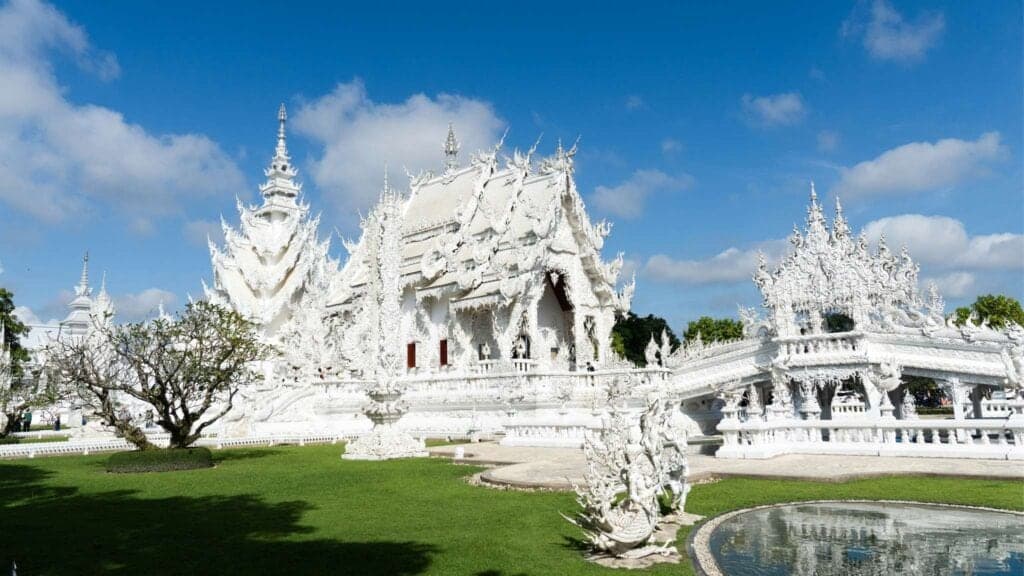
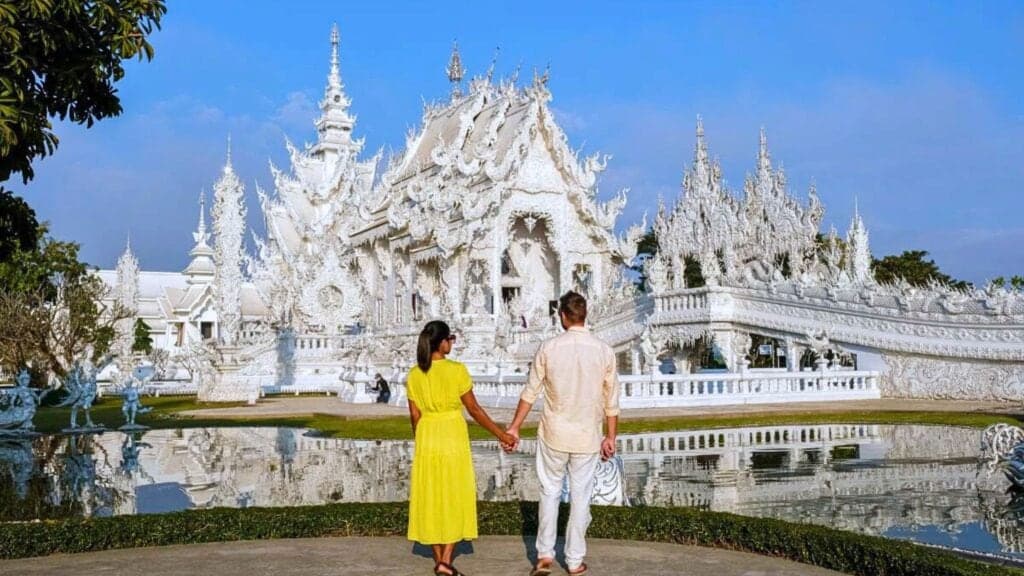
The three sites together form an unofficial trilogy that most Chiang Rai day-trips cover in sequence — white for heaven and purification, blue for serenity and water, black for mortality and the shadow.
| Site | Designer | Theme | Typical visit time |
|---|---|---|---|
| White Temple (Wat Rong Khun) | Chalermchai Kositpipat | Heaven, purification, modern Buddhist iconography | 60–90 min |
| Blue Temple (Wat Rong Suea Ten) | Phuttha Kabkaew (student of Kositpipat) | Serenity, water, contemplation | 30–45 min |
| Black House (Baan Dam) | Thawan Duchanee | Mortality, the natural world, the shadow | 60–90 min |
Doing all three in one day is the standard Chiang Rai itinerary, and the White & Blue Temples + Black House Museum tour covers exactly this trio in sequence. The sequence-effect actually works — you start with the white-and-mirrors brightness, transition through the blue's cool palette, and end with the black compound's heavier register. Most operators run them in that order for a reason.
What do you actually see inside?
The compound has three building types: the main exhibition halls (huge black wooden structures with the largest bone installations), the artist's residence (more intimate), and outdoor sculpture gardens with skulls, antlers and contemplation seats.
The standout pieces, in rough order of impact:
- Main exhibition hall. Vast black wooden room dominated by buffalo-skull installations and a long wooden table set with bones and skins. The most photographed interior in the compound.
- Egg-throne hall. A black hall with seating built from giant carved wooden egg-forms — a meditation on creation and decay.
- Snake-skin gallery. Lined with full python and cobra skins exploring the boundary between art object and natural form.
- Garden buffalo arrangement. Outdoor installation of dozens of buffalo skulls on wooden poles. Striking from a distance.
- Artist's residence. Domestic-scaled, showing how Duchanee lived among his collections.
When should I visit?
Morning (09:00 opening) or late afternoon (15:30 onwards) — midday sun washes out the black-on-black aesthetic and tour groups peak between 11:00 and 14:00.
Hours are 09:00–17:00 daily, last entry around 16:30. Standard Chiang Rai day-trips arrive 13:00–14:30, the worst window for both light and crowds. On a private Chiang Rai city tour you can ask the operator to flip the order: White Temple first, lunch in town, Blue Temple at 14:00, Baan Dam at 15:30. The compound is fully outdoor, so November–February afternoons are pleasant, March–May are brutal heat, June–October risk afternoon rain.
How does Baan Dam compare to the White Temple?
The White Temple is more spectacular and more crowded; Baan Dam is denser and more rewarding for visitors who like art-and-ideas museums.
Most visitors prefer the White Temple as the photogenic single-image experience. Baan Dam rewards a different kind of visit. You're walking through one artist's worldview, building by building, and the cumulative effect is the point. If you can only see one of the three Chiang Rai sites, pick the White Temple. If you can see two, do White and Black. If you can see all three, the order matters: White first, Black last.
What's the practical visit info?
Entry: ฿80 adult foreigner rate. Open 09:00–17:00 daily. Cafe on-site for cold drinks. Eat in Chiang Rai town before or after — no restaurant near the compound.
The address is on Highway 1, about 12km north of Chiang Rai city centre. From Chiang Mai it's a 3.5-hour drive; from Chiang Rai town, 20 minutes. Most day-trip operators include all three sites in a 12–13 hour round-trip from Chiang Mai, such as the full-day White and Blue Temple plus Black Museum and Golden Triangle trip.
Is Baan Dam worth a special trip?
Not alone — pair it with the White Temple and ideally an overnight in Chiang Rai. The compound is 200km from Chiang Mai, so a single-destination day-trip doesn't justify the drive.
The geography is the constraint. Baan Dam, White Temple and Blue Temple are within 30km of each other, which makes the combined visit the obvious shape. For first-time Chiang Rai visitors, do all three. For repeat visitors who've done the White Temple, Baan Dam works as a deeper-cut second visit.
The bottom line
Baan Dam is a museum, not a temple. It's the lifelong art compound of Thawan Duchanee, dense with bones, hides and Lanna craft, organised around his exploration of mortality and the natural world. Pair it with the White and Blue Temples for a Chiang Rai cultural day. Give it 75 minutes, visit in the morning or late afternoon for better light, and prep kids under 7 before going.
Book the White, Blue and Black House Chiang Rai tourWhite Temple, Blue Temple and the Black House compound in one dayInternal reading worth your time:
- White Temple Chiang Rai guide: what to expect, when to go
- Chiang Rai day-trip from Chiang Mai: the realistic itinerary
Outbound references:
- Wikipedia — Thawan Duchanee biography (en.wikipedia.org, accessed 2026-04-28)
- Wikipedia — Baan Dam Museum (en.wikipedia.org, accessed 2026-04-28)
- Tourism Authority of Thailand Chiang Rai listings — tatnews.org (accessed 2026-04-28)
Frequently asked questions
Is Baan Dam actually a temple?
No, and that's a common misconception. Baan Dam (literally 'Black House') is the lifelong art-and-museum project of the late Thai national-artist Thawan Duchanee. It contains 40+ black-painted buildings filled with animal bones, hides, antlers, traditional Lanna crafts and Duchanee's own paintings. It's a museum, an artist's compound and a contemplation of mortality. The local marketing calls it the 'Black Temple' for symmetry with the White and Blue Temples, but it has no religious function and no monks.
Is photography allowed at Baan Dam?
Yes for exteriors and most interiors, no for the main exhibition hall and a few smaller buildings marked with no-camera signs. Staff are relaxed about phone photography in the outdoor compound — and the exteriors are the most photogenic part anyway, with the black wooden halls, antler-decorated rooflines and the buffalo-skull installations. The interior bone-and-hide collections feel less photo-worthy and more 'experience in person.' No tripods anywhere without prior permission.
How long does Baan Dam take to visit?
60–90 minutes is the right window. The compound has 40+ buildings spread across a generous garden — you can walk a quick perimeter in 30 minutes if you're rushing, or spend 2 hours absorbing the detail. Most visitors land at 75 minutes, which lets you see the major halls, walk the back garden's installations, and rest at the small cafe near the entrance. Don't budget less than 60 — you'll feel rushed and miss the smaller installations that are the most rewarding.
Is Baan Dam kid-friendly?
Mostly yes, with one caveat. The compound is outdoor, walkable and visually striking, which kids generally find interesting. The caveat is the bones — buffalo skulls, snake skins, animal hides on display in considerable volume. Younger kids (under 7) sometimes find the displays distressing. Older kids tend to be fascinated. We'd say: go with kids 8+, prepare younger ones for what they'll see, skip the most intense interior halls if a child is uncomfortable. Strollers work on the main paths but not all side gardens.
Frequently asked questions
Is Baan Dam actually a temple?
No, and that's a common misconception. Baan Dam (literally 'Black House') is the lifelong art-and-museum project of the late Thai national-artist Thawan Duchanee. It contains 40+ black-painted buildings filled with animal bones, hides, antlers, traditional Lanna crafts and Duchanee's own paintings. It's a museum, an artist's compound and a contemplation of mortality. The local marketing calls it the 'Black Temple' for symmetry with the White and Blue Temples, but it has no religious function and no monks.
Is photography allowed at Baan Dam?
Yes for exteriors and most interiors, no for the main exhibition hall and a few smaller buildings marked with no-camera signs. Staff are relaxed about phone photography in the outdoor compound — and the exteriors are the most photogenic part anyway, with the black wooden halls, antler-decorated rooflines and the buffalo-skull installations. The interior bone-and-hide collections feel less photo-worthy and more 'experience in person.' No tripods anywhere without prior permission.
How long does Baan Dam take to visit?
60–90 minutes is the right window. The compound has 40+ buildings spread across a generous garden — you can walk a quick perimeter in 30 minutes if you're rushing, or spend 2 hours absorbing the detail. Most visitors land at 75 minutes, which lets you see the major halls, walk the back garden's installations, and rest at the small cafe near the entrance. Don't budget less than 60 — you'll feel rushed and miss the smaller installations that are the most rewarding.
Is Baan Dam kid-friendly?
Mostly yes, with one caveat. The compound is outdoor, walkable and visually striking, which kids generally find interesting. The caveat is the bones — buffalo skulls, snake skins, animal hides on display in considerable volume. Younger kids (under 7) sometimes find the displays distressing. Older kids tend to be fascinated. We'd say: go with kids 8+, prepare younger ones for what they'll see, skip the most intense interior halls if a child is uncomfortable. Strollers work on the main paths but not all side gardens.