TL;DR — Wat Phra Singh is the most important Lan Na temple inside the Old City walls, founded in 1345. Foreign entrance is ฿40 in cash. Cover shoulders and knees, take shoes off at each building, and don't miss the viharn lai kham behind the main hall — that's where the original Phra Sihing Buddha lives and where the gold-leaf murals make the trip. Saturday 07:00–09:00 is the quietest, photo-friendly window.
What is Wat Phra Singh and why does it matter?
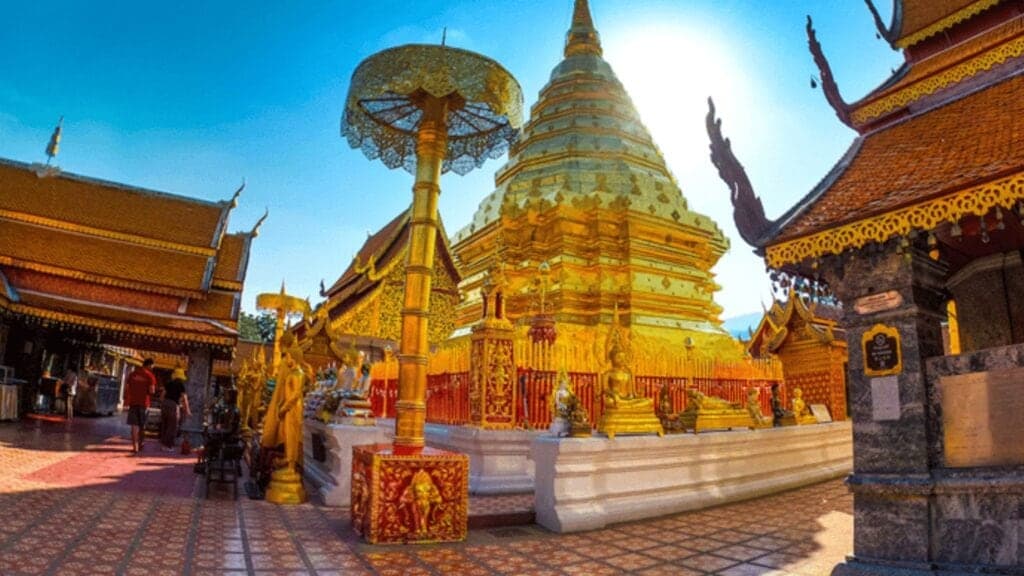
Wat Phra Singh Woramahawihan is Chiang Mai's most important royal temple, founded in 1345 by King Phayu of the Lan Na kingdom to house his father's ashes. The complex anchors the western Old City and hosts the most-revered Buddha image in northern Thailand.
The temple's full name translates roughly as "monastery of the lion Buddha." That lion is the Phra Sihing image, a 14th-century gilt-bronze Buddha that lives in the smaller lai kham hall behind the main viharn. The image is paraded around the Old City during Songkran (Thai new year, April 13–15) and is the focal point of the temple's working ceremonies. For a visitor, the building you photograph from the street (the main viharn) is impressive, but the building you should slow down inside is the one most tour groups skip.
What's the dress code, really?
Shoulders and knees must be covered for entry to the viharn and ubosot. Sarongs to rent at the south gate (฿20 with refundable deposit). Shoes off at each building, not at the gate. Wearing socks is fine.
The dress code is enforced more strictly here than at most Old City temples because Wat Phra Singh is a working royal-level temple, not a museum. Volunteer monitors at the entrance of the viharn lai kham have politely turned away visitors in tank tops or running shorts. The sarong rental is at the south gate (the main entrance from Singharat Road); the booth is unstaffed in the early morning but the sarongs sit on a rack with a deposit box.
How do you find the rooms most tour groups miss?
Behind the main viharn, walk past the central chedi to a smaller white-and-red gabled building. That's the viharn lai kham. Inside: the Phra Sihing Buddha and the gold-leaf murals. This is the actual must-see, not the bigger hall closer to the road.
The geometry of the temple confuses most first-time visitors. Walking in from Singharat Road, the building directly ahead is the main viharn — large, beautiful, with the gold-and-red facade and seven-tiered roof. Tour groups stop here and most visitors think they've seen Wat Phra Singh. They haven't.
Walk around the main viharn to the right, past the bell tower and the principal chedi. The smaller building on the far side, oriented north-south, is the viharn lai kham. The exterior wood carving is detailed but understated. Inside: the original 14th-century Buddha image after which the temple is named, plus the famous Sang Thong gold-leaf murals depicting Lan Na village life and Buddhist tales.
| Building | What's inside | Most visitors | Should you go? |
|---|---|---|---|
| Main viharn (street-facing) | Larger Buddha image, modern interior | Yes, all | Yes — but it's not the highlight |
| Viharn lai kham (behind) | Phra Sihing Buddha, gold-leaf murals | About 30% | Yes — this is the highlight |
| Ubosot (north of chedi) | Larger Buddha for ordinations | About 20% | Yes if not crowded |
| Ho Trai (scripture library on stilts) | Wooden Lan Na library architecture | About 10% | Yes for photography |
When should you visit to avoid crowds?
Saturday 07:00–09:00 is the quietest window with good light and active morning chanting. Tour buses arrive from 09:30 and peak 11:00–14:00. Evenings 18:00–19:30 are atmospheric if you prefer warm light to silence.
The temple opens at 06:00 and closes at 20:30. Working monks live and study on the grounds, so dawn and dusk are the most photogenic windows because the temple is genuinely alive then — not staged for visitors. The bus-tour wave arrives mid-morning because most multi-temple itineraries pair Wat Phra Singh with Wat Chedi Luang and Wat Suan Dok, hitting Phra Singh first.
If you can only visit during the bus-tour window, head straight to the viharn lai kham first — it's behind the main hall and most tour groups don't reach it before being herded back to the bus.
What's the right way to handle donations and offerings?
A ฿20 flower-and-incense offering at the entrance is the customary gesture. Cash donations to the offering boxes are welcome but not required. Larger named donations go through the office near the bell tower. Nothing is mandatory beyond the ฿40 entry.
Thai visitors generally drop ฿20–฿100 into offering boxes near the front altars. Foreign visitors who want to participate typically give ฿100–฿500. The temple's working economy depends on these contributions and the morning alms rounds outside the walls — visitor donations fund building maintenance, monk meals, and community education programs run from the temple school.
What are the rules for photography?
Photography is allowed in most areas but no flash inside any building. No tripods, no posed selfies with Buddha images directly behind, no climbing on platforms. During morning chanting (06:30 and 17:00), pause photography out of courtesy.
The Phra Sihing Buddha is the most-photographed object on the site and the temple's monks have a relaxed attitude provided basic respect is shown. The lines that should not be crossed: don't pose with your back to a Buddha image, don't step onto an altar platform, don't photograph monks during prayer without permission, and don't use a drone anywhere on temple grounds.
For the gold-leaf murals in the viharn lai kham, available light is dim. A wide-aperture lens (f/2.0 or wider) handles it well; flash is forbidden and would ruin the patina-look anyway. Phone cameras with night mode do remarkably well — modern computational photography reads the murals better than most consumer DSLRs.
What's around the temple worth combining into a visit?
Wat Chedi Luang is 600 metres east and pairs naturally for a half-day Old City temple route. The Sunday Walking Street terminates at Wat Phra Singh, so Sunday afternoon visits get the market spillover. Add Wat Phan Tao for a third stop and you've covered the Old City temple core.
The walking-route logic: enter the Old City via Tha Phae Gate, walk west on Ratchadamnoen Road past the food carts and the daily 17:00 monk alms procession, hit Wat Chedi Luang first (it sits roughly in the middle of the Old City), then continue west to Wat Phra Singh. Total walk 25 minutes plus temple time. Wat Phan Tao (the all-wood viharn from the Lan Na royal era) is on the same Ratchadamnoen strip and adds 20 minutes.
If you'd like a guided route that hits the temples with context rather than just photo stops, browse our Chiang Mai temple tours for guided visits with a Chiang Mai-resident guide who reads temple-mural iconography.
What's the etiquette inside the buildings?
Shoes off at each building's steps. Sit with feet tucked behind you, never pointing at any Buddha image. Hat and sunglasses off. Volume to a whisper. Don't turn your back to the Buddha when leaving — back away or sidestep.
These rules apply in every Thai temple but Wat Phra Singh is one of the temples where they're noticed by working monks. If a monk is present, women should avoid sitting too close (touching is forbidden by monastic rule) and let him pass without crossing his path. Speaking to monks is fine and they're often happy to answer questions in English — the temple runs an English-language conversation program for monks studying at Mahachulalongkornrajavidyalaya University on Tuesday and Thursday afternoons, and visitors are often invited to participate.
Should you join a tour or visit alone?
Visiting alone works perfectly well — the temple is well-signed in English and Thai. A guided visit adds value if you want the historical context on the Phra Sihing Buddha controversy, the Lan Na architectural vocabulary, and the mural iconography that's invisible without translation.
Most independent visitors spend 30–45 minutes and leave satisfied. A guided visit typically runs 60–90 minutes and unlocks the meanings of the murals (which depict specific tales and named villages), the political backstory of the Phra Sihing Buddha (Chiang Mai and Bangkok both claim authentic versions), and the architectural details that distinguish Lan Na from central Thai styles. If you're interested in Thai history at all, the guided version is worth the time. To pair an Old City temple visit with the mountain temple above the city, the Doi Suthep temple and Hmong village tour reads the same Lan Na vocabulary at Wat Phra That Doi Suthep.
The bottom line for a Wat Phra Singh visit
฿40 entry, knees and shoulders covered, Saturday morning if possible. Walk past the main viharn to the smaller hall behind — that's where the Phra Sihing Buddha and the gold-leaf murals are. Most visitors miss the highlight by not knowing it's behind the obvious building.
If you have a half-day in the Old City, pair Wat Phra Singh with Wat Chedi Luang and Wat Phan Tao for the classic temple route. If you have a full day and want temples plus context, take a guided walking tour — the iconography of the murals is unreadable without one.
Book the Doi Suthep temple guided tourLan Na temple context with a Chiang Mai-resident guide, half dayInternal reading worth your time:
- Chiang Mai temple etiquette: what to wear, what to do, what to avoid
- Old City walking tour: the four-temple loop in 3.5 hours
- Department of Fine Arts heritage register of Lan Na temples (external)
- Tourism Authority of Thailand — Wat Phra Singh listing (external)
Frequently asked questions
Is there a strict dress code at Wat Phra Singh?
Yes. Shoulders and knees must be covered for all visitors entering the viharn (main prayer hall) and ubosot (ordination hall). Spaghetti straps, tank tops, short shorts and short skirts are not allowed. There is a sarong-rental booth at the south entrance charging ฿20 with a refundable ฿100 deposit. Shoes come off at the steps of each building, not at the temple gate. Wearing socks is acceptable. The rule applies to all genders, including children over about 10. Inside, hats and sunglasses come off and feet should never point at a Buddha image.
Is photography allowed inside the temple?
Inside the viharn lai kham and ubosot, photography is generally permitted but flash is not. No tripods, no posed selfies with the Buddha image directly behind, and no climbing on platforms for the shot. During morning chanting (roughly 06:30 and 17:00) photography pauses out of courtesy — point the camera at the architecture, not the monks mid-prayer. The Phra Sihing Buddha is the most-photographed object on the site; treat it as a working altar, not a museum piece. Drone use anywhere on temple grounds requires advance written permission and is rarely granted.
Should I donate, and how much?
Donations are welcome but never required. The small offering boxes inside the viharn typically receive ฿20–฿100 from Thai visitors and ฿100–฿500 from foreign visitors. The money goes to temple upkeep, monk meal provisions, and community programs run by the abbot. If you want to make a more substantive donation, the office near the bell tower handles named contributions and issues receipts. Buying a small flower-and-incense offering (฿20) at the entrance is the most common gesture; lighting incense and placing it at the front altar is the customary way to use it.
When is the temple actually quietest?
Saturday morning between 07:00 and 09:00 is the sweet spot. The Sunday Walking Street ends at midnight Sunday so Monday-morning visitors are sparse too, but Saturday wins because monks are most active for morning chanting and Sunday's market hasn't drained the Old City yet. Tour buses arrive from 09:30 onward and peak between 11:00 and 14:00. The temple is open until 20:30 but the evening atmosphere from 18:00–19:30 is lovely if you prefer warm light to silence. Avoid Thursday afternoons when local tour groups concentrate.
What's the deal with the Phra Sihing Buddha and the rooms most tourists miss?
The Phra Sihing Buddha sits in the viharn lai kham (the smaller, ornate hall behind the main viharn) — that's the original 14th-century Lan Na image after which the temple is named. Most tour groups march straight to the main viharn and miss the lai kham entirely. The lai kham also houses the famous gold-leaf murals depicting the Sang Thong tale and northern Thai village life. The ubosot to the north contains a different, larger Buddha image used for monastic ordinations. The wooden scripture library on stilts behind the main hall is one of the finest in northern Thailand and underphotographed.
Is there an entrance fee, and how does it work for foreigners vs Thai visitors?
There is a foreigner fee of ฿40 at the south entrance booth, paid in cash THB. Thai nationals enter free. The fee covers maintenance of the heritage buildings and is enforced consistently. Children under about 10 are not charged. The fee does not include a guide; audio guides are available at the office for ฿100. Receipts are given on request. If you're visiting multiple Old City temples in a day, this is the only one inside the walls with a foreigner entrance fee — Wat Chedi Luang charges separately. Budget ฿100 for both.
Frequently asked questions
Is there a strict dress code at Wat Phra Singh?
Yes. Shoulders and knees must be covered for all visitors entering the viharn (main prayer hall) and ubosot (ordination hall). Spaghetti straps, tank tops, short shorts and short skirts are not allowed. There is a sarong-rental booth at the south entrance charging ฿20 with a refundable ฿100 deposit. Shoes come off at the steps of each building, not at the temple gate. Wearing socks is acceptable. The rule applies to all genders, including children over about 10. Inside, hats and sunglasses come off and feet should never point at a Buddha image.
Is photography allowed inside the temple?
Inside the viharn lai kham and ubosot, photography is generally permitted but flash is not. No tripods, no posed selfies with the Buddha image directly behind, and no climbing on platforms for the shot. During morning chanting (roughly 06:30 and 17:00) photography pauses out of courtesy — point the camera at the architecture, not the monks mid-prayer. The Phra Sihing Buddha is the most-photographed object on the site; treat it as a working altar, not a museum piece. Drone use anywhere on temple grounds requires advance written permission and is rarely granted.
Should I donate, and how much?
Donations are welcome but never required. The small offering boxes inside the viharn typically receive ฿20–฿100 from Thai visitors and ฿100–฿500 from foreign visitors. The money goes to temple upkeep, monk meal provisions, and community programs run by the abbot. If you want to make a more substantive donation, the office near the bell tower handles named contributions and issues receipts. Buying a small flower-and-incense offering (฿20) at the entrance is the most common gesture; lighting incense and placing it at the front altar is the customary way to use it.
When is the temple actually quietest?
Saturday morning between 07:00 and 09:00 is the sweet spot. The Sunday Walking Street ends at midnight Sunday so Monday-morning visitors are sparse too, but Saturday wins because monks are most active for morning chanting and Sunday's market hasn't drained the Old City yet. Tour buses arrive from 09:30 onward and peak between 11:00 and 14:00. The temple is open until 20:30 but the evening atmosphere from 18:00–19:30 is lovely if you prefer warm light to silence. Avoid Thursday afternoons when local tour groups concentrate.
What's the deal with the Phra Sihing Buddha and the rooms most tourists miss?
The Phra Sihing Buddha sits in the viharn lai kham (the smaller, ornate hall behind the main viharn) — that's the original 14th-century Lan Na image after which the temple is named. Most tour groups march straight to the main viharn and miss the lai kham entirely. The lai kham also houses the famous gold-leaf murals depicting the Sang Thong tale and northern Thai village life. The ubosot to the north contains a different, larger Buddha image used for monastic ordinations. The wooden scripture library on stilts behind the main hall is one of the finest in northern Thailand and underphotographed.
Is there an entrance fee, and how does it work for foreigners vs Thai visitors?
There is a foreigner fee of ฿40 at the south entrance booth, paid in cash THB. Thai nationals enter free. The fee covers maintenance of the heritage buildings and is enforced consistently. Children under about 10 are not charged. The fee does not include a guide; audio guides are available at the office for ฿100. Receipts are given on request. If you're visiting multiple Old City temples in a day, this is the only one inside the walls with a foreigner entrance fee — Wat Chedi Luang charges separately. Budget ฿100 for both.