Most ethical Chiang Mai elephant sanctuaries set their minimum age at 4 or 5 — three we book for families regularly allow kids 4 and up, and a small number of smaller camps accept supervised 3-year-olds for shorter observation visits. The full-day experience suits kids 8 and up, half-day suits 4-7. Avoid camps that aggressively market "baby elephant cuddles" or "paint with the elephant" — both are usually red flags. Here's the kid-by-kid breakdown of what works.
What age do Chiang Mai elephant camps actually allow?
4 or 5 is the standard minimum at ethical sanctuaries. A few smaller camps allow 3 with parent for shorter visits. Camps advertising all-ages-welcome including babies tend to be the chain-and-show camps prioritising bookings over safety.
The minimum-age policy at each camp reflects their genuine safety philosophy more than any other single factor. A camp that lets toddlers walk freely near a 4-tonne animal hasn't thought about visitor management.
| Camp | Minimum age (half-day) | Minimum age (full-day) | Notes |
|---|---|---|---|
| Karen Elephant Experience | 4 | 6 | Small herd, slower pace |
| Elephant Nature Park (Family Visit) | 5 | 12 | Dedicated family timing |
| Maerim Elephant Sanctuary | 5 | 7 | Single-day family-focused |
| Boutique Elephant Park | 4 | 6 | Smaller groups |
| Generic 'sanctuary' chain camps | 0 (all ages) | 0 | Avoid — usually chains/shows |
How does a kid-friendly elephant day actually work?
Three core moments: feeding the elephants by hand, walking with the herd for 20-40 minutes through forest, and the mud bath plus river rinse. Total camp time 3-4 hours for half-day, 6-7 hours for full-day.
The structure of a good kid-friendly visit:
- 8:30 — Pickup from Chiang Mai hotel.
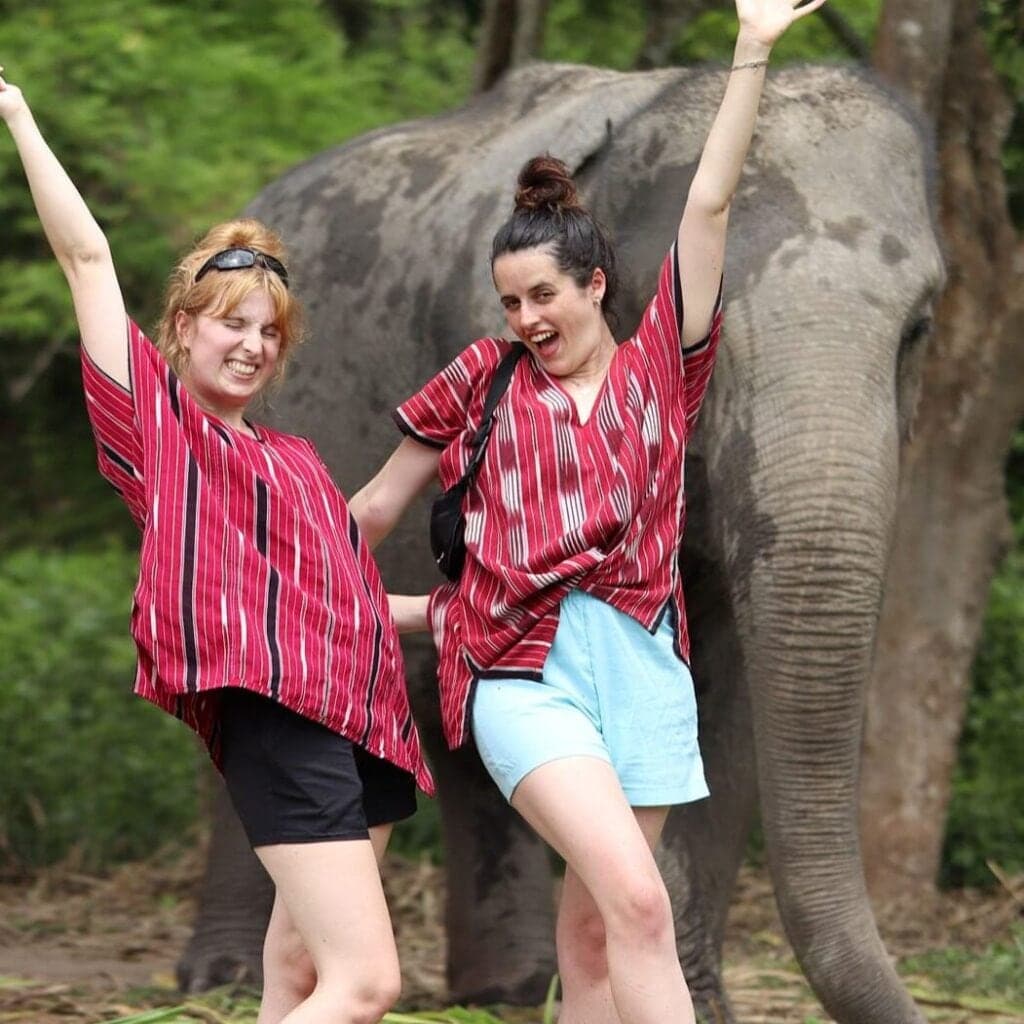
- 9:45 — Arrive at camp. Welcome, safety briefing, change into provided traditional clothing (optional).
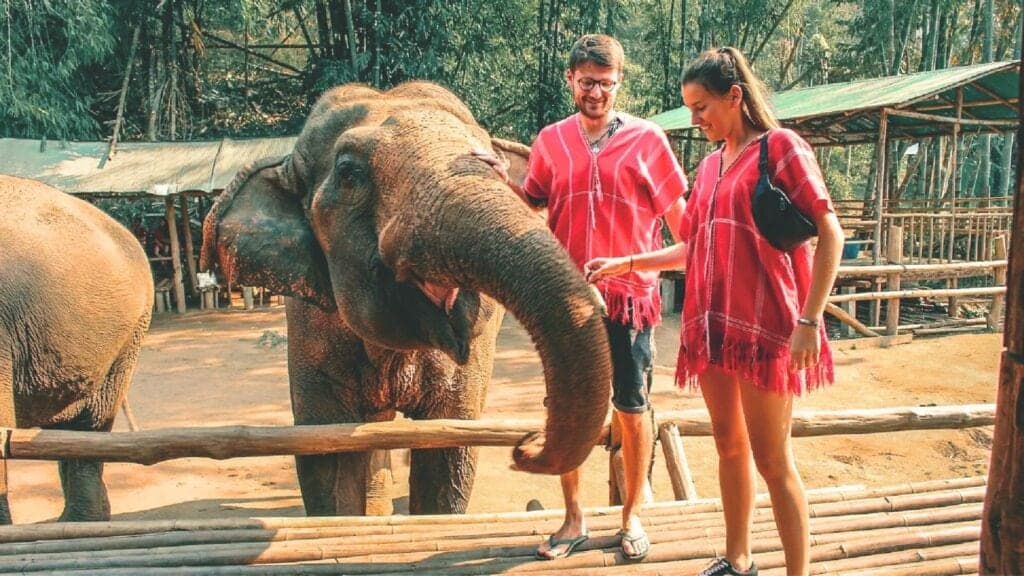
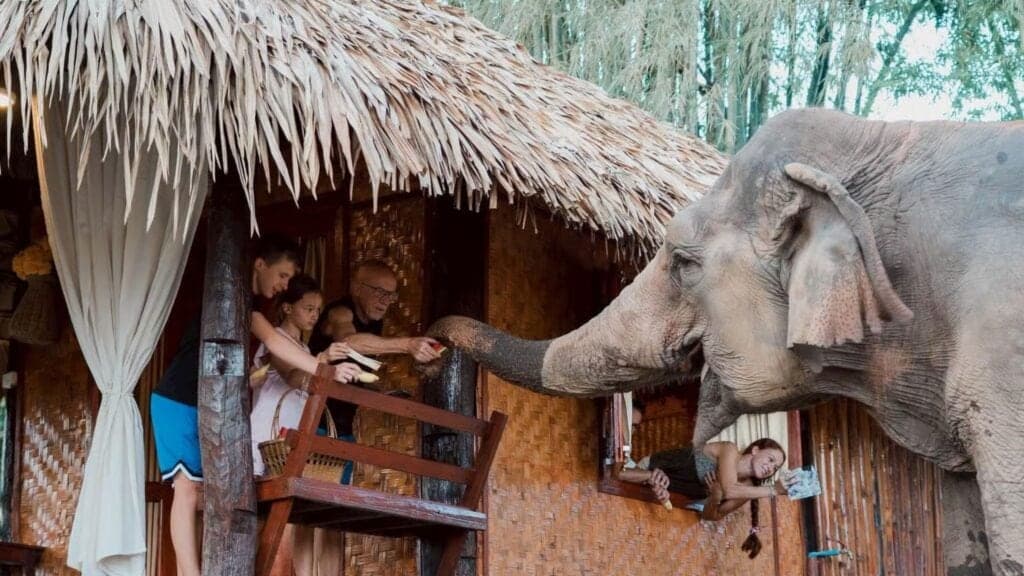
- 10:00 — Feed elephants. Bananas, sugar cane, sticky rice balls.
- 10:30 — Walk with the herd. Short forest walk, 25-40 minutes, mahouts at the front.
- 11:30 — Mud bath. The kid highlight. 30-45 minutes, lots of laughs.
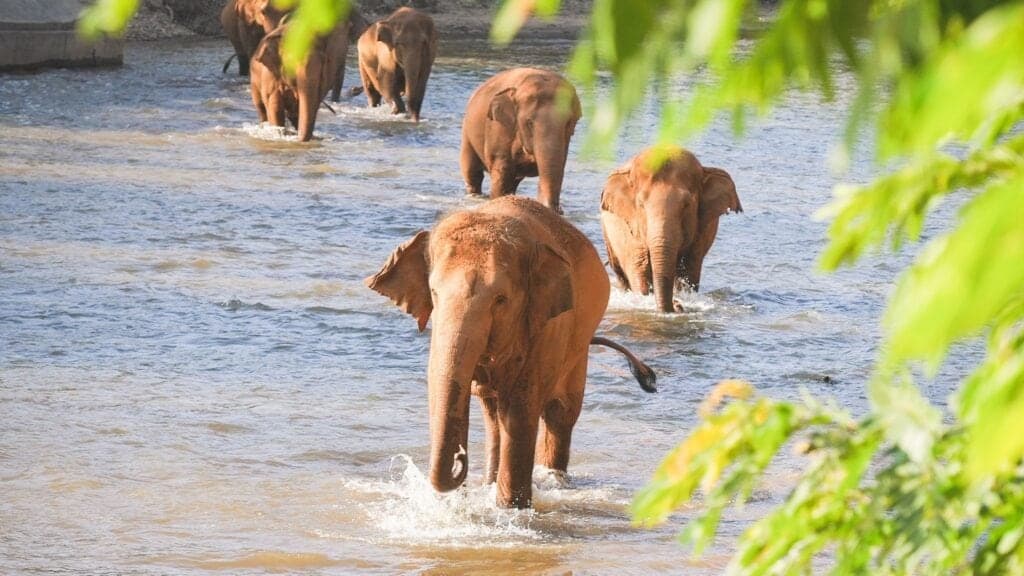
- 12:15 — River rinse. Cool water, the elephants love this part.
- 12:45 — Lunch at the camp pavilion. Northern Thai set meal, vegetarian options.
- 13:30 — Return drive to Chiang Mai.
This is the half-day version. Full-day adds a morning forest hike and an afternoon educational session about elephant care.
The half-day camps we book most often for families are the Karen hill tribe elephant sanctuary half-day (small herd, gentle pace, kids 4+) and the Maerim ethical elephant sanctuary half-day (single-day family-focused, kids 5+). Both avoid riding, chains and shows.
Are the half-day options good enough?
For kids under 8, yes. Half-day delivers 80% of the experience in 50% of the time, and the time saved is the difference between an excited child and an over-tired meltdown by 3pm.
The full-day experience exists because adults want longer visits, such as the half-day visit to Elephant Nature Park, which runs a dedicated family schedule with separate timing from the main tour. The bottlenecks for kids are different from adults — the morning drive is 90 minutes (boring for kids), the forest walk is 40 minutes (tiring for short legs), and the mid-afternoon energy crash is real. Half-day skips the second walk and back-to-Chiang-Mai by 3pm.
What does it cost as a family?
Half-day for two adults plus two kids (5 and 8) runs ฿4,800-6,800 through a direct operator, including transport, lunch and the camp's kid pricing. Marketplaces (Viator, GetYourGuide) typically charge ฿6,200-8,400 for the same family group.
Most camps charge kids under 4 a small or no fee but require advance notice. Kids over 12 are charged adult rates.
How do we screen for ethical camps with kids in tow?
Apply the 3-Question Test, then add two child-specific filters: mahout-to-elephant ratio (should be at least 1:1), and the camp's policy on handling children near the herd.
The 3-Question Test (from our Viator alternatives guide):
- Can guests ride the elephants? (Should be no.)
- Are there chained legs or hooks? (Should be no.)
- Are there shows or paint-the-elephant-painting activities? (Should be no.)
For families, add:
- What's the mahout-to-elephant ratio? Should be at least 1:1 (one mahout per elephant). Camps running 1:2 or 1:3 can't reliably monitor herd behaviour around kids.
- What's the camp's child-distance protocol? Should be: 5m minimum from elephants except during structured feeding and bathing. If the camp lets kids run freely near elephants, that's not safety — that's negligence.
What if our kid is scared of elephants?
Common. The camps we work with handle this gracefully — kids can hang back during the feeding segment and join only at the mud-bath stage. Most fear dissolves within the first hour.
Real elephants are bigger than the picture-book version. Many kids — and adults — find the first 30 minutes of proximity overwhelming. The signs of genuine distress (crying, hiding behind a parent, refusing to make eye contact with the elephants) usually resolve once the kid sees the elephants behaving gently with food.
If a kid stays scared after the feeding segment, ethical camps will move them to the observation deck for the rest of the visit and won't pressure further engagement. We've had a handful of 5-year-olds spend most of their visit watching from a viewing platform and still call it the best day of the trip. The elephants are still the show, even from 15 metres.
How do mud baths and rivers work for kids?
The mud bath is shallow (knee-deep on a 5-year-old), the river is supervised, and life jackets are available. Most kids end up muddier and happier than adult guests.
The mud bath happens in a designated pit — typically 8-12 metres across, with a softened bottom, accessed via a wooden ramp. The mud is body-temperature, neutral pH, and locally sourced. It washes off in the river afterwards.
Risks: slippery footing on the ramp, occasional eye-contact with mud (rinse with bottled water immediately), and one kid in maybe twenty has a mild skin reaction (rare). Bring antihistamine cream if your kid has sensitive skin.
The river rinse uses a section of stream selected for shallow, slow water — typically waist-deep on an adult, knee-deep on a child. The current is mild. Camps with strong river sections sometimes provide life jackets for under-6s.
What about lunch for picky-eater kids?
Most camps provide a Thai set lunch with rice, mild curry, stir-fried vegetables, fresh fruit, and a "kid-friendly" option (typically pad Thai or chicken with rice). Tell the camp at booking if your kid has specific needs.
Standard camp lunch is family-style Thai food. The curry is mild but not non-spicy. The stir-fry is usually pork or chicken with vegetables. Sticky rice with mango (in season) is a near-universal kid hit.
If your child has dietary needs (vegan, allergies, very picky), tell the camp at booking 48+ hours ahead. Most camps will substitute. Bringing one or two backup snacks from Chiang Mai is sensible — granola bars, dried fruit, banana chips.
How do we recover the rest of the day after an elephant tour?
Back at the hotel by 3pm (half-day) or 6pm (full-day). Plan a quiet evening — no second activity the same day. Pool, hotel ground, ice cream from a 7-Eleven and an early dinner.
Elephant days are tiring even for adults. Kids return covered in mud, slightly sun-stroked, and over-stimulated. Booking a temple visit or a Night Bazaar trip the same evening is a recipe for meltdown.
Most family-friendly Chiang Mai hotels have a pool — that's the perfect post-elephant unwind. The hotel kids' menu, an early dinner at 6pm, bedtime by 8pm. The next day, plan something lower-energy: a Thai cooking class with the parents while a sitter takes the kid to the hotel kids' club, a half-day botanical garden walk, or a relaxed Sunday Walking Street wander.
For broader family-trip planning, see our Chiang Mai with kids guide. The which Chiang Mai elephant sanctuary deep-dive covers the camp-by-camp ethical breakdown.
For external reference, World Animal Protection's elephant tourism guidance covers the broader ethical framework for sanctuary visits.
Book the Karen elephant sanctuary half-day for familiesKids welcome from age 4, no riding, no chains, no showsMore family reading:
- Chiang Mai with kids — full family-trip planning guide
- Which Chiang Mai elephant sanctuary — ethical camp-by-camp breakdown
Frequently asked questions
What's the minimum age for an elephant tour in Chiang Mai?
Most ethical sanctuaries set 4 or 5 as the minimum age. A few quieter, smaller camps allow under-4s with a parent for shorter visits (typically 2-hour observation experiences rather than half-day or full-day programs). Camps that aggressively market 'all ages welcome' including infants are usually a red flag — they're prioritising bookings over safety. Elephants are large unpredictable animals, and even ethical herds need quiet, slow children. Most camps we book require 5+ for full-day, allow 3-4 for shorter visits with parent supervision, and have no upper age limit.
Half-day or full-day elephant tour for kids?
Half-day for kids under 8. Full-day works for 8-12 if the child is engaged with animals. Beyond 12 it's the same calculus as adults. The full-day experience runs 8 hours including transport and a 2-hour walk through forest terrain — too long for younger kids, even enthusiastic ones. Half-day camps run 4-5 hours total with feeding, mud bath and a short walk, which holds attention better. The mid-afternoon mud bath is usually the kid highlight regardless of age.
Are elephant herds unpredictable around small children?
Yes, which is why ethical camps space visitors at 5+ metres from the herd at all times and intervene if children approach unprompted. A well-managed camp has at least one mahout per elephant whose entire job is monitoring the elephant's body language and adjusting visitor positioning. The risk to children isn't malicious — it's that elephants take wide turns, swing trunks, and don't notice small bodies underneath. Camps with chained or hooked elephants are sometimes 'safer' because the animal can't move freely. That's not the kind of safety to aim for. Choose a camp with high mahout-to-elephant ratios.
Can toddlers (under 3) join an elephant tour?
Not at any sanctuary we recommend. The under-3 visitor risk profile is too high — toddlers don't reliably stay still or follow instructions, and the ground hazards (mud, uneven terrain, elephant dung) are harder to manage. Some camps will accept toddlers if a parent commits to holding them or strapping them in a carrier for the entire visit, but the parent typically ends up missing most of the experience to keep the child contained. Our suggestion: leave toddlers with a hotel babysitter (most Chiang Mai hotels arrange ฿400-600/hour sitting) and bring kids 5+ to the elephant day.
Which Chiang Mai elephant camps are best for families?
Three we book regularly for families: Karen Elephant Experience (smaller herd of 3-5 elephants, gentler pace, allows kids 4+), Elephant Nature Park's Family Visit program (ENP has a dedicated family schedule with separate timing from the main tour), and Maerim Elephant Sanctuary (single-day family-focused program, allows kids 5+). All three avoid riding, chains and shows. Avoid any camp marketing 'baby elephant cuddles' or 'paint with the elephant' family activities — both are usually warning signs of breeding programs or training abuse.
What should I bring for kids on an elephant tour?
Change of clothes (the mud bath happens), closed-toe shoes that can get wet, sun hat, sunscreen, water bottle, snacks for the drive (camps provide lunch but the morning drive is 1.5 hours), light long sleeves for sun and insect protection, a small towel. Skip white clothing — mud is the day's signature stain. Skip flip-flops for kids — closed shoes give better footing on slippery terrain. For kids under 6, a small backpack with their own gear gives them ownership of the trip. Most camps have spare T-shirts for sale if a kid's clothing fails the mud test.
Frequently asked questions
What's the minimum age for an elephant tour in Chiang Mai?
Most ethical sanctuaries set 4 or 5 as the minimum age. A few quieter, smaller camps allow under-4s with a parent for shorter visits (typically 2-hour observation experiences rather than half-day or full-day programs). Camps that aggressively market 'all ages welcome' including infants are usually a red flag — they're prioritising bookings over safety. Elephants are large unpredictable animals, and even ethical herds need quiet, slow children. Most camps we book require 5+ for full-day, allow 3-4 for shorter visits with parent supervision, and have no upper age limit.
Half-day or full-day elephant tour for kids?
Half-day for kids under 8. Full-day works for 8-12 if the child is engaged with animals. Beyond 12 it's the same calculus as adults. The full-day experience runs 8 hours including transport and a 2-hour walk through forest terrain — too long for younger kids, even enthusiastic ones. Half-day camps run 4-5 hours total with feeding, mud bath and a short walk, which holds attention better. The mid-afternoon mud bath is usually the kid highlight regardless of age.
Are elephant herds unpredictable around small children?
Yes, which is why ethical camps space visitors at 5+ metres from the herd at all times and intervene if children approach unprompted. A well-managed camp has at least one mahout per elephant whose entire job is monitoring the elephant's body language and adjusting visitor positioning. The risk to children isn't malicious — it's that elephants take wide turns, swing trunks, and don't notice small bodies underneath. Camps with chained or hooked elephants are sometimes 'safer' because the animal can't move freely. That's not the kind of safety to aim for. Choose a camp with high mahout-to-elephant ratios.
Can toddlers (under 3) join an elephant tour?
Not at any sanctuary we recommend. The under-3 visitor risk profile is too high — toddlers don't reliably stay still or follow instructions, and the ground hazards (mud, uneven terrain, elephant dung) are harder to manage. Some camps will accept toddlers if a parent commits to holding them or strapping them in a carrier for the entire visit, but the parent typically ends up missing most of the experience to keep the child contained. Our suggestion: leave toddlers with a hotel babysitter (most Chiang Mai hotels arrange ฿400-600/hour sitting) and bring kids 5+ to the elephant day.
Which Chiang Mai elephant camps are best for families?
Three we book regularly for families: Karen Elephant Experience (smaller herd of 3-5 elephants, gentler pace, allows kids 4+), Elephant Nature Park's Family Visit program (ENP has a dedicated family schedule with separate timing from the main tour), and Maerim Elephant Sanctuary (single-day family-focused program, allows kids 5+). All three avoid riding, chains and shows. Avoid any camp marketing 'baby elephant cuddles' or 'paint with the elephant' family activities — both are usually warning signs of breeding programs or training abuse.
What should I bring for kids on an elephant tour?
Change of clothes (the mud bath happens), closed-toe shoes that can get wet, sun hat, sunscreen, water bottle, snacks for the drive (camps provide lunch but the morning drive is 1.5 hours), light long sleeves for sun and insect protection, a small towel. Skip white clothing — mud is the day's signature stain. Skip flip-flops for kids — closed shoes give better footing on slippery terrain. For kids under 6, a small backpack with their own gear gives them ownership of the trip. Most camps have spare T-shirts for sale if a kid's clothing fails the mud test.