Chiang Mai is one of Asia's strongest wellness-retreat destinations because three traditions overlap — Thai Buddhist meditation, traditional Thai massage and herbal medicine, and a yoga and modern-wellness scene built by Western teachers settling in the 2010s. Most retreats run 3 to 14 days. Pricing ranges from free (donation-based monastery) to 200,000 THB per week (luxury resorts). This guide is for travellers actually picking one rather than scrolling Instagram.
Why is Chiang Mai a wellness retreat hub?
Three traditions overlap — Theravada Buddhist meditation, traditional Thai medicine and massage (Lanna lineage), and the modern yoga and wellness scene. No other Thai city has all three at scale.
The Buddhist tradition runs through the temples — Wat Suan Dok, Wat Doi Suthep, Wat Umong — with donation-based retreat programs offered to foreigners since the 1980s. Traditional Thai massage centres on Old Medicine Hospital and Wat Po lineage schools. The modern yoga and wellness scene built up in the 2010s as Western teachers found Chiang Mai's lower cost-of-living attractive. For travellers this means options across price and intensity — free silent meditation, mid-range Western-led yoga retreats, premium wellness resorts.
What kinds of retreats can you actually book?
Five categories: silent meditation (monastery donation-based), yoga retreats (typically Mae Rim mountain or Old City), Thai massage training (Old Medicine Hospital and schools), detox and fasting programs, and luxury wellness resorts.
| Type | Typical length | Typical price | Best for |
|---|---|---|---|
| Monastery silent retreat | 2–10 days | Donation (500–2,000 THB) | Serious meditation, budget travel |
| Yoga retreat (mountain) | 3–7 days | 15,000–60,000 THB | Yoga deepening, wellness reset |
| Thai massage training | 5–15 days | 8,000–25,000 THB course fee | Bodyworkers, serious learners |
| Detox / fasting retreat | 5–14 days | 30,000–90,000 THB | Reset, weight management |
| Luxury wellness resort | 3–14 days | 8,000–35,000 THB / night | All-inclusive, full programming |
| Yoga teacher training | 21–28 days | 60,000–150,000 THB | Career certification |
Are the free monastery retreats actually any good?
Yes — and that surprises most travellers. Wat Suan Dok's program in particular is run seriously by English-speaking monks with international training, with structure that genuinely teaches insight meditation rather than offering wellness theatre.
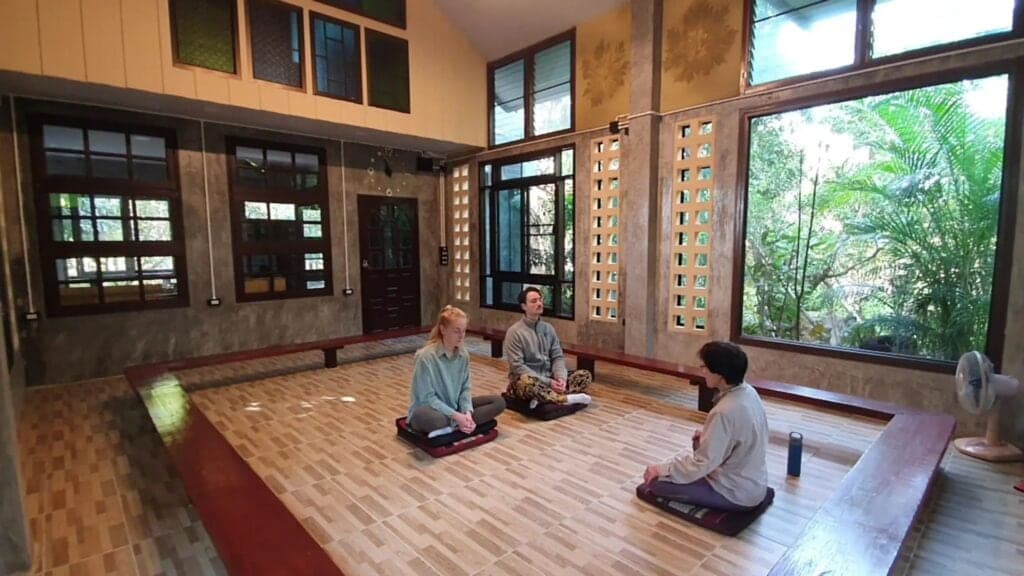
The Monk Chat / Meditation Retreat program at Wat Suan Dok is the most accessible entry point. Format: 2-day or 4-day silent retreat at the temple's retreat centre 30 km outside the city. Dormitory-style accommodation with bedrolls. Simple vegetarian meals twice a day (no eating after noon). Wake at 05:00, walking and sitting meditation alternated through the day, dharma talks, end at 21:00. Donation-based — around 500 to 2,000 THB per retreat. Book via the Wat Suan Dok website 4 to 8 weeks ahead in high season.
Wat Doi Suthep runs longer 10-to-21-day silent retreats for travellers wanting to go deeper. Wat Umong runs occasional weekend forest-temple retreats. The catch: donation-based programs are not wellness retreats. No spa, massage, or yoga beyond basic stretching. Plain food. Floor sleeping. If those matter to you, book a commercial retreat.
What about commercial yoga retreats?
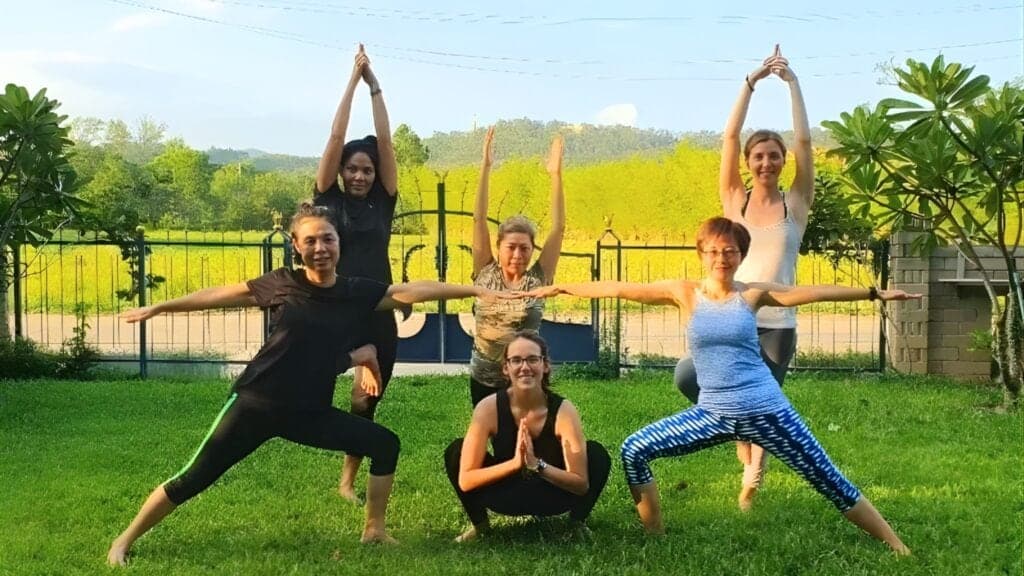
The strong commercial yoga retreats in Chiang Mai cluster in Mae Rim (mountain north) and Hang Dong (mountain south). They run 3 to 7 days, mix daily yoga with healthy meals and bodywork, and cost 15,000 to 60,000 THB per program.
The names that consistently deliver:
- Suan Sati (Mae Rim) — established yoga retreat centre, 5-day programs, vegetarian food, multiple teachers. Most common Chiang Mai recommendation.
- Phakua Retreat (Mae Rim) — quieter, longer programs (7 to 14 days), more meditation focus.
- Pavana Chiang Mai (Doi Saket) — modern facility, mix of yoga and wellness, full board.
- Wild Rose Yoga retreats (varied locations) — multiple short retreats per year, well-known teacher (long-term resident).
- Sereno (Hang Dong) — boutique, smaller group sizes.
Most of these run multiple retreats per year on a published calendar — you book by date, not by walk-in. Booking 4 to 12 weeks in advance is standard. If you want an operator-confirmed mountain program that bundles yoga, meditation and mindfulness, the Chiang Mai wellness retreat with mindfulness, yoga and meditation in nature is the standard short-format option, and the 3-day Chiang Mai wellness getaway covers the deeper reset.
What about Thai massage training?
Chiang Mai is the global capital of traditional Thai massage training — the Lanna northern tradition runs through Old Medicine Hospital and several lineage-holders. Programs range from weekend introductions to 200-hour certifications.
Major schools: Old Medicine Hospital (TMC, the original Lanna lineage school); Sunshine Massage School (popular with Western students, English-led); ITM (broad menu of specialty modules); Thai Massage School Chiang Mai (boutique, smaller groups). Course fees: 8,000 THB for a 5-day intro, 25,000 THB for 60-hour certification, 60,000 THB+ for 200-hour international certification. Accommodation is separate — students book guesthouses in the Wat Suan Dok area at 500 to 1,500 THB per night.
This is serious bodywork training, not a wellness experience. Schedule is 09:00 to 16:00 daily of hands-on practice, Sunday off. Most students are professional massage therapists or yoga teachers from abroad.
How does pricing compare across retreat types?
The 3 to 5x markup between mid-range and luxury mostly buys better accommodation (private villa vs dorm), more 1-on-1 time, meal flexibility, and pool/spa amenities. Actual yoga and bodywork quality is often similar — smaller retreats sometimes have better teacher-student ratios than resorts.
What about detox and fasting programs?
Detox programs run 5 to 14 days at commercial centres in the Doi Saket and Mae Rim areas. They mix fasting, juice cleansing, colonic hydrotherapy, supplements, and light activity. Science behind some practices is contested. We recommend caution and proper medical screening before committing.
The major Chiang Mai detox centres include Phuket Cleanse-style operations like Pavana, Anya Resort, and Spa Mantra. Programs typically include: structured fasting or juice cleanse phase, daily colonic sessions, supplement protocols, light yoga, lymphatic drainage massage. Pricing typically 30,000 to 70,000 THB for a 7-day program.
If you do book a detox program: get a medical clearance from your home doctor first; choose a centre with at least basic emergency contact protocols; tell them about all medications and pre-existing conditions; book the shortest option (3 to 5 days) for your first one.
What about the luxury wellness resorts?
The top-tier wellness resorts are Four Seasons Chiang Mai (Mae Rim), Anantara Chiang Mai (riverside), and Veranda Chiang Mai (mountain). They run 7,000 to 35,000 THB per night, with optional wellness programs adding on top.
These are not retreat-format programs in the same sense as Suan Sati or a monastery. They are luxury resorts with strong wellness amenities — spa, fitness, yoga schedule, healthy menus — and optional wellness packages that bundle daily treatments and consultations.
For travellers wanting all-inclusive luxury, full-board wellness packages at these resorts run 80,000 to 200,000 THB per week. Daily yoga, daily massage, healthy meal plan, herbal tea library, pool, gym, optional consultations with traditional medicine practitioners. The accommodation is the strongest differentiator from the mid-range retreats.
How does the season affect wellness retreats?
Avoid March and early April — burning season smoke makes outdoor practice unpleasant and most retreat centres lack indoor backup spaces large enough for full programming. November to February is ideal.
Seasonal: November-February is best weather, outdoor practice possible, peak pricing. March to mid April avoid (air quality routinely above 150 PM2.5). Late April-June excellent (clean air, evening rain, lighter crowds, better pricing). July-September good but rain-affected. October is underrated (clean air, post-monsoon greenery, pre-festival pricing).
How do you actually pick the right retreat?
Start with priority — meditation, yoga, healing, detox, luxury — then narrow on length and price. Do not book the first Instagram-pretty option you find.
Decision sequence: pick priority (meditation → monastery; yoga → Suan Sati / Phakua / Wild Rose; bodywork → Old Medicine Hospital / Sunshine; detox → commercial centres with caveats; luxury → Four Seasons / Anantara). Pick length (3-day acclimatise, 5-7 days reset, 10-14 days deep immersion). Pick season (avoid March-April, prefer May-June or November-December). Verify the centre (recent reviews, teacher continuity, group size, food). Book 4 to 12 weeks ahead.
Common mistake: booking a luxury resort expecting transformational retreat — resort format is comfort-led, not transformation-led. For structural change, a smaller dedicated retreat with consistent teachers delivers more per dollar.
Book the Chiang Mai wellness retreat in natureMindfulness, yoga and meditation — operator-confirmedRelated reading worth your time:
External references used in this guide:
- Wat Suan Dok Monk Chat program
- Old Medicine Hospital training programs
- Thailand Ministry of Public Health — traditional Thai medicine regulation
Frequently asked questions
Is silent meditation retreat free in Chiang Mai?
Yes for the major monastery programs. Wat Suan Dok runs a 2-day or 4-day Monk Chat program for free, including accommodation and basic meals. Wat Doi Suthep runs longer 10-day retreats also on a donation basis. Wat Umong has periodic silent retreats with a donation-only structure. The free programs are real and serious — they are not luxury wellness experiences. Donations of 500 to 2,000 THB are appropriate. Commercial silent retreats run 3,000 to 12,000 THB per day at private centres.
What is the best yoga studio in Chiang Mai?
Wild Rose Yoga in the Old City is the long-running institution, with daily drop-in classes and intermittent retreat programs. Yoga Tree on Loi Kroh has the most consistent teacher quality. The Yoga Tree on Nimman is a separate operation, also good. For retreat-format programs the major names are Suan Sati (Mae Rim, 5-day immersive), Wild Rose's mountain retreats (3 to 7 days), and Phakua Retreat (longer 7 to 14 day programs).
How long is a typical wellness retreat program in Chiang Mai?
Three days is the entry-level format. Five to seven days is the standard. Ten to fourteen days is the deep-immersion option. Three-day weekend retreats run 8,000 to 25,000 THB per person. Seven-day retreats cluster at 25,000 to 60,000 THB. Two-week intensive programs start around 60,000 THB and reach 200,000 THB for luxury wellness resorts. Cheaper donation-based monastery retreats run 10 days for under 2,000 THB total.
What is the difference between detox and medical wellness retreats in Chiang Mai?
Detox retreats focus on fasting, juicing, colonic cleansing and supplements — they are not medically supervised in Thailand and the science behind some practices is contested. Medical wellness retreats use licensed Thai or Chinese medicine doctors, blood work, and treatment plans — they are regulated. Detox programs run 25,000 to 60,000 THB for a week. Medical wellness at places like Chiva-Som (in Hua Hin, not Chiang Mai) is 100,000+ THB per week. Chiang Mai's strength is in traditional Thai medicine and herbal programs rather than Western medical wellness.
Frequently asked questions
Is silent meditation retreat free in Chiang Mai?
Yes for the major monastery programs. Wat Suan Dok runs a 2-day or 4-day Monk Chat program for free, including accommodation and basic meals. Wat Doi Suthep runs longer 10-day retreats also on a donation basis. Wat Umong has periodic silent retreats with a donation-only structure. The free programs are real and serious — they are not luxury wellness experiences. Donations of 500 to 2,000 THB are appropriate. Commercial silent retreats run 3,000 to 12,000 THB per day at private centres.
What is the best yoga studio in Chiang Mai?
Wild Rose Yoga in the Old City is the long-running institution, with daily drop-in classes and intermittent retreat programs. Yoga Tree on Loi Kroh has the most consistent teacher quality. The Yoga Tree on Nimman is a separate operation, also good. For retreat-format programs the major names are Suan Sati (Mae Rim, 5-day immersive), Wild Rose's mountain retreats (3 to 7 days), and Phakua Retreat (longer 7 to 14 day programs).
How long is a typical wellness retreat program in Chiang Mai?
Three days is the entry-level format. Five to seven days is the standard. Ten to fourteen days is the deep-immersion option. Three-day weekend retreats run 8,000 to 25,000 THB per person. Seven-day retreats cluster at 25,000 to 60,000 THB. Two-week intensive programs start around 60,000 THB and reach 200,000 THB for luxury wellness resorts. Cheaper donation-based monastery retreats run 10 days for under 2,000 THB total.
What is the difference between detox and medical wellness retreats in Chiang_Mai?
Detox retreats focus on fasting, juicing, colonic cleansing and supplements — they are not medically supervised in Thailand and the science behind some practices is contested. Medical wellness retreats use licensed Thai or Chinese medicine doctors, blood work, and treatment plans — they are regulated. Detox programs run 25,000 to 60,000 THB for a week. Medical wellness at places like Chiva-Som (in Hua Hin, not Chiang Mai) is 100,000+ THB per week. Chiang Mai's strength is in traditional Thai medicine and herbal programs rather than Western medical wellness.