TL;DR — Chiang Mai-specific travel insurance must cover three things most generic policies exclude: motorcycle riding (with motorcycle licence proof), elephant-camp interactions, and adventure activities like trekking and ziplining. Standard travel insurance excludes all three by default. Verify in writing before flying. For Feb–April trips, consider a "cancel for any reason" upgrade for burning-season flexibility. World Nomads, Allianz, SafetyWing, and HeyMondo are the four providers most often correctly configured for Thailand trips.
Do you actually need travel insurance for Chiang Mai?
Yes — Thailand's private hospital costs for serious accidents (especially motorbike injuries) run USD 5,000–25,000+. Public hospitals are cheaper but slower to admit non-Thai patients in emergencies. The single statistic that matters: foreign tourists are involved in roughly 700 fatal motorcycle accidents per year across Thailand. Insurance isn't optional if you'll ride.
The cost-benefit math is straightforward. A standard week-long travel insurance policy runs USD 25–60 per person. A serious motorbike accident requiring hospitalisation and air evacuation can run USD 50,000+. The insurance is roughly 0.1% of the worst-case medical exposure. For trips that include any motorbike riding, elephant interaction, or adventure activity, the math is unambiguous.
For trips that are purely sightseeing — temple visits, cooking classes, cafe-and-spa days — the insurance still makes sense but the exposure is lower. The genuine risks reduce to food poisoning, theft, and trip-cancellation events. Standard policies cover these adequately.
What does Chiang Mai-specific coverage actually need?
Five specific coverage categories matter: medical emergency, motorcycle/scooter (with licence proof), adventure activities, trip interruption, and air-quality contingency. Standard policies cover medical and trip interruption automatically; the other three need explicit attention.
| Coverage | Why it matters in Chiang Mai | Typical exclusion |
|---|---|---|
| Medical emergency | Hospital costs at private facilities (Bangkok Hospital, Chiang Mai Ram) | Pre-existing conditions |
| Motorbike/scooter | 30% of riders have an incident; main injury source | Riding without licence (most policies) |
| Adventure activities | Trekking, ziplining, white-water rafting, elephant camps | Activities not declared upfront |
| Trip interruption | Flight changes, illness disrupting plans | Pre-existing conditions, voluntary cancellation |
| Air-quality / cancel for any reason | Burning season Feb–April disruption | Standard policies don't include |
| Theft and personal liability | Lost luggage, phone theft, accident liability | Cash or unattended valuables |
| Air evacuation | Serious mountain injury, remote-area incidents | Often capped at USD 50,000 |
The medical and trip interruption coverage is universally included in any reputable policy and rarely the issue. The motorbike, adventure activities, and air-quality coverage are the three that need conscious purchasing decisions.
What's the deal with motorbike coverage specifically?
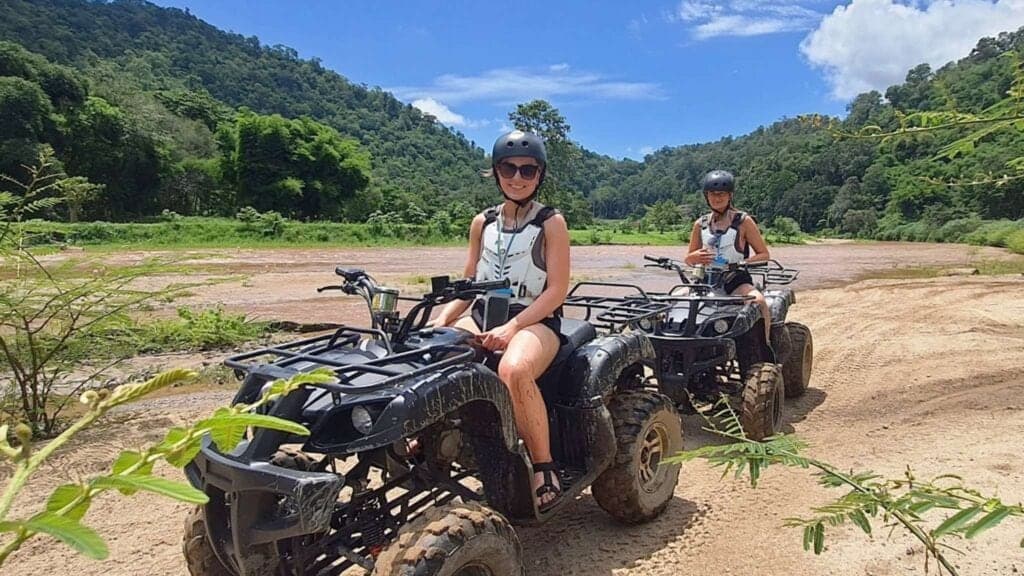
Every major insurance policy requires a valid motorcycle endorsement on your home licence plus an International Driving Permit with the motorcycle category specifically endorsed. Riding without either voids the medical coverage entirely. This is the single biggest insurance trap for Chiang Mai travellers.
The mechanics:
- Home licence with motorcycle endorsement. Most countries require a separate motorcycle test. Add 1–2 months to your pre-trip planning if you need to take it.
- International Driving Permit (IDP). Issued by your home country's automobile association, valid 1 year. The IDP must show the motorcycle category specifically ticked. Bare IDPs for car-only licences don't count.
- Policy disclosure. Some policies require you to declare in writing that you'll ride a motorcycle when purchasing. Others apply blanket coverage but exclude unlicenced riding. Read the wording before buying.
If you don't have a motorcycle licence at home, the simplest path is to skip scooter rental entirely. Songthaews, Grab, and hired drivers cover all Chiang Mai sightseeing for ฿200–฿800 per day all-in. The savings from scooter rental aren't worth the licence and insurance risk.
How do insurance policies handle elephant interactions?
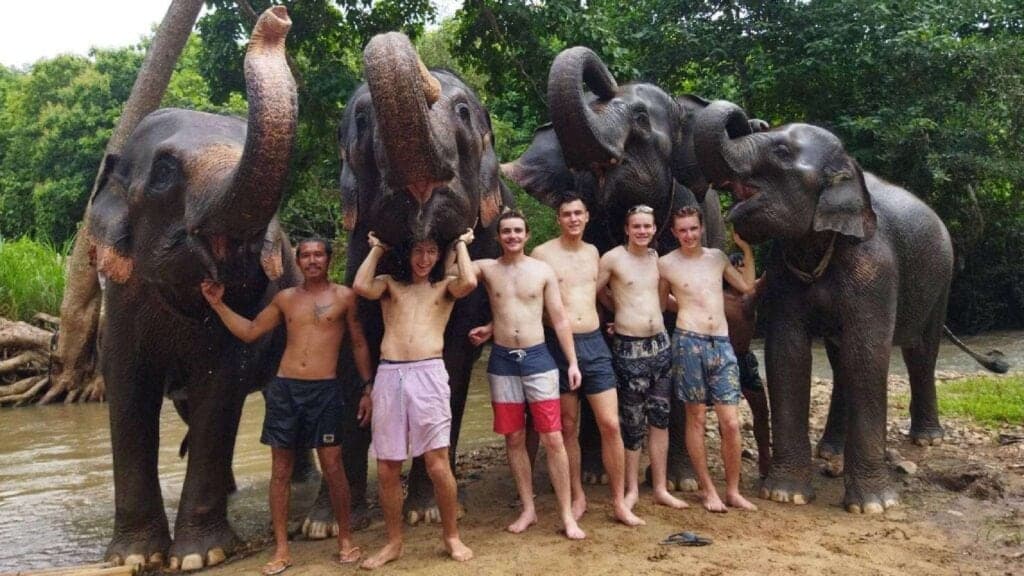
Most adventure-tier policies cover observation, feeding, and river bathing at ethical sanctuaries. Riding is excluded by some policies as 'high-risk animal interaction.' Mahout training programs are murky and depend on wording. Stick to no-riding sanctuaries and you stay inside coverage.
The category most policies use is "wildlife interaction" or "animal contact." Standard tiers cover passive interaction (watching, feeding from a distance, walking alongside). Adventure tiers add active interaction (bathing, walking together, hand-feeding). Riding crosses into "animal recreational use" which several policies (Allianz, IMG) explicitly exclude alongside bull running and similar activities.
The clean way to stay covered: book only ethical sanctuaries that don't offer riding. Our ethical elephant sanctuaries guide walks through the 3-Question Camp Test. Sanctuaries that pass the test (Elephant Nature Park, Boon Lott's, the small handful of family-run Mae Taeng camps we work with) keep you inside any reasonable adventure-tier policy. The no-riding camps we run, like the Karen Hill Tribe elephant sanctuary day and the half-day visit to Elephant Nature Park, are observation-and-feeding only, which keeps them inside standard sightseeing coverage.
What about burning season and air-quality contingencies?
Standard travel insurance doesn't cover voluntary trip changes for air-quality reasons. 'Cancel for any reason' (CFAR) upgrades cover 50–75% of non-refundable costs but add 30–50% to the premium. Worth it for Feb–April trips with significant prepaid bookings.
The honest calculus for burning season: if your trip dates are flexible and you can wait until November–January if conditions deteriorate, standard insurance is fine. If your trip dates are fixed (school holidays, work calendar) and February–April is the only possible window, CFAR is worth the markup. The threshold where it pays for itself: typically USD 1,000+ of non-refundable bookings.
The non-CFAR alternatives: book flexible flights, refundable hotels, and tours with generous cancellation policies. Direct operators (us included) tend to be more flexible on rescheduling than marketplace listings. That flexibility reduces the need for CFAR.
Who are the best providers for Chiang Mai trips?
World Nomads, Allianz Travel, SafetyWing, and HeyMondo cover most use cases. Match the provider to your trip profile rather than picking the cheapest.
| Provider | Best for | Typical price (week) | Motorbike coverage |
|---|---|---|---|
| World Nomads (Standard) | Adventure travellers, short trips | USD 70–120 | Optional upgrade, with licence |
| World Nomads (Explorer) | Multi-activity adventure | USD 110–180 | Included, with licence |
| Allianz Travel | Comprehensive cover, families | USD 80–150 | Included basic, riders extra |
| SafetyWing | Digital nomads, longer trips | USD 56–63/month | Weak — verify before riding |
| HeyMondo | Tech-forward UX, app claims | USD 60–100 | Included with proper licence |
| Cigna Global | Long-term expats | USD 200+/month | Included, with licence |
| Staysure (UK travellers) | UK-issued passports, comprehensive | GBP 50–100 | Included, with licence |
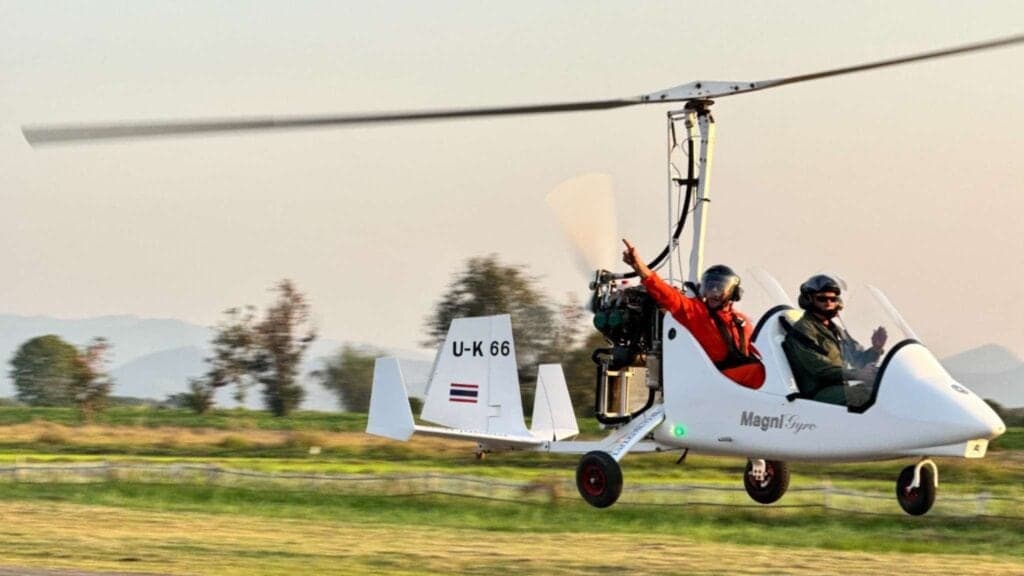
For most readers, the choice narrows to two: World Nomads Explorer for adventure-heavy trips (Mae Hong Son loop, multi-day trekking, ziplining), or Allianz Travel Premium for general-purpose comprehensive coverage. Both handle the motorbike licence requirement clearly and both have established Thailand claims experience. If your itinerary includes higher-risk activities like the zipline adventure at King Kong Smile or a Doi Inthanon trekking day, declare them when you buy so the adventure tier actually applies.
What about credit-card included travel insurance?
Many premium cards (Chase Sapphire, Amex Platinum, capital-issued travel cards) include travel insurance up to USD 1,500–10,000 in medical emergency and trip cancellation. Limited adventure coverage. Almost never includes motorbike coverage. Useful as a baseline; not a substitute for dedicated insurance if you'll ride or do adventure activities.
The pattern: credit-card insurance covers the typical hassles (lost luggage, flight delay, mild illness) but excludes the catastrophic categories (motorbike injury, adventure activity injury, air evacuation from remote areas). For a sightseeing-only Chiang Mai trip, credit-card coverage may genuinely be enough. For trips including any motorbike riding or adventure activity, layer a dedicated policy on top.
Verify your card's coverage by reading the policy wording (not the marketing copy). Look specifically for the motorcycle exclusion clause, the adventure-activity definition, and the air-evacuation cap.
How do claims actually work in Thailand?
Most reputable providers have direct-billing arrangements with Bangkok Hospital, Chiang Mai Ram Hospital, and other major private facilities. Public hospitals usually require pay-then-claim. Have policy documents and emergency contact numbers accessible on your phone before something goes wrong.
The claims process for a typical serious incident:
- Emergency. Call your provider's emergency hotline (number on the policy card). They route you to an in-network hospital and authorise treatment.
- Treatment. In-network hospitals direct-bill the insurer. Out-of-network hospitals expect cash deposit (USD 500–5,000) and you claim reimbursement later.
- Documentation. Keep all receipts, medical reports, police reports (for accidents). Photograph documents before discharge.
- Filing. Most providers accept claims online within 60 days of incident. Direct-billed claims need confirmation but no upfront payment.
For minor issues (mild stomach illness, twisted ankle), pay out of pocket and claim reimbursement later. The deductible on most policies makes small claims not worth filing.
What's the bare-minimum policy if you're on a tight budget?
SafetyWing Nomad Insurance at USD 56–63/month covers medical emergency and basic trip interruption. Add a documented motorcycle licence and the coverage works for most scenarios except riding-related accidents at high speeds. For sightseeing-only trips, this is the floor.
SafetyWing is the digital-nomad community's most-discussed provider because the monthly subscription model fits long, flexible trips better than annual policies. The trade-offs: weaker on adventure activities, weaker on motorcycle coverage, smaller in-network hospital list than World Nomads or Allianz.
If you're young, healthy, on a tight budget, and not planning to ride a scooter or do adventure activities, SafetyWing is genuinely workable. If you'll ride or do anything adventurous, pay the extra USD 50–100 for World Nomads Explorer or equivalent.
What's the bottom line on insurance for Chiang Mai?
Buy a policy that covers motorbikes (if you'll ride), adventure activities (most travellers do at least one), and standard medical/trip interruption. Verify the licence requirement before renting a scooter. Add CFAR if you're travelling February–April with significant prepaid costs. The math always favours having insurance.
For a comprehensive sense of the safety landscape around the insurance decision, see our is Chiang Mai safe guide. For scooter-specific risk management, the scooter rental guide covers shop selection and inspection. For burning-season planning, the burning season guide covers air-quality timing.
Book the Karen elephant sanctuary dayNo riding, observation only, stays inside standard travel coverInternal reading worth your time:
- Chiang Mai scooter rental guide: shops, prices, what to inspect
- Burning season in Chiang Mai: when, how bad, and workarounds
- WHO Thailand road safety country profile (external)
- Thai Ministry of Foreign Affairs travel advisory information (external)
Frequently asked questions
Is scooter rental covered without a motorcycle licence?
Almost never. Every major travel insurance policy we've audited (World Nomads, SafetyWing, Allianz, Cigna, AXA, IMG, HeyMondo) requires a valid motorcycle endorsement on your home licence plus an International Driving Permit with the motorcycle category specifically endorsed. Riding without either voids the medical coverage. Thai law requires the same. Rental shops will rent without checking but if you crash, your insurance provider asks for licence documentation before paying claims. The scooter rental industry's casual licence-handling is the single biggest insurance trap for Chiang Mai travellers.
Are elephant tours covered by travel insurance?
Most basic adventure-tier policies cover elephant interactions — observing, feeding, river bathing. What gets murky is mahout training and elephant riding. Riding is excluded by some policies as 'high-risk animal interaction' (the same category as bull running). Mahout training programs may or may not be covered depending on wording. The clear advice: only book ethical sanctuaries that don't offer riding (you should anyway), then your activity falls into standard sightseeing coverage. Confirm in writing if you're unsure. Most ethical sanctuaries are below the risk threshold of any reputable policy.
What if Chiang Mai's air quality cancels my flight or makes me change plans?
Standard travel insurance doesn't cover voluntary changes due to bad air quality. Premium 'cancel for any reason' (CFAR) policies do, with typical reimbursement of 50–75% of non-refundable costs. CFAR adds 30–50% to a standard policy premium. If you're travelling February through April and worried about burning season, the CFAR upgrade is worth the cost only if you've prepaid significant non-refundable bookings (international flights, premium hotels). For budget travellers with flexible bookings, standard cover plus willingness to absorb minor change fees is usually adequate.
Who are the best travel insurance providers for Thailand?
For young travellers and digital nomads: SafetyWing (USD 56–63/month, 4-week minimum, weak on Thailand-specific scooter coverage). For comprehensive coverage and adventure activities: World Nomads (Standard tier USD 70–120 for a week with explicit motorbike option for an upgrade fee). For families and longer trips: Allianz Travel or Cigna Global. For UK travellers: Staysure, Holiday Extras, or InsureandGo. Compare on three dimensions specifically: motorcycle coverage, adventure-activity coverage, and trip-cancellation reasons. Generic policy comparison sites under-weight these three.
Frequently asked questions
Is scooter rental covered without a motorcycle licence?
Almost never. Every major travel insurance policy we've audited (World Nomads, SafetyWing, Allianz, Cigna, AXA, IMG, HeyMondo) requires a valid motorcycle endorsement on your home licence plus an International Driving Permit with the motorcycle category specifically endorsed. Riding without either voids the medical coverage. Thai law requires the same. Rental shops will rent without checking but if you crash, your insurance provider asks for licence documentation before paying claims. The scooter rental industry's casual licence-handling is the single biggest insurance trap for Chiang Mai travellers.
Are elephant tours covered by travel insurance?
Most basic adventure-tier policies cover elephant interactions — observing, feeding, river bathing. What gets murky is mahout training and elephant riding. Riding is excluded by some policies as 'high-risk animal interaction' (the same category as bull running). Mahout training programs may or may not be covered depending on wording. The clear advice: only book ethical sanctuaries that don't offer riding (you should anyway), then your activity falls into standard sightseeing coverage. Confirm in writing if you're unsure. Most ethical sanctuaries are below the risk threshold of any reputable policy.
What if Chiang Mai's air quality cancels my flight or makes me change plans?
Standard travel insurance doesn't cover voluntary changes due to bad air quality. Premium 'cancel for any reason' (CFAR) policies do, with typical reimbursement of 50–75% of non-refundable costs. CFAR adds 30–50% to a standard policy premium. If you're travelling February through April and worried about burning season, the CFAR upgrade is worth the cost only if you've prepaid significant non-refundable bookings (international flights, premium hotels). For budget travellers with flexible bookings, standard cover plus willingness to absorb minor change fees is usually adequate.
Who are the best travel insurance providers for Thailand?
For young travellers and digital nomads: SafetyWing (USD 56–63/month, 4-week minimum, weak on Thailand-specific scooter coverage). For comprehensive coverage and adventure activities: World Nomads (Standard tier USD 70–120 for a week with explicit motorbike option for an upgrade fee). For families and longer trips: Allianz Travel or Cigna Global. For UK travellers: Staysure, Holiday Extras, or InsureandGo. Compare on three dimensions specifically: motorcycle coverage, adventure-activity coverage, and trip-cancellation reasons. Generic policy comparison sites under-weight these three.