Chiang Mai has three bus terminals serving different routes: Arcade for long-distance south and east (Bangkok, Sukhothai, Khon Kaen), Chang Phueak for short-distance north (Chiang Rai, Mae Hong Son), and the Aya/Prempracha minivan terminal for Pai. Knowing which one you need cuts an hour off your transit day. This guide is what we tell guests on their first overland trip out of Chiang Mai.
Which Chiang Mai bus station serves which routes?
Arcade is for the south and east. Chang Phueak is for the local north. The minivan terminals at Aya and Prempracha serve Pai. The airport bus terminal is separate and serves bus-plus-flight transfers.
| Terminal | Location | Serves | Bus types |
|---|---|---|---|
| Arcade Bus Terminal (Terminal 2) | Northeast of Old City | Bangkok, Sukhothai, Khon Kaen, Chiang Rai (long-distance), Mae Hong Son | VIP, first-class, second-class long-haul |
| Arcade Terminal 3 | Adjacent to Terminal 2 | Same as Terminal 2 newer | VIP and first-class, modern |
| Chang Phueak Bus Terminal | North moat, just outside city wall | Short-distance north (Fang, Tha Ton, local provinces) | Second-class local |
| Aya Service Minivan Terminal | Praisani Road, north of Old City | Pai (and Mae Hong Son via Pai) | Minivan, 12-seater |
| Prempracha Minivan Terminal | Same area as Aya | Pai (and onward routes) | Minivan, 12-seater |
| Chiang Mai Airport Terminal | Inside CNX airport | Airport-bus shuttle to Old City and major hotels | Shuttle bus |
The most common tourist error is assuming all buses leave from Arcade. They do not. Pai minivans specifically leave from the smaller north-of-Old-City terminals, which is a 5-minute songthaew ride from the moat versus the 15-minute ride to Arcade.
What's the deal with Arcade Bus Terminal?
Arcade is the main long-distance bus hub for the entire north of Thailand. Located 3 km northeast of the moat. Three terminal buildings clustered together. VIP overnight buses to Bangkok, first-class daytime buses to Sukhothai and Khon Kaen, second-class to almost everywhere.
Arcade's three terminal buildings:
- Terminal 1. Older building, mostly second-class local buses. Less commonly used by tourists.
- Terminal 2. The main long-distance hub. Most VIP and first-class southbound buses depart from here. Tourist information desk is on the ground floor.
- Terminal 3. Newer building (opened around 2015), modern facilities, primarily Bangkok-direction premium service. The Greenbus and Nakhonchai Air services typically depart here.
The ticket booking process is straightforward: walk in, find the operator counter for your route (Greenbus for north, Nakhonchai Air for south, Sombat Tour for Bangkok VIP), buy the ticket, get a printed receipt with seat number, board at the assigned platform. For Bangkok-bound overnight buses, book 2–4 hours ahead in low season, 1–2 days ahead during Yi Peng or Songkran.
What's the difference between bus classes?
Three or four classes on most routes. Second-class is no-aircon or basic-aircon for short routes. First-class adds aircon, recline and assigned seats. VIP adds wider seats, blankets, sometimes meals. Premium/Gold VIP exists on the Bangkok run and includes pseudo-business-class seats.
The class distinctions in plain English:
- Second-class (chan song). Cheapest. Often no aircon on local routes, basic aircon on regional routes. Stops more frequently. Worth it for short hops (under 3 hours).
- First-class (chan nueng). Aircon, reclining seats, assigned seating. The default for daytime medium-distance.
- VIP. Wider seats (typically 32 seats on a coach where second-class has 40+), more recline, blanket. Best for overnight runs.
- Gold VIP / Sleeper. Bangkok route only. 24-seat configuration with lie-flat seats. Premium pricing.
For longer-distance overnight travel, the VIP or Gold VIP class is the right choice. The price delta is modest and the sleep quality difference is real.
How do the minivans to Pai work?
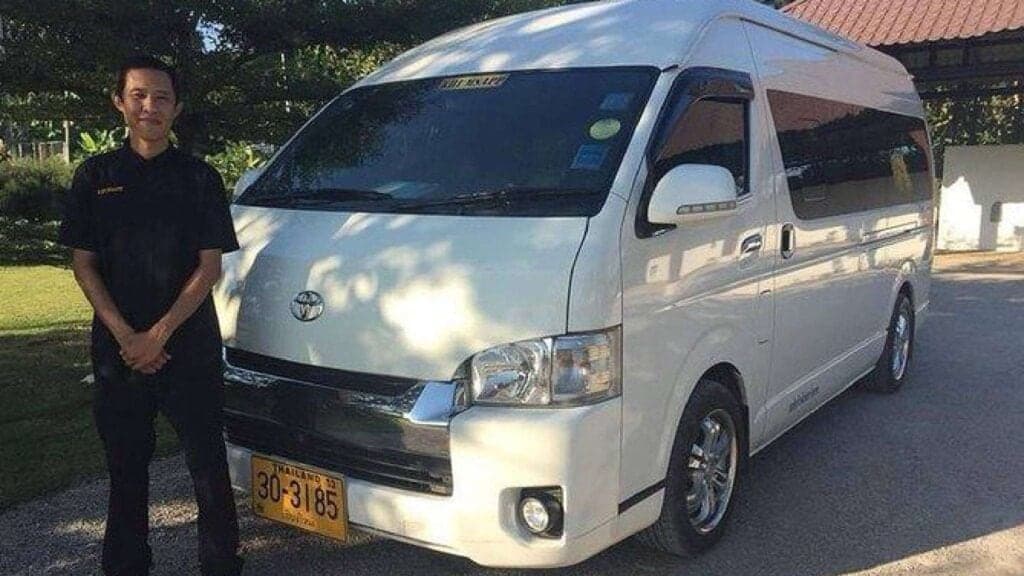
Aya Service and Prempracha both run roughly hourly minivans from Praisani Road to Pai, taking about 3 hours each way on the twisty mountain highway. ฿180 one-way. First minivan around 7am, last around 4–5pm.
The Pai minivan is one of the more notorious tourist transit experiences in Thailand. The road (Highway 1095) has 762 curves, and motion sickness is common. Buy sea-sickness tablets at any pharmacy before you board if you are prone. The minivan drivers do not slow for the curves.
What to pack for the minivan:
- Light layer (aircon is aggressive).
- Motion-sickness tablets if you need them.
- Water and a small snack — there is one rest stop at the halfway mark.
- Earplugs if you don't want to listen to the driver's playlist.
- Cash for the ticket.
The minivan deposits you at Aya's Pai terminal in the village centre. Return minivans run on a similar schedule. Book the return on arrival in Pai if you want a specific time slot. If the curves are not for you, our private one-way transfer to Pai runs the same route door-to-door in an air-conditioned car at your own pace.
What about Chang Phueak Bus Terminal?
Chang Phueak is the smaller north-side terminal just outside the moat. Serves local routes within Chiang Mai province and short hops to Fang and Tha Ton. Not the right terminal for Pai.
Chang Phueak is the one most often confused with the Pai minivan terminal because both are north of the moat and within walking distance of each other. The distinction matters: Chang Phueak serves local route 1, 3, 5 buses to neighbouring Chiang Mai districts and short-haul provincial routes. It does not serve Pai (those are at Aya/Prempracha) and does not serve long-distance south or east (those are at Arcade).
Tourist usage: low. Most travellers will never need Chang Phueak unless they are going to Fang, Tha Ton, or onward to the Burma border crossing at Mae Sai. For the popular Chiang Rai day trip many guests pair with this region, a private Chiang Rai city tour from Chiang Mai skips the long-distance bus entirely.
What about the overnight train as an alternative?
Chiang Mai–Bangkok overnight sleeper trains run twice daily and take 12–14 hours. Second-class sleeper is ฿850–฿1,200, first-class sleeper is ฿1,400–฿1,900. Generally more pleasant than the bus but takes longer.
The Chiang Mai railway station sits east of the Ping River, about 15 minutes from the Old City. Booking via the State Railway of Thailand's website (railway.co.th, accessed 2026-05-15) is the cheapest. Major tour agencies on Tha Phae Road add a ฿100–฿200 service fee but handle the booking for travellers without Thai-language phone numbers.
The sleeper-train experience has become more comfortable since the 2016 introduction of new Chinese-built rolling stock on the route. The new carriages have better aircon, cleaner toilets, and reading lights at each berth.
How does the bus compare to flying?
Flight wins on time and on rest, bus wins on cost only if booked last-minute. AirAsia and Nok Air run multiple daily Chiang Mai-Bangkok flights at ฿1,200–฿2,400 one-way booked 1–2 weeks ahead, going up sharply for same-day or next-day.
The bus-vs-flight calculation, plainly:
- Flight booked 1+ weeks ahead. ฿1,200–฿2,400. 1 hour 15 minutes flight time, plus 90 minutes airport time each end. Total 4 hours including transport to/from each airport.
- Flight booked same-day. ฿2,800–฿4,500. Same time.
- VIP overnight bus. ฿650–฿900. 9–11 hours.
- Overnight sleeper train. ฿850–฿1,900. 12–14 hours.
For most travellers with even modest planning lead time, flying is the right answer. The bus and train make sense only for budget travellers, for travellers who want the experience, or for routes where flight booking has spiked.
For broader trip-cost context, the Chiang Mai trip budget calculator covers the full five-day stack of accommodation, transport and tours.
What's the right transport between bus terminals and the Old City?
Songthaew red truck or Grab. Grab is the predictable option at ฿80–฿150 from Arcade to the Old City. Songthaews charge ฿30–฿50 per person but require knowing the route and bargaining briefly.
For arrivals at Arcade specifically: walk out the front of Terminal 2 or 3, find the Grab pickup zone marked with a small sign, book the ride on the app, wait the 3–5 minutes for the driver to arrive. The songthaew alternative is the row of red trucks parked along the curb — wave one down, tell the driver "Tha Phae Gate" or "Old City" (in English is fine, most Arcade drivers handle basic tourist English), agree the fare before getting in (฿40–฿60 per person for a shared ride, ฿150–฿200 for a charter).
Avoid the unlicensed taxi touts in the parking area. They will quote ฿300+ for the same trip and the cars are not licensed for the run.
For ongoing onward travel from Chiang Mai by other means, see our Pai from Chiang Mai guide for the minivan route specifics and the Chiang Mai airport transfer guide for getting between CNX and the Old City.
Skip the minivan with a private transfer to PaiDoor-to-door air-conditioned car at your own pace on the Highway 1095 routeFrequently asked questions
Where do the Pai minivans leave from?
Aya Service and Prempracha both operate Pai minivans, and both run from a small terminal cluster on Praisani Road, north of Chang Phueak Bus Station and a short songthaew ride from the Old City. The Pai minivans do not depart from Arcade. The journey takes about 3 hours each way on the famously twisty Highway 1095. Tickets are ฿180 one-way at Aya Service, slightly cheaper at Prempracha. Buy on the day of travel or up to a week ahead. The first minivan of the day leaves around 7am and they run roughly every 90 minutes until late afternoon.
Is Arcade bus station safe at night?
Generally yes, but be sensible. Arcade is a working transit hub with shops, food vendors, and overnight bus departures, which means it has staffed activity 24/7. Petty theft is rare but luggage left unattended is at risk. The walk to and from a Grab pickup point outside the terminal is well-lit. Single travellers including women travel through Arcade at night routinely. Avoid the unlicensed taxi touts in the parking area — they overcharge and occasionally pressure tourists. Use Grab or Bolt on your phone for a confirmed-price ride.
Is a VIP bus actually worth the price difference?
Yes for overnight runs, no for short daytime trips. The VIP class on Chiang Mai-Bangkok overnight buses gets you a wider seat that reclines further, a blanket, a thermos of hot water, sometimes a basic meal, and fewer stops. The price difference is about ฿200–฿400 over standard second-class. For an overnight 9-hour journey, that is genuinely worth it for sleep quality. For a daytime 3-hour Chiang Mai-Lampang trip, second-class is fine. The middle 'first-class' tier exists on most routes and is the value sweet spot for daytime medium-distance runs.
Should I take the overnight bus to Bangkok or fly?
Fly, unless you have a specific reason to take the bus. The overnight bus from Chiang Mai to Bangkok costs ฿650–฿900 in VIP class and takes 9–11 hours. A budget flight on AirAsia or Nok Air books at ฿1,200–฿1,800 if reserved a week ahead, takes 1 hour 15 minutes plus airport time, and gets you to Bangkok rested. The bus only wins on cost when bought less than 24 hours ahead, when last-minute flights spike to ฿3,000+. The overnight train (sleeper) is the third option and is genuinely pleasant if you can book ahead.
Frequently asked questions
Where do the Pai minivans leave from?
Aya Service and Prempracha both operate Pai minivans, and both run from a small terminal cluster on Praisani Road, north of Chang Phueak Bus Station and a short songthaew ride from the Old City. The Pai minivans do not depart from Arcade. The journey takes about 3 hours each way on the famously twisty Highway 1095. Tickets are ฿180 one-way at Aya Service, slightly cheaper at Prempracha. Buy on the day of travel or up to a week ahead. The first minivan of the day leaves around 7am and they run roughly every 90 minutes until late afternoon.
Is Arcade bus station safe at night?
Generally yes, but be sensible. Arcade is a working transit hub with shops, food vendors, and overnight bus departures, which means it has staffed activity 24/7. Petty theft is rare but luggage left unattended is at risk. The walk to and from a Grab pickup point outside the terminal is well-lit. Single travellers including women travel through Arcade at night routinely. Avoid the unlicensed taxi touts in the parking area — they overcharge and occasionally pressure tourists. Use Grab or Bolt on your phone for a confirmed-price ride.
Is a VIP bus actually worth the price difference?
Yes for overnight runs, no for short daytime trips. The VIP class on Chiang Mai-Bangkok overnight buses gets you a wider seat that reclines further, a blanket, a thermos of hot water, sometimes a basic meal, and fewer stops. The price difference is about ฿200–฿400 over standard second-class. For an overnight 9-hour journey, that is genuinely worth it for sleep quality. For a daytime 3-hour Chiang Mai-Lampang trip, second-class is fine. The middle 'first-class' tier exists on most routes and is the value sweet spot for daytime medium-distance runs.
Should I take the overnight bus to Bangkok or fly?
Fly, unless you have a specific reason to take the bus. The overnight bus from Chiang Mai to Bangkok costs ฿650–฿900 in VIP class and takes 9–11 hours. A budget flight on AirAsia or Nok Air books at ฿1,200–฿1,800 if reserved a week ahead, takes 1 hour 15 minutes plus airport time, and gets you to Bangkok rested. The bus only wins on cost when bought less than 24 hours ahead, when last-minute flights spike to ฿3,000+. The overnight train (sleeper) is the third option and is genuinely pleasant if you can book ahead.